
Are Ads Ruining Our Entertainment?
Sony Pictures Motion Picture Group Chairman and CEO Tom Rothman made a stir at Cinemacon 2026 when he urged theater owners to stop overloading screenings with pre-show content, famously telling them to “Get off the ad crack” as it was turning off moviegoers.
The Ad Crack. Indeed.
There are many reasons movie theater attendance has declined over the last decade, including the high cost of a night out, surly crowds, and, yes, the weaker films often being offered up today, but Rothman took specific aim at the industry’s own house by calling out the self-inflicted wound of excessive trailers and promotions. This oversaturation of visual propaganda, he argued, was assaulting audiences and driving them away.
As someone who toiled in the world of advertising for decades, I understand both the necessity of promotion and the feeling that it can often come off as intrusive, if not downright pummeling. No one, if they had their druthers, would want their favorite TV program, magazine, or even a night out at the cineplex to be interrupted by so much (ahem) shill.
Sure, audiences can appreciate that marketing fulfills many needs, from educating us about products we might want to buy to enticing us with a new movie set to open in a month, but does such messaging have to be as overt as it’s become? So disruptive? So … lengthy?
Advertising has always struggled with nuance, and for every brilliantly subtle TV commercial like those Clydesdales "going for two" in the classic 1996 Budweiser Super Bowl spot, there are utterly egregious examples of pushy advertising being little more than offensive. Take the 1961 effort where Fred Flintstone and Barney Rubble hawked Winston cigarettes in the middle of an actual episode of “The Flintstones." Hard to believe that was acceptable back then, but it was.
Since the second half of the 20th century, advertising has been an omnipresent part of all our lives. Ads are not just on TV, they’re on every street corner, in every stadium, even at schools, but most of us tend not to realize how huckstering ads really can be. It’s become such a presence in daily life that the citizenry tends to treat the eye sores of Times Square and Piccadilly Circus as merely quaint forms of overt consumerism.
Today, advertisers can wheedle their way into every corner of our lives via not just magazines, outdoor boards, radio spots, TV campaigns, Sunday circulars, and direct mail coupons, but also through texts, targeted emails, and all kinds of promotions dotting social media.
Often, such messaging can be entertaining. Just look at how popular it’s become to watch the Super Bowl each year for the commercials alone. But if studio heads like Rothman are taking potshots at the way his business incorporates advertising, then the entertainment industry is in even more dire straits than imagined.
Still, Rothman’s point isn’t lost on anyone in the industry, nor the millions of moviegoers who know that those “pre-show” promotions running before movies in theaters are all part and parcel. It’s more a question of how much we can stomach.
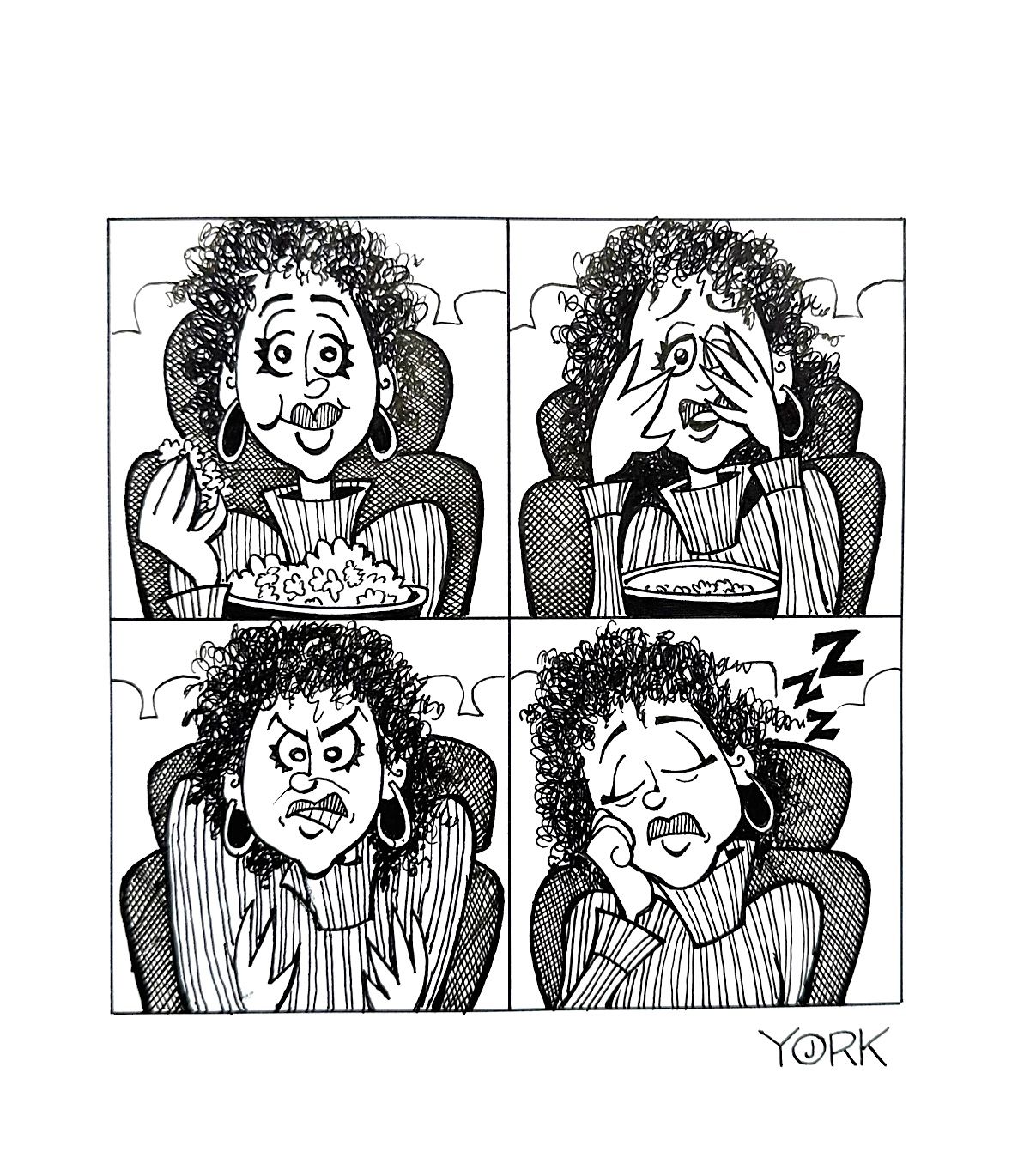
It’s not always easy, considering the average time spent on those pre-shows is 20-30 minutes. Then there are the 10-20 minutes of movie trailers that follow, and before you know it, you’ve sat through around 45 minutes of screen fare before your movie has even begun.
Is it any wonder that audiences go through various levels of frustration and exhaustion as they wait for the real show to begin?
The inundation gets worse, though, because cinemas are not the only leisure destination being overrun by too much marketing these days. Social media used to play more like an exclusive club with your friends and interests in years past. Now, computer algorithms have turned it into an all-too-knowing playback of your specific interests served up via ads designed to stop you in your tracks. In many ways, social media is the greatest tool for direct marketing ever. And I don’t mean that as a compliment.
Like gourmet cookies, do you? Great, Instagram and Facebook will make sure you get several posts trying to sell you on ordering every time you log on. Bought a meal kit once but stopped your subscription because they were too expensive? Don’t worry, cheaper, competitive meal kits will make their pitch to you every chance they get. Heck, they’ll even follow you into your emails and texts. That’s standard operational fare these days, bouncing from platform to platform, with a stalking style of messaging, and all of it is nothing if not smothering.
There’s an old adage in the ad biz about “the selling starting the moment the client says no,” but the all-out assault on you for what’s in your pocketbook almost feels like harassment these days, doesn’t it? Oh, and if you’ve ever given money to a political campaign, good luck, because you will be deluged with one message after another, often one more scolding or desperate than the next.
The need of all these marketers to separate you from your cash has become less a sales job and more like hostage-taking.
Such overtly targeted and repetitive shilling feels like it’s never resting because it literally isn’t. So relentless are these marketing strategies that 20 to 50% of Instagram’s feed now consists of such ads or “suggested content” as the platform prefers to call them. For all the complaining by politicians about TikTok targeting its subscribers with overt content, it’s not much different from what everyone else is doing online, be it via CRM, SMS, or BOGO offerings.
Little of it is new; it’s just the amount of it by any singular sponsor that has dramatically risen exponentially. And almost every leisure or entertainment venue these days welcomes all of it. In fact, if you want less of it, you now have to pay for that privilege. Streaming platforms, more often than not, offer two pricing tiers: a lower monthly price that includes ads interrupting the content you watch, and a higher price that lets you avoid ads. And if you opt for the less pricey option, your content will be interrupted willy-nilly, often with no rhyme or reason. At least networks still try to place their ads at natural cliffhanger points during the run of an episode. Not so with most streamers.
Just as blatant are those advertisers who pay email platforms to pop up first in your feed, well before the latest correspondence from family or friends. You may find yourself targeted by various demographic groups you belong to, as well as by information gained from tracking your viewing or purchasing habits. But make no mistake, the internet is tracking you, sizing you up, and allowing companies to pay for such information to go whole hog for the shill. You can program your computers and phones to try and keep pop-ups at bay, but most is for naught as advertising is baked into your platform’s contract or part of the agreement you didn’t object to when you signed up.
Certain countries, like the UK, at least have restrictions on how aggressive the sales language can be in places like movie theaters. Heavy-handed sales copy is often forbidden, or at least, significantly watered down. The Brits take a more insinuating approach, again part of that subtlety missing from most advertising on this side of the pond, and such a tactic forces advertisers to be cleverer in how they lay out their product stories in their commercials designed for the cineplexes. That same tactic was employed by Landmark Theaters a decade or so ago, but since then, they’ve become more like regular theater chains, no longer worrying whether too much advertising is driving people away.
Embedded advertising continues to thrive, like when James Bond tells Vesper Lynd in Casino Royale that his fancy-schmancy watch is an Omega and not a Rolex, or instances on “Friends” when Rachel Green worked for Bloomingdale’s on seasons 3 and 4, and Ralph Lauren for seasons 5-10 as part of the overall storytelling. None of such occurrences are by accident, of course, but it’s insinuating enough to not earn Mr. Rothman’s wagging finger.
It seems to me that with advertising coming on too strong these days across our leisure destinations, the task for advertisers should be to do less damage, be less offensive, and find savvier ways to pitch all of us. Popcorn buckets designed to tie into specific movies feel inspired and appropriate. I like that idea. So does movie tie-in content designed specifically for a platform like social media feeds that feels more integrated and appropriate.
Dolling out breadcrumbs isn’t a bad way to keep audiences engaged, either. Apple TV and production company A24 did a marvelous job with their approach to selling the new streaming series, "Margo’s Got Money Troubles." They released key screenshots timed to the episode in which they appeared, giving the advertisements a sense of immediacy. Pics of star Elle Fanning in her full “Hungry Ghost” cosplay costume and makeup did not appear until her Margo character appeared similarly on the show. It’s so simple, yet so smart. It shows, dare I say, a sense of sensitivity and mindfulness.
We’re not being force-fed whatever the advertiser wants to shove down our throats, but rather a cleverly thought-through strategy that leans into appropriate timing and a knowingness about the product that makes consumers feel even better about watching.
It would behoove the publicity and marketing departments working in the entertainment lanes to strive for shrewder ways to keep an audience engaged without ever turning them off so egregiously. What other promotions could also feel more organic? What news could be doled out a piece at a time to keep building on a narrative and making interaction more fun?
Every company and its brother is leaning heavily into A.I., so what can that newfangled approach net them? Be present and consistent but lean into cleverness. Eschew bullying and smothering.
The challenge should always be one of deftness, not expenditure. Another old advertising adage instructs, “Endear, and you’ll endure.” And that starts with not hitting consumers over the head for 45 minutes, pissing them off before the film they paid to see even starts, and driving them away in droves.
If Hollywood could start there, they’d be onto something.
Then maybe next year, Mr. Rothman can wag his finger at his fellow execs who cut off their noses to spite their faces by shrinking the time between theatrical and VOD releases to less than six weeks.
Ahhh, one can always hope …
*Featured image created by Jeffrey York