
I Played FFX with My Mom ... This is What I Learned
When I was 12 years old, I was transported …
To a world of monsters and magic. To a land of adventure and peril. To a place that would find a permanent spot in my heart and mind forever.
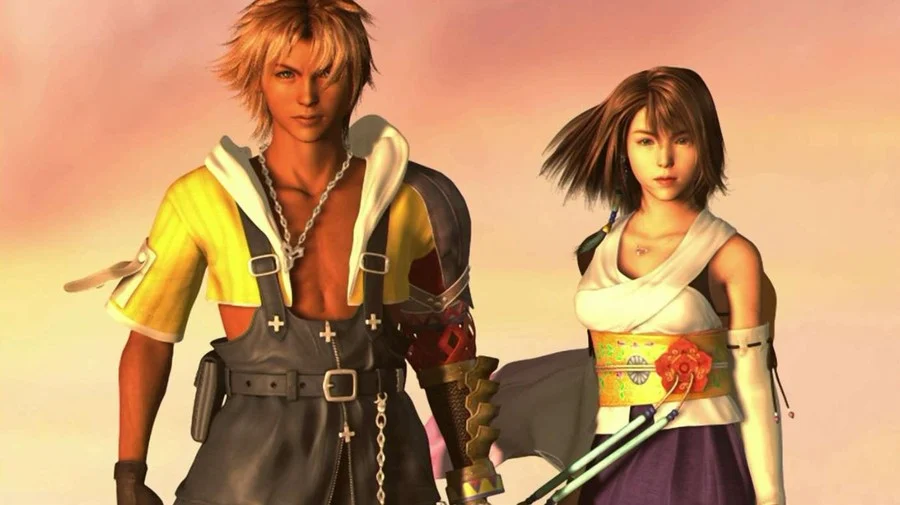
The land was called Spira. It’s the setting for, what I believe to be, the greatest video game ever made (and the best romance I’ve personally ever experienced). It’s the setting for Final Fantasy X.
If you’ve never heard of this game series before, the first question I have is: have you been living under a rock your whole life?? But in case you’re unfamiliar, Final Fantasy is a Japanese video game franchise that started in the 1980s. It’s an anthology series, which is pretty unique in the gaming world. The stories, settings, and characters of all 16 of its iterations are different (mostly), but they’re connected by several common elements.
They share similar monsters, beasts, money, and narrative themes. Primarily, each game takes place in a different fantasy land, where the main characters all get connected and save the world. In almost all cases, too, the leads fall in love.
It’s a formula that has worked since the beginning of time, and for young Spike, these games were my novels. Why read a book with love and adventure when I could literally LIVE the story through these games? That was my thinking at least. And when the tenth installment of the franchise came out, I was the first one in line (after absolutely adoring 7, 8, and 9).
I have played this game eight times in my life. And eight times, I have cried my eyes out. That’s how deeply the characters and narrative resonate with me.
And somehow, this game came up in conversation one night during dinner with my mom (don’t ask me how, I can’t remember, lol). But she remembered this from my youth … mostly how she constantly bugged me to leave the Playstation alone and do my homework.
But on this night … something sparked in her. She was intrigued by the premise, the emotion, and how passionately I spoke about the story. She asked if she could experience it, too. She wanted to play.
Let’s pause for a second and appreciate how freaking cool this is. How many other people’s 69-year-old mothers would have the gumption to ask to play their son’s favorite video game? Not many, I’d hazard.
But that’s beside the point. I instantly agreed. With a huge smile on my face.
And thus started a family tradition of sorts. I would stop by her house from time to time, PS5 in tow, and bring her up to speed on the story so far. She started out actually playing the game, but soon ceded the controller over to me (joystick skills are not her thing). But for the entire time, she remained enraptured … lost in the lore and worldbuilding, just like I had been all those years ago.
And through this endeavor, I was able to experience the game with fresh eyes. Every time a plot point was revealed, a major question got answered, or an emotional moment landed, I saw her reaction to it. And it reminded me just how powerful and compelling this story is.
Make no mistake, I can cite every pivotal story turn by heart. I’ve played it that much. But playing with her gave me some new insight into exactly what makes this game great. Why the narrative hums so damn well. And why millions of other gamers feel the same way.
There’s a lot that writers can learn from this game when it comes to storytelling. And for the rest of this article, I want to break down the most important lessons that Final Fantasy X reminded me of. Starting with:
USE A VIEWPOINT CHARACTER
This is a common refrain in my coverages for the Script Pipeline Workshop, especially when it comes to period specs or the fantasy genre in general. Stories that don’t take place in a common setting (i.e. Earth, or at least the modern day) need grounding. The reader (or player, or viewer … whatever) needs you (the writer … the crafter of the narrative) to settle them in for the ride. It is absolutely essential for enjoyment of the story.
In my experience, far too many young writers skip over this critical step. Many scribes will spend months or years in their head creating these sweeping fantasy settings. They’ll build whole religions, institutions, governments, and more. And then they’ll just drop the reader smack dab into the middle of it without any set up or direction and say, “Good luck! Hope you find your way around!”
No. Please, don’t do this. It’s one of the fastest ways to lose your reader if you aren’t careful.
Instead, I highly (repeat: highly) recommend having a viewpoint character. Someone who knows exactly as much about this world as the reader does. This gives the audience someone to connect with … they see themselves (and the story) through this character’s eyes. Because they are sharing an experience. Neither knows what is going on and needs stuff explained to them.
A great non-fantasy example of this is the TV show "Scandal." The pilot for this story begins with Quinn starting her first day at Olivia Pope’s crisis-management firm. It’s clear from the get-go that Quinn is a fish out of water; she’s totally overwhelmed and needs help being shown the ropes (just like anyone on their first day on a job). The other characters meticulously do that … They explain their mission, how they operate, and how Quinn fits in. And in just one episode, the audience has a foothold in this world.
Final Fantasy X is no different. The story begins with Tidus, a star athlete who lives in a futuristic metropolis. The game begins when a gigantic monster known as Sin shows up and destroys his home. And during his escape from the carnage, Tidus blacks out.
When he wakes up, he’s in a world completely foreign to him. The people here live in straw huts rather than massive skyscrapers. They devoutly worship a religion called Yevon, and summon awe-inspiring monsters with great power. And they don’t use any technology whatsoever.
Tidus knows NOTHING about Spira. Thereby, it doesn’t make sense for the writers to just drop the protagonist into this situation and expect him to sort it out. Tidus, and the player, are the same. Both need guidance.
So, when the people around Tidus explain things about the world to him, it doesn’t feel like an exposition dump. It feels like questions that would naturally be asked are getting answered. Because they’re the same questions the player has. AND it allows the writers to meticulously control the flow of information.
The kiss of death for many “high-fantasy” stories is the reader getting overwhelmed; our brains can only handle so much new information in one sitting. Spacing critical information out is also key to success.
I wish more young writers would use viewpoint characters. It’s massively helpful for any spec TV show, novel series, or even a video game in this case. But there’s something else I wish scribes would do more of, too. And that’s:
MAKE SURE EVERY CHARACTER HAS AN ARC
Okay, it doesn’t have to be literally every character, but the more arcs you have, the better. The point is, stories become more dynamic when people change based on what happens in the narrative. And that happens in droves in this game.
Yuna (the female lead) goes from being a soft-spoken, devout follower of Yevon, never questioning a single thing the church says, to a confident free-thinker who denounces her old beliefs. The core of who she is doesn’t change, but how she interacts with the world certainly does.
Wakka starts out as an ultra-pious bigot. He hates a group of people known as the “Al-Bhed” more than anything. By the end of the game, he’s embraced them.
Lulu has a subplot where she comes to terms with a huge moment from her past—she failed to do her job as a guardian and her former ward perished because of it. While this doesn’t get a ton of time, she still is able to grow from this experience, and move on with her life.
Auron (and this is going to sound weird to people who haven’t played the game) is dead. He was killed ten years ago while trying to save the world. For all that time, his strong emotions have kept his soul in Spira … His mission to complete what he set out to do has bound him to this land. And by the very end of the game, he lets go. Moving on to the next life.
Tidus is holding on to something, too. He hates his dad. More than anything. But throughout the events of the game, he comes to learn that his father has suffered a terrible fate. One that I wouldn’t wish on anyone. And by the very end of the story … Well, he hasn’t forgiven him, that’s for sure … but he empathizes with him. Even promising to kill his old man. But it isn’t out of hatred. It’s a mercy killing. Trust me, it’s the kind thing to do.
I could go on. There are plenty more arcs in this game. Some even for side characters who don’t impact the story very much. But that’s what makes it rich and real. And I wish more storytellers planned this stuff out from the beginning.
I’ve already hit my word count for this article (proving that I can talk anyone’s ear off about this game, haha) but a list with only two things feels incomplete. So, I’ll throw in one last point, and it’s a personal pet peeve of mine.
THE LOVE INTERESTS HAD A REASON TO CONNECT
Yeah, I know. It’s a video game. The characters are gonna be hot. Hell, Tidus is literally drawn with an 8-pack.
But way too many writers I read these days don’t justify their romance angles enough. They don’t give the characters strong reasons to start talking, connect, or be attracted to each other. Besides just “the story needs them to.”
What I appreciated about the game this time around is how that’s a non-factor here. Tidus and Yuna have a lot in common.
Specifically, their fathers. Tidus’ dad (somehow) journeyed with Yuna’s father ten years prior.
How Jecht (Tidus’ father) got to Spira is one of the game’s core mysteries. But it serves a dual purpose. It gets the protagonists talking. It gives Yuna a reason to be interested in Tidus beyond just his looks or the author’s plans. It helps make the relationship feel authentic and real.
Obviously, this game came out twenty years ago. There were limitations on the medium then that don’t exist now. Because of that, there aren’t as many character building scenes as there might be in newer games. But that allows the imagination to run wild.
I can see Yuna and Tidus staying up late talking about their fathers. About where Tidus came from (another point of interest for Yuna). And about Tidus’ questions about Spira (a world he doesn’t know well).
Their chemistry feels natural. It feels real. And it’s one of the huge selling points of the romance for me (trust me, their first kiss is unforgettable).
My mom didn’t cry when we finished the game. But she still appreciated the artistry of it. She appreciated the journey she had just been on. And she appreciated getting to experience it with her son. I hope that you can appreciate (and apply) some of these storytelling lessons, too.
I mean, if my 69-year old mother can, what’s your excuse?
Godspeed y’all, and happy writing.