
Josephine: A Childhood Shattered
Josephine is one of those films that hits hard within its opening moments and then continues to tighten its grip until you are left emotionally leveled. Written and directed by Beth de Araújo, this is a devastating and deeply personal examination of childhood trauma and the impossible task of parenting in a world that refuses to be gentle.
It is not an easy watch. It is also a necessary one.
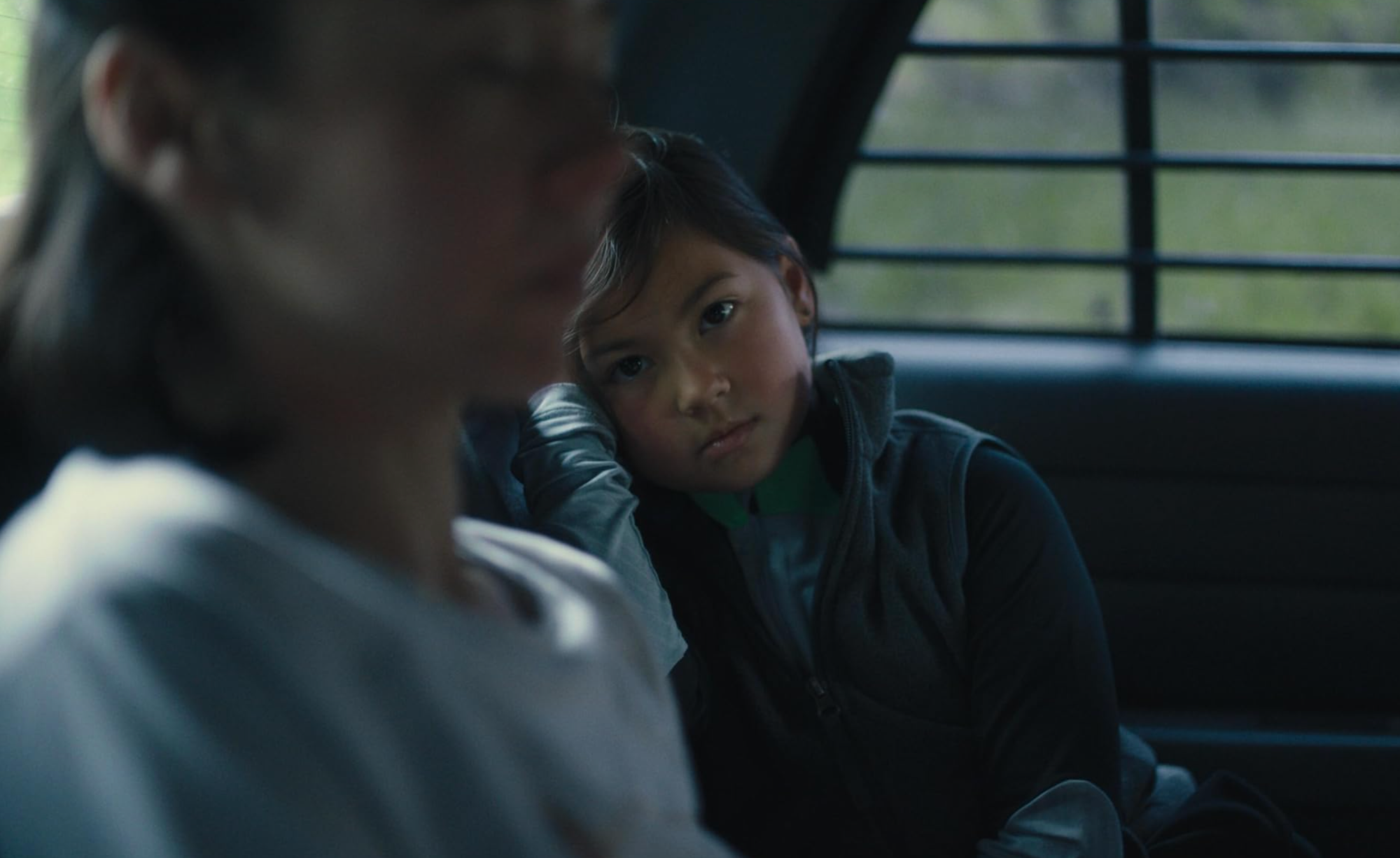
The film centers on eight-year-old Josephine, who accidentally witnesses a violent crime in Golden Gate Park. What follows is not a procedural or a courtroom thriller in any traditional sense, but an intimate portrait of what happens after violence enters a child’s life.
Josephine begins to act out, lashing out physically and emotionally as a means of self-protection. Her parents, played by Channing Tatum and Gemma Chan, struggle to find a way forward, both for their daughter and for themselves, as their marriage and belief systems begin to fracture under the strain.
This is a very, very upsetting film, and that discomfort is the point.
Josephine plays like Come and See for contemporary parents, offering a harrowing look at violence and its aftermath through the eyes of a child who cannot yet process what she has seen. I was in awe of, and appropriately shaken by, de Araújo’s Soft and Quiet back in 2022, and I made the mistake of assuming this would be more tempered, especially with the presence of a major star like Tatum.
It is not.
It is just as brutal and sobering, all the more impressive because so much of its emotional weight rests on the shoulders of a child actor.
Mason Reeves delivers an unbelievable acting debut as Josephine. Her performance is quiet, raw, and painfully honest, capturing the confusion and rage of a child whose sense of safety has been irrevocably damaged. Reeves has the kind of screen presence that elevates everyone around her. In scenes shared with seasoned actors, she never fades into the background. Instead, she pulls focus simply by existing within the frame, her eyes constantly searching for answers no one can give her.
Channing Tatum, meanwhile, gives one of the best performances of his career. We really do need to have the Channing Tatum conversation.
Year after year, his script selection continues to surprise, and here he is devastatingly present in the moment, even when facing an impossibly horrific situation as a parent. His performance is all restraint and quiet desperation, and his final scene absolutely destroyed me. It is a reminder of how powerful he can be when he allows himself to sit in discomfort rather than push toward likability.
Gemma Chan is equally strong, particularly in the early moments where the weight of the situation crashes over her in real time. Together, these performances create a portrait of parenting that feels painfully authentic.
This film shows us a glimpse of how difficult it is to be a parent, especially when the outside world intrudes in ways you cannot control. Is it even possible to not feel the weight of the world on your shoulders at all times? The film understands that the real terror is not just what happens to Josephine, but the realization that her parents do not have all the answers.
De Araújo is a very loud filmmaker, and after two films, I am still not sure I fully connect with her style. That said, the filmmaking here is undeniably powerful. She captures the psychology of a child with striking clarity, often placing the audience in Josephine’s emotional headspace rather than offering easy narrative signposts.
Cinematographer Greta Zozula is a perfect match for this vision, crafting an anxious, claustrophobic atmosphere that mirrors the characters’ internal states. I also appreciated seeing parts of San Francisco that rarely make it to the screen, grounding the story in a lived-in reality.
I do have frustrations, which I will mention without spoiling specifics. At times, the parents repeatedly fail to do what feels like the best thing for their child, and it can feel as though these choices exist to force additional conflict. More significantly, the ending did not fully land for me. It felt unearned and overly simplistic, suggesting a resolution I simply did not buy, especially given the complexity of the trauma explored.
Even with those reservations, I would still highly recommend Josephine. People will come away feeling differently than I did, and the film’s power is undeniable.
This is a brutal meditation on trauma, the failures of systems meant to protect, and the terrifying reality that sometimes justice does not heal what has been broken.
One of those films that hits hard while watching and then twenty times harder once you leave the theater, Josephine is a devastating study of a girl learning to live with trauma far too young. Powerful in every way.
In theaters Dec 4th.
*Feature image: Josephine (Sumarian Pictures)