On Sandboxes and the Soullessness of Generative A.I.
Early on in the press tour for The Odyssey, two-time Oscar winner Christopher Nolan was asked about generative A.I. in film. If you’ve caught even a glimpse of the writer/director’s latest, which recently became his highest-grossing movie of all time, you can probably guess where he lands.
“I’ve never seen a more rapid wholesale dismissal of a supposedly foundational jump in technology in my lifetime,” he told The Telegraph, later referring to the technology—and the things it generates—as “A.I. slop.”
“After years of driving towards heavily virtual environments,” he added, “we’re seeing a renewed interest in more tactile, more real forms of storytelling.”
Tactile. Real. Storytelling.
Everything generative A.I. isn’t.
Let’s go back to the beginning. There’s a reason so many kids sat in sandboxes with Marvel toys, or in their bedrooms with Legos and dollhouses, and created the pre-school equivalent of lore and myth. Even as children, there’s an understanding that real, tactile storytelling involves doing things ourselves, not asking someone or something else to do it for us. Kids’ imaginations are expansive but nascent, still limited by the toys their parents bought them as birthday gifts, yet they gleefully use said gifts to create entire worlds. While they are no doubt heavily influenced by the ingredients of what they’ve seen—be it Bluey, K-Pop Demon Hunters, the latest Spider-Man, or all of the above—they bring their own flavor to the creative cookout.
Parents don’t tell their kids, “This is what you should create.” Kids tell their parents, “Watch this!” And they do it with pride. However nonsensical, their imaginations are badges of honor.
Decades later, a subset of these kids-turned-adults, whose imaginations tragically stopped evolving, have now reverted back to a sad mutation of that childlike state. If toxic nostalgia had a mascot, it would be generative A.I., which seemingly solely exists to pump out zombified versions of yesteryear’s zeitgeist. So many A.I. videos are some iteration of “Wolverine vs. Batman,” or animated fruits causing drama. (No, I’m not joking. ‘Fruit Love Island’ amassed hundreds of millions of views, and led The Wall Street Journal to declare, ‘AI Entertainment is Here to Stay’ in a March 27, 2026 story. 'Fruit Love Island' ended one day later.)
Paradoxically, these technological sandboxes and dollhouses may be bigger in scope, but creatively, they’ve never been emptier. They’re saying nothing and doing even less.
The 15-second, viral “fighting” clip of Tom Cruise and Brad Pitt, which was generated via Seedance 2.0 and uploaded earlier this year, is essentially a soulless version of what those kids were doing in those sandboxes all those years ago. What if we made these characters fight? Hilariously, there are no characters in this video. They’re artificially generated actors with familiar likenesses, who fight for some unspecified reason. These so-called “creations” are pawned off as genuine stories, and, we’re told, made with tech that will up-end the industry. Generative A.I., though, is a regurgitation of a facsimile of a copy. It takes what’s already been done and presents it as a cutting edge example of how this generator is a democratized tool for artistry.
But here’s the truth: inspiration and imitation are on opposite ends of the artistic spectrum. You simply can’t be creative without looking ahead, and those tools exist exclusively to look back, scanning the achievements of actual artists. They take this prior style, these previous characters and that old idea, stuff them in a blender, pour out the goop, and deliver it with a demand for praise.
Academy Award-winning director Guillermo Del Toro said it best when he offered, “Creation is things that have never been done.” And the goop that’s poured out from that blender? It ain’t artistic creation. It’s creative masturbation. A solo effort in service of an instantly-gratifying piece of forgettable, mundane mediocrity. It distorts the inventive process in every conceivable way, and as a bonus, it does so with the unauthorized scraping of someone else’s work, a form of digitized theft.
“Hollywood is cooked,” goes the familiar refrain, almost every time someone, somewhere, posts an A.I.-created clip. As Logan Roy famously declared, you are not serious people. Let’s take a step back and look at Hollywood’s output in 2026. We just had the highest-grossing summer in box office history, led by the newest Spider-Man and Nolan’s aforementioned The Odyssey. “Well, this tool is for creators who don’t have hundreds of millions of dollars at their disposal!”
Okay, well, Obsession was made for around $750,000, en route to a global haul of more than $500 million. Backrooms cost $10 million and made a total of almost $400 million worldwide. Even the recent Buddy, released domestically at the end of August and produced for ~$3 million, has already grossed more than five times its budget. Like Obsession, it made more in its second weekend than it did in its first. Perhaps most importantly: none of those films used generative A.I.
Making things isn’t supposed to be easy or quick. Sometimes, it’s downright torturous! Horror gurus will remember that a little more than half a century ago, Stephen King threw away the first three pages of a novel he was toiling over, because his frustration reached a boiling point. His wife later found those pages, rescued them, and convinced King to forge ahead. She even offered to help him. The creative process can quite often force us to embrace our worst demons of doubt, but when the better angels of our own confidence eventually reemerge (sometimes with the help of a literal angel in our better-halves), there’s a refreshing clarity that emerges along with it. Namely, the clarity of pure, authentic creation.
(King tossed those pages in 1972. He would take his wife’s advice, finish the book and release it in 1974. It was his debut horror novel, Carrie.)
Don’t get me wrong. There’s no virtue in getting so fed up with your artistic output that you trash a novel in progress. What is virtuous is caring that deeply about your output. Having a program, or a piece of software, or an algorithm automatically generate your work is the opposite of that artistic instinct. The thrill of creation lies in the oftentimes time-consuming, maddening process it takes to bring it to life. If the worthiness of the art we create is commensurate with how much of ourselves we put into it, then the A.I. slop factories that the hucksters and tech titans so desperately want to push on us are destined for failure. Their soullessness becomes more obvious with each update, because it continues to confirm what we already know: their output is fueled by the past, not pointed toward the future.
And if that is the case, if the sheen of these new sandboxes is mere mirage, then perhaps the real sandboxes will remain intact for at least one more generation, and the tactile, organic ingredients of imagination will persevere.
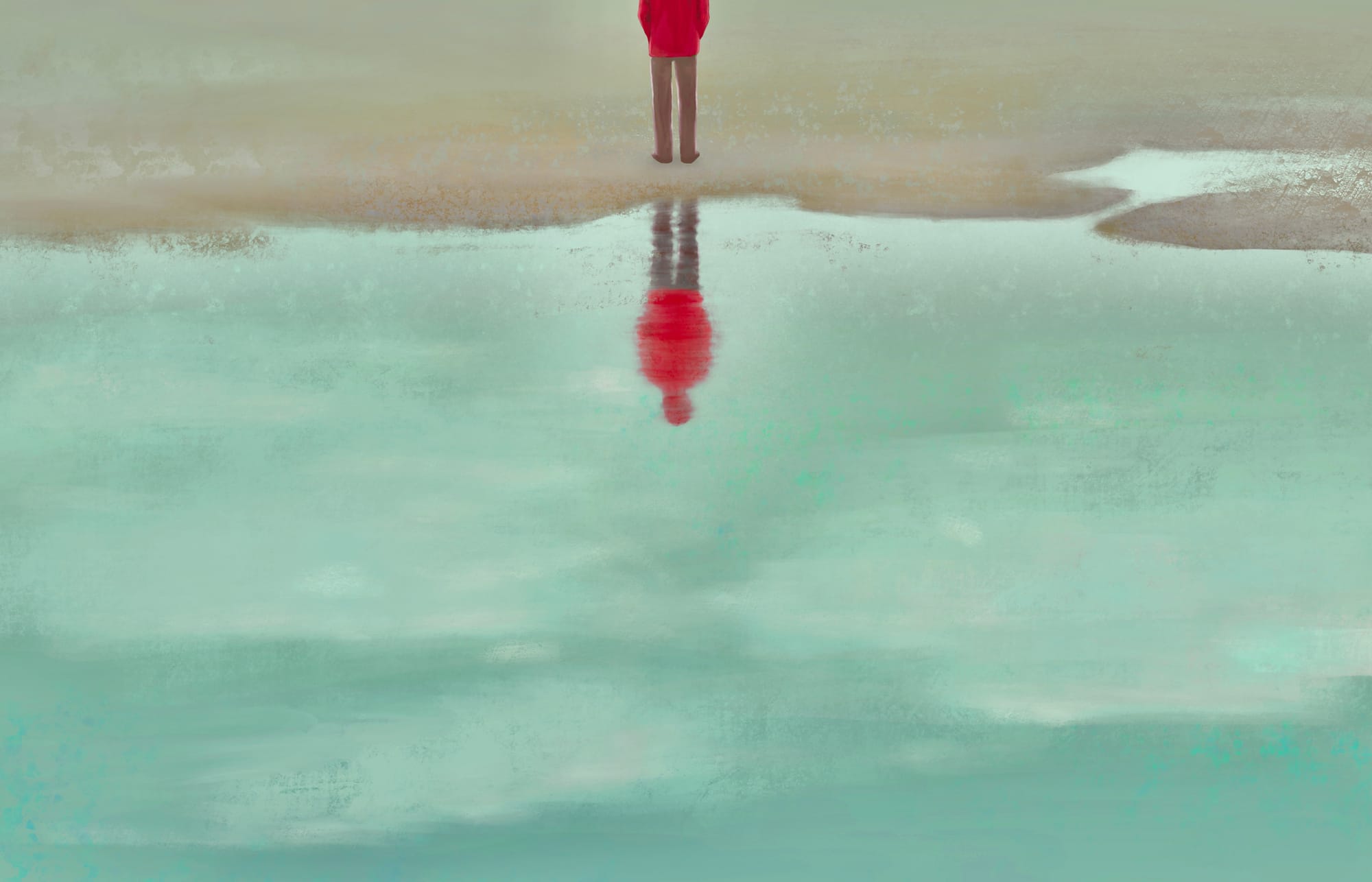
*Featured image by Jorm Sangsorn (Adobe)