The Medium is the Message
Advice to the distracted creative.
Five years on from the onset of the first COVID lockdowns, it’s worth reflecting on a grueling half-decade for the film industry. As lockdowns shuttered movie theaters and brought productions to a halt, they also changed content consumption patterns as people remained at home, streaming video to their personal devices. Then, AI emerged as an apparent rival to human creators—which was followed by a lengthy writers’ strike, changing production patterns as the streaming boom fizzled out, and, most recently, devastating Los Angeles wildfires that massively disrupted the industry.
The combination of these various forces has altered the entertainment landscape, probably permanently, and have left many struggling to adjust.
As co-founders of a nonprofit that mentors creatives, we’ve weathered these storms, advising writers as they’ve adjusted to new reality after new reality. Despite the breakneck pace of change, we’ve remained resolutely optimistic about the future of the story art, an enduring form of creative expression. We have always told stories to make sense of our experience—and our greatest stories, from Homer’s epics to Beowulf to Shakespeare’s plays, have remained cultural touchstones for centuries, even millennia.
Story is woven so deeply into the fabric of human experience that, as neuroscience continues to demonstrate, our brains are wired to be receptive to it. The particular forms of storytelling may evolve, as they always have—but storytelling is not going away.
When our writers ask for guidance in navigating an unpredictable, uncharted marketplace for new content, we help them in practical ways to rework their writing samples, hone their pitches, or reboot their story concepts. And we routinely give one piece of advice that some find counterintuitive—put away your phone, at least while working.
Many younger writers often push back, trained to believe that a phone, and the world of connectivity and self-promotion it enables, are vital to success in a rapidly evolving industry. FOMO, or the fear of missing out, is strong. Nobody wants to miss a potentially career-changing call or text, or feel “out of the loop.”
But we do ask writers to consider what their phones may be doing to their focus. Younger people, often on their phones late in the evening and during the night, are sleeping less than ever before, and undersleeping can lower IQ by up to 10 points. Multitasking can lower IQ by a similar amount. So, if you’re already sleep-deprived while “writing,” and on top of that you have 25 browser tabs open in the background and notifications pinging your phone or smartwatch, your focus is radically compromised.
The following video from the Wall Street Journal shows how our electronic devices help to keep two areas of our brain—the parietal cortex, which responds to distractions, and the frontal cortex, which aims to keep us focused—in almost continual conflict.
Continue reading the full article by Maurice Black on "The Story Rules Project."
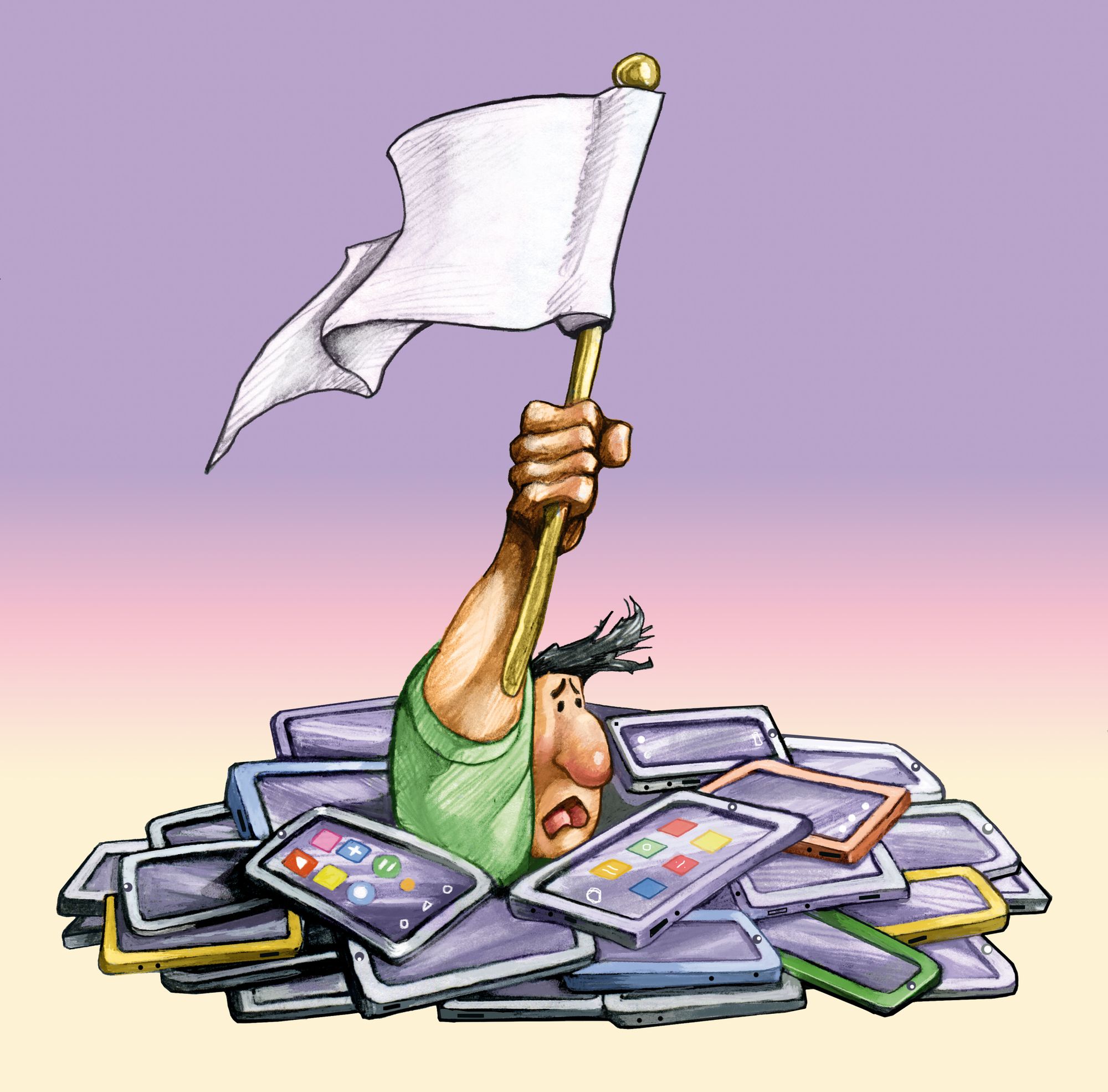
*Feature image by nuvolanevicata (Adobe)