
'I Play Rocky': Going the Distance
A warm, well-cast love letter to the greatest underdog story ever told.
There is a line in the original Rocky that has never stopped working on me: the idea that it was never about winning the fight, but about going the distance. Peter Farrelly's I Play Rocky is a film about the man who decided to go that distance in real life, and whatever its flaws, it carries that spirit in nearly every frame.
It is a warm, funny, sincere movie about Sylvester Stallone refusing to sell the script he wrote unless he could play the lead—a decision that, as the film points out, meant turning down a fortune in 1976 for the chance to be the man he had imagined.
It is also the best two-hour advertisement for believing in yourself that I have seen in a while.
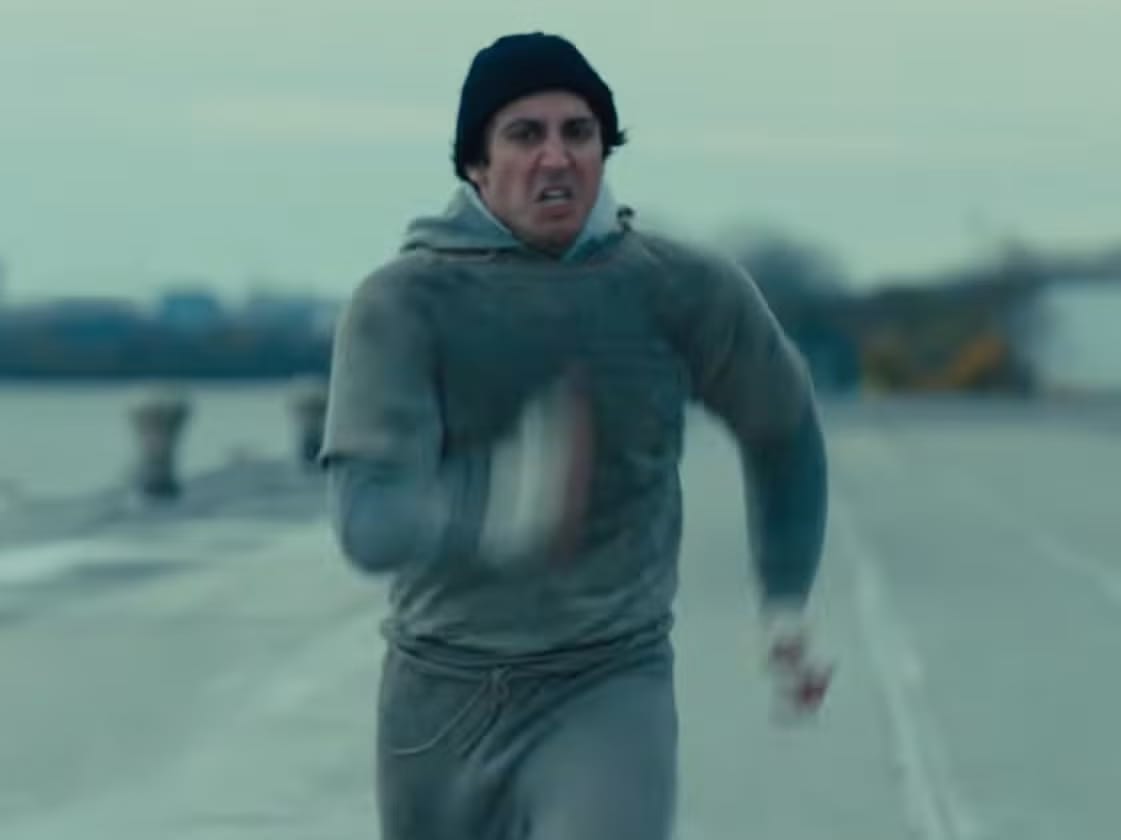
The reason it works, and the reason you should see it, is Anthony Ippolito. He is so good as the young Stallone that at times he is more Stallone than Stallone himself. The slurred cadence, the posture, the tilt of the face, the hungry, slightly bruised optimism: none of it feels like impersonation. It feels like inhabitation.
There were moments where I would have believed you if you told me the production had travelled back in time and simply pointed a camera at the real thing. It is a performance that deserves awards conversation, though in a stacked year for acting, it faces serious competition. Even so, it carries the film through its rougher patches with a sincerity that makes you root for him from his very first scene.
The film opens with real energy and a confident, propulsive pace, though the first half moves at such a clip that I occasionally wished it would slow down and let a few moments settle. Peter Gamble’s screenplay is admirably clear about what each scene means, and while that directness sometimes leaves less room for the emotion to surface on its own, it also keeps the story accessible and easy to follow.
The people around Stallone are drawn with remarkable warmth and decency, which gives the film a generous, feel-good spirit, even if it occasionally leans more toward idealism than realism. These are small quibbles, and they never dimmed my affection for the film.
Because then something lovely happens.
In the second half, the movie finally lets itself breathe. The story begins to come together, the emotional beats start landing with real weight, and everything feels more cohesive and more earned. Stallone sleeping rough, writing in a fever, pitching to a wall of rejections, holding the line on his one non-negotiable demand: this is where the film finds its rhythm, and it is genuinely moving. A montage of Garrett Brown and John G. Avildsen filming the famous run through Philadelphia, set to the Electric Light Orchestra's "Fire on High," is a pure cinephile delight and one of my favorite sequences.
The ensemble around Ippolito is a pleasure. Anna Sophia Robb is a lovely counterpart, and the two have the lived-in chemistry of a couple built on friendship and companionship rather than sparks alone, which is a dynamic I appreciated. Her warmth gives the film its ride-or-die heart.
Tracy Letts is hilarious, Toby Kebbell, P.J. Byrne, and Jay Duplass bring great comic frustration as the people trying to steer the project toward something safer, and the casting of lookalikes across the board is a small joy. A few performances maybe tip toward the campy, but the tone suits a film that is always more crowdpleaser than prestige drama.
Craftwise, the film wears its period proudly. The 1970s costumes have real swagger, the music supervision laces in deep cuts rather than easy hits, and the production never loses its affection for the grit and scrappiness of that era of filmmaking. If there is a limitation, it is that the film is more interested in surface than interior. We see Stallone turn down a life-changing sum of money, but we do not always get to feel the full psychology behind that decision. A different director might have added some grace to certain scenes. Farrelly instead leans into charm, and honestly, it mostly works.
There is a moment I keep returning to, a conversation between Stallone and Avildsen about the difference between a good movie and a great one: that instant when an actor goes somewhere they have never been before and either brings it or does not. It is both the thesis of the film and a quiet challenge to it.
I Play Rocky is a good movie, a nostalgic, big-hearted, thoroughly entertaining one, and it does not quite reach that other place. But how do you catch lightning in a bottle with a film about catching lightning in a bottle? Comparisons to Richard Linklater's Nouvelle Vague, another affectionate making of story about a scrappy production that birthed a masterpiece, are inevitable, and like that film, this one is more interested in love than in rough edges.
The post credits sequence, a clip of Stallone on Johnny Carson describing how Rocky came to be, is the cherry on top. He says, in so many words, that if someone made a movie about how this movie came about, you would not believe it.
And you would not.
That is the film's greatest asset: the story itself is so improbable, so full of stubborn belief and long odds, that even a lightly told version is irresistible. For anyone who has ever sat with a script nobody wanted, or a dream that everyone told them to trade for something safer, this film feels like a hand on the shoulder.
I Play Rocky may not change cinema. It will, however, send you out of the theater feeling lifted, with a smile on your face and the Bill Conti theme looping in your head. See it for Ippolito, see it for the nostalgia, and see it for the reminder that the best underdog stories are the ones that actually happened.
Sometimes going the distance is the whole point.
*Feature image: Rocky (ONE Media)