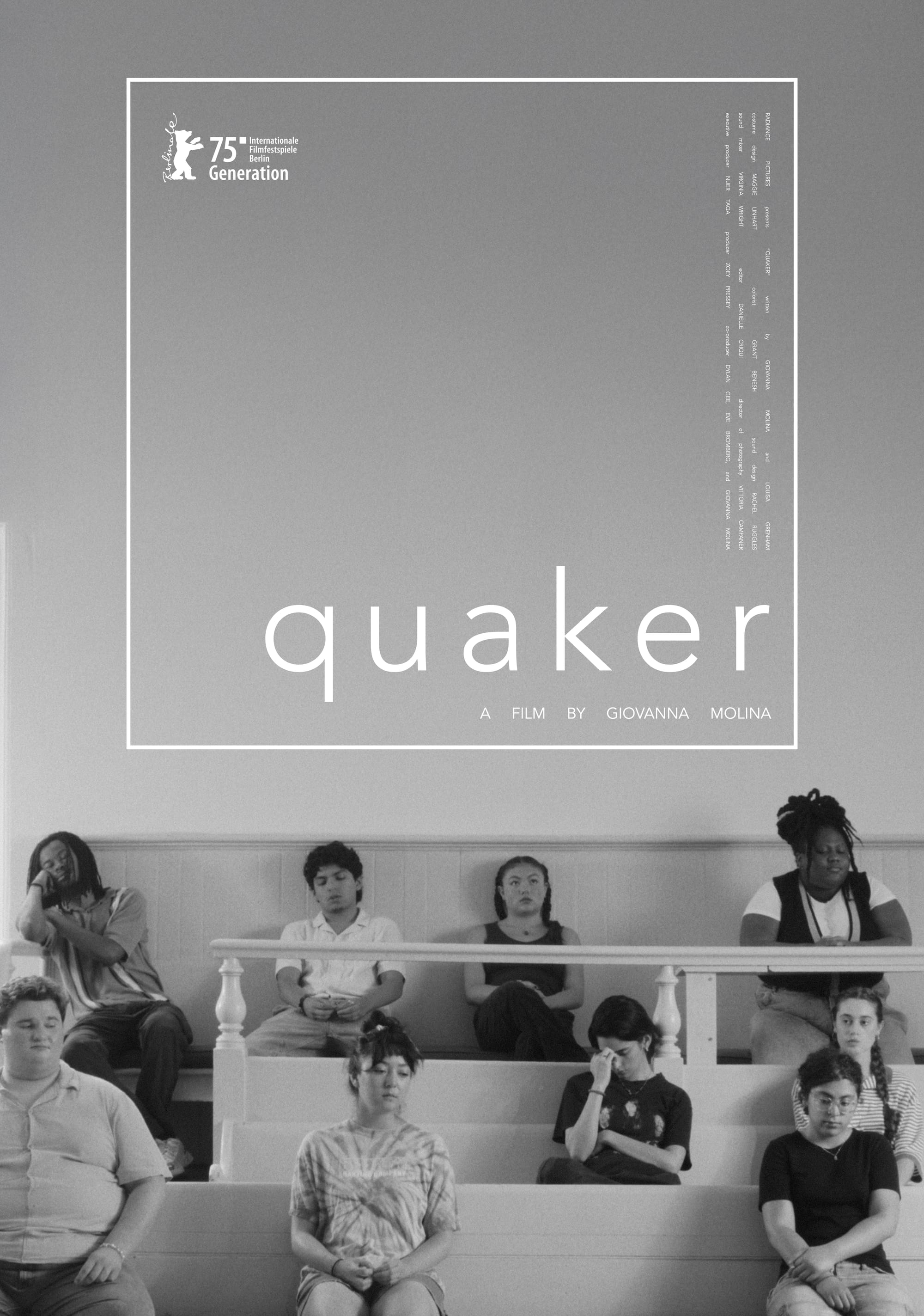
"Quaker" by Giovanna Molina
Most of you don't know what a Quaker is.
Or a Quaker school.
The mention of "quaker" for those on the West Coast means something entirely different ... (that's a Pacific Rim joke—bear with us).
For filmmaker Giovanna Molina, it's something personal:
"When I got the idea to make Quaker, I was living primarily in Los Angeles where there are very few people who know about the Quakers—Quakers are mostly concentrated on the East Coast, particularly in Pennsylvania."
But broad unfamiliarity on a topic is a breeding ground for ripe cinematic subject matter.
Giovanna's background attending a Quaker school started coming up in conversations, and to her surprise, people were fascinated.
"With politics and our country in such turmoil, turning to making a film inspired by Quakerism—which values peace, equality, and community—felt right. I was lucky to grow up with a space that allowed me and my classmates to speak our ideas freely and be heard—even if those ideas weren’t always shared. The core of this film aims to get across that: community comes from owning up to how you feel and listening to others."
And the result here is a mediative and thoughtful short film that proves how immersive a piece like this can play, even without prior knowledge of how Quakers or Quaker meetings work. The aesthetic helps in introducing this "foreign" or ostensibly "dated" idea, as Giovanna notes:
"The process of making the film was about looking back on a time in my past that I'm quite removed from ... like looking back on a memory ... and I quickly came to the idea that the film should be in black and white to match the feeling of flipping through old yearbooks, or looking at my high school darkroom photography prints."
She also hoped to play with the stereotype that Quakers are austere. Buttoned-up.
"We start with these black and white portraits of students sitting in silence, which conveys a serious tone, but as the students speak, we realize they’re normal, goofy, modern teens trying to figure out who they are. Coincidentally, around the time of developing the film, I had turned my phone screen to black and white to be less addicted to it, so I was seeing the world through a black and white phone screen, which may have subliminally informed this decision."
There's a moment in the film where a girl drops some hard truths ... if that’s not the most universal thing we can all empathize with. But at that stage, for us outsiders, it stops becoming a story about a Quaker meeting and more about the superficiality and disingenuousness in our relationships with friends and acquaintances. Like how some us put on this veneer for the sake of social acceptance, or conflict avoidance, or what have you. The resonance hits us hard, and we switch from b&w to color.
"There’s something inherently superficial about closing a chapter of your life," Giovanna explains. "A normal instinct is to think of it with rose-colored glasses, especially when finishing high school. Quaker meetings have this confessional quality I wanted to play with, so I wanted to push the characters to their limits of what they were willing to confess—letting sentimentality, embarrassment, and resentment all have space in the film ... A lot of the things she says aren’t necessarily wrong, but they also aren’t coming from a kind place ... Is it really too bad to try to close a chapter positively? We step into color in the last shot to signify that all these characters are moving on to a new chapter—their past will remain in a black and white memory, and their futures are all equally available to them."
Which leaves us with perhaps the most universal takeaway:
"My hope is that the experience of watching the film takes you back to who you once were and who you wanted to become."
Quaker is co-written alongside Louisa Grenham, featuring a mixed cast of trained actors and those who attended Quaker school with Giovanna. With gorgeous visuals from cinematographer Vittoria Campaner to highlight an effective and memorable short.
Odds & Ends
- Giovanna is often asked which one of the characters is closest to her. "I’ve put myself into a lot of the characters, but the one people don’t expect: the coughing kid." She had a traumatic Quaker meeting in 5th grade where she had a coughing fit and didn’t know if she should leave or ride it out.
- Perhaps surprisingly, Giovanna is not a Quaker herself but attended Quaker school for 14 years, sitting in on well over 500 (!) meetings.
- They filmed in the Quaker meeting house Giovanna went to growing up. An old teacher and classmate of hers are in the cast. She wanted it to come across like "a strange reenactment of my memory of high school (even though the messages shared throughout the film are fictional or come from some of the actors’ lives)."
- Watching the short in a theater was critical, in that Giovanna wished to "force the audience to sit within silence, as if they’re participating in the Quaker meeting on screen. Rustles, coughs, and laughter in the theater feel like extensions of what appears on screen." Clever, in that "the realism of the film allows the world to transcend the screen and fill the theater—or wherever you happen to be watching."About Giovanna Molina
About Giovanna Molina
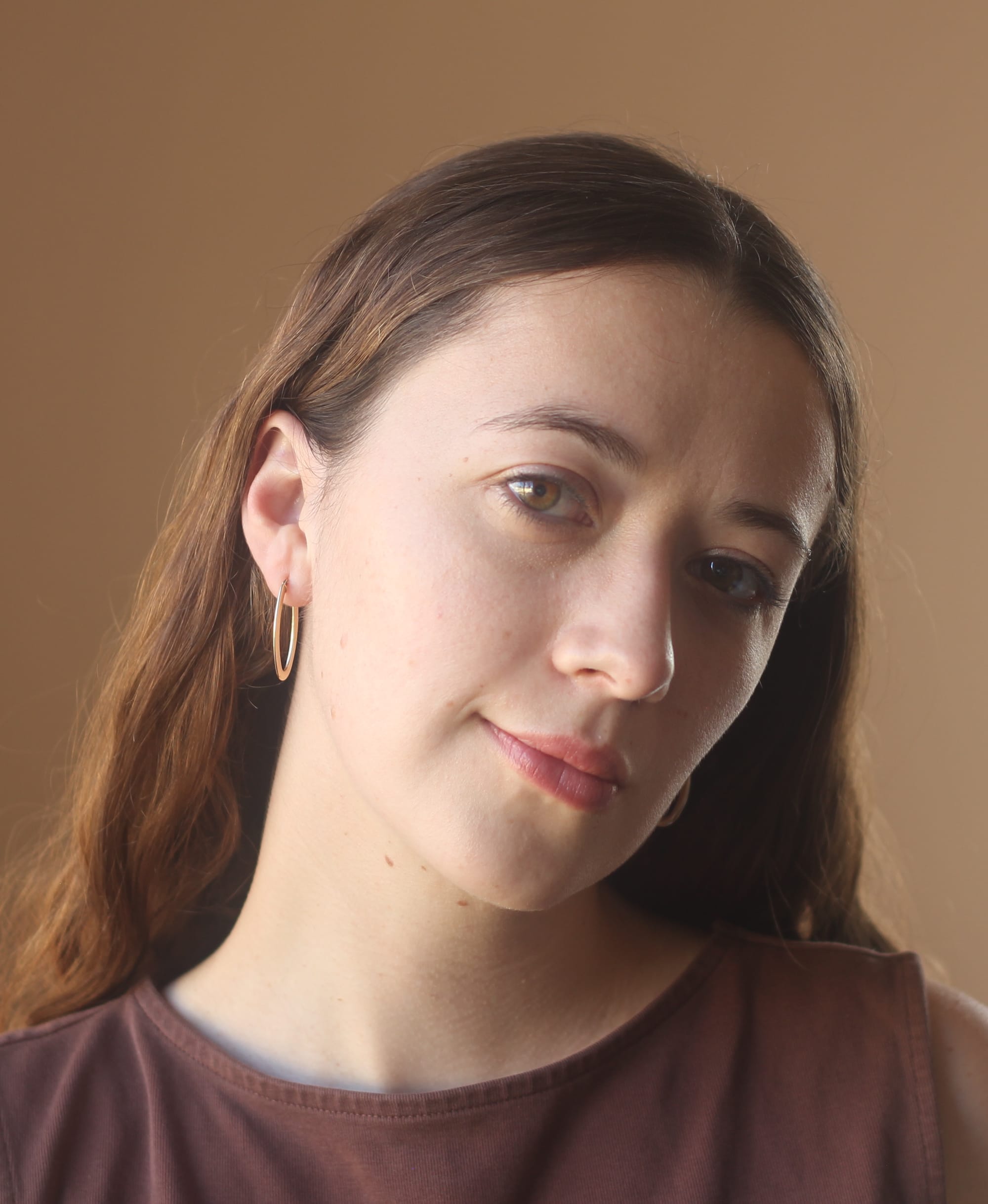
Giovanna Molina is a Mexican-Italian-American filmmaker from Brooklyn, NY. Her work explores stories of isolation, belief, and surrealism within a female coming-of-age context. She has received grants and fellowships from Sundance, PBS, The Future of Film is Female, and the Saul Zaentz Innovation Fund.
Her film Quaker had its world premiere at the 75th Berlin International Film Festival and won Best Narrative Short at Bend Film Festival.
She holds an MFA in Directing from the UCLA School of Theater, Film and Television and a BA from Johns Hopkins University, with degrees in The Writing Seminars and Film & Media Studies.
Her debut feature Kismet, starring Jena Malone and Suzanna Son, is in post-production.