
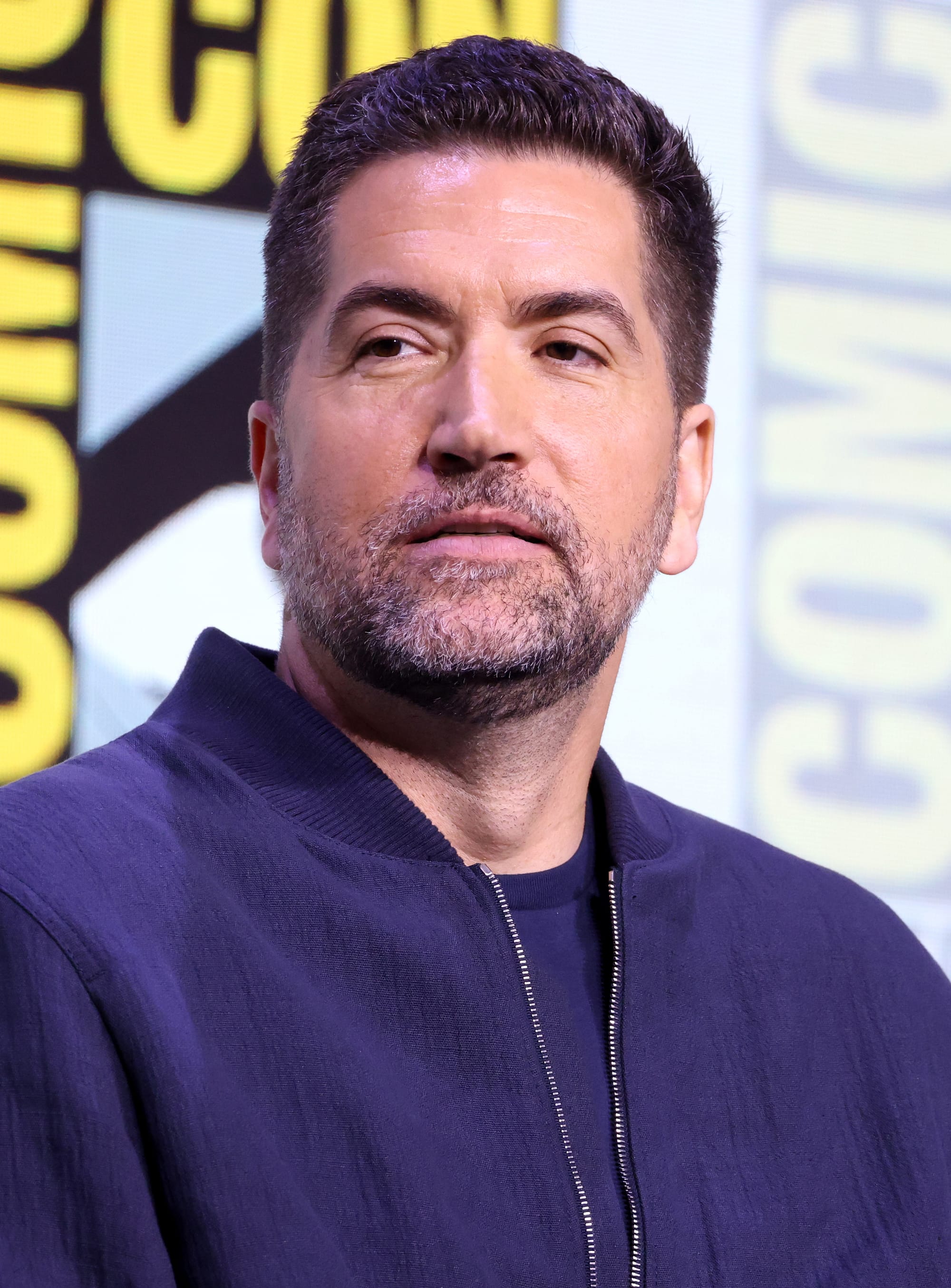
Heart Inside the Spectacle: A Conversation with Writer and Filmmaker Drew Goddard
Writer and filmmaker Drew Goddard on the emotional core of genre storytelling, adapting Project Hail Mary, and the thrill of stepping into the world of The Matrix.

There are certain writers whose fingerprints you recognize before you even see the credit. A rhythm. A warmth. A refusal to let genre swallow the human beings living inside it. For as long as I have been watching film and television, that fingerprint has belonged to Drew Goddard.
I first encountered his work through "Buffy the Vampire Slayer," catching episodes out of order, then rewinding, then watching again just to trace what made it feel so alive. Later came "Lost," Cloverfield, Cabin in the Woods, The Martian, and Project Hail Mary, and through it all, in Daredevil, in World War Z, in Bad Times at the El Royale, the same instinct kept surfacing: people matter more than plot.
Emotion is not decoration. It's the point.
Project Hail Mary, six years in development, directed by Phil Lord and Christopher Miller and starring Ryan Gosling and Sandra Hüller, arrived earlier this year and delivered on every one of those instincts. The film has been on streaming for a couple of months now, and the conversation around it keeps deepening rather than fading, which is exactly what happens when something lands the way it was supposed to. Goddard has also stepped into the world of The Matrix, a mythology he describes as both terrifying and joyful to inhabit, which tracks perfectly with everything his career has been about.
I spoke with Drew about the film, about genre, about craft, and about the stories still pulling him forward. Now that the world has had months to sit with Project Hail Mary, returning to that conversation only makes it richer.
It turned out to be as illuminating a discussion as any fan of his work could hope for.
*This interview has been edited for flow and clarity.

Rahul Menon: You started out as a fan of "Buffy the Vampire Slayer" before eventually writing for the show. What was it like stepping into a writers room for something you had once loved purely as an audience member?
Drew Goddard: Honestly, it was terrifying. And yet I kept telling myself: they cannot take love away from me. I knew I loved the show, and I had tremendous respect for those writers. I was confident they would see I was legit, that I wasn't just passing through. I was someone who genuinely loved what they were doing. What I was not confident in was whether I had the writing skills to hang with them, because that was a murderer’s row of a writing staff. But thank goodness they were all so kind and nurturing. They said, here, let us help you, let us teach you. I really could not have landed in a better spot.
RM: You have written across television writers rooms and large-scale studio films. What lessons from the television room still guide the way you approach writing features today?
DG: Two things. First, always have an emotional core to the story you are trying to tell. That was a Buffy 101 lesson. We always said nobody cares about the MacGuffin, or the witch curse of the week, or the monster of the week. None of that mattered if it didn't line up with what Buffy was going through in her own life. I have held onto that across everything I have done since. And then second, you just learn structure. In TV, every eight days you are writing sixty pages. That is an extraordinary training ground for knowing how to shape a story for the screen. I look back and thank God I started there. It was everything to me.
RM: When people talk about modern genre storytelling, your name often comes up because of how comfortably you move between horror, mystery, comedy, and drama. What draws you to stories that live between genres rather than staying neatly inside one?
DG: I honestly don't know. I just know that I'm drawn to it. Even looking back as a kid, it was stuff like Douglas Adams, where you are asking yourself: is this sci-fi or is this a comedy? Monty Python is comedy first, and yet they took whatever genre they were working in completely seriously. I think part of it is that we are all three-dimensional people. Our lives are comedic, dramatic, happy, sad, thrilling, boring. All of those things are true at once. And as an audience member, I'm genuinely thrilled when a dramatic movie goes in a comedic direction or vice versa. I don't know that I ever want to do it any other way.

What strikes me about Goddard talking about "Buffy" is that the terror and the love arrive at the same time, inseparable from each other. That, it turns out, is exactly how he has approached every project since. The fear of inadequacy standing next to something you love too much to fake your way through. It's also the most honest description of what it feels like to start writing seriously that I have ever heard.

RM: The Cabin in the Woods is one of my all-time favorite theater experiences. It manages to be funny, scary, and strangely philosophical about why we watch horror in the first place. When you and Joss Whedon were writing it, how conscious were you of balancing the satire with genuine horror?
DG: It would be different depending on who you asked. I would say I was the least interested in the horror part of it, and I don't mean that I was not interested in horror. But the philosophical side was really what I was in. It was not accidental that we were making that movie against the backdrop of the second Iraq War. That was the soup I was writing in. It's a movie about adults making decisions to send young people to their deaths.
I was also less interested in making a scary movie that works once than I was in making a movie you could watch over and over again. The ones that endure are the ones speaking to something deeper. You can feel me as a director, when things get scary, sort of going ... all right, let us have fun with this now.
RM: Your screenplay for The Martian earned you an Academy Award nomination, and now with Project Hail Mary you're once again in Andy Weir’s world. What is it about his storytelling that keeps pulling you back as a writer?
DG: I think he speaks to themes I'm interested in, even though he would say he does not. Andy is very modest about it. We have known each other for over a decade now, and he often says he's just writing popcorn movies. I don't agree with him, and I think that's actually why we make a good team.
I see a very strong strain of humanism in all of his work. And if you look at my own work, the thing that connects all of it is humanism. I'm not interested in misanthropic storytelling. Andy’s stories do not tend to have villains. The antagonist is circumstance.
The Martian is about people rallying to save somebody. Hail Mary is about finding hope through compassion and empathy. And all of that is wrapped around a deep love for science and scientists, which I share. So I think those two things, a love for science and a love for people, are what keep pulling me back.
RM: Project Hail Mary has been one of my favorites of the year, and now that it has been on streaming for a couple of months, it feels like the conversation around it keeps deepening. What has it been like watching the audience actually find the film, and does the response change how you think about the six years you spent making it?
DG: It has been genuinely moving to watch. When Andy first told me he had another book, I was a little worried. I didn't want to just repeat The Martian. I wanted there to be a real reason. And then I read it, and it was speaking to things that really connected with me right now. Personal sacrifice. Finding salvation through compassion and empathy. Learning to see the universe through someone else's eyes. And it felt like, oh, this is what I want to spend my time doing. Because when I commit to something, I know it's going to be a while.
I have been working on this film for six years. It's not enough to think, "that's a cool story," or "that was a good read." It needs to be about something that justifies years of your life. Seeing how audiences have responded to exactly those themes, the things that drew me to the material in the first place, makes those six years feel very worth it. Andy's writing keeps giving me that.
Six years on a single project. That number keeps surfacing in his answers, and it's worth sitting with. Goddard is not describing a grind, it's the kind of commitment that only happens when a project speaks to something you genuinely need to say right now. That distinction, between genre as craft and genre as conscience, is what separates his work from the pack.

RM: Phil Lord and Christopher Miller were directing, and Ryan Gosling led the cast. Now that the film is out and audiences have seen what that collaboration produced, can you talk about what it was actually like to write into that partnership? Does the process change when your collaborators are that specific?
DG: It begins in the same place, but it does change. I have known Chris and Phil for two decades and love their work. There is a real reason we all respect each other, and it's because they're also coming from a place of humanism.
No matter the genre, their work loves people.
Their process is also very different from mine. I'm methodical. I spend a lot of time outlining and figuring out structure before I write, which comes from my TV training. Chris and Phil come from the opposite end. Fail early, fail often, keep iterating.
But part of being a good screenwriter is knowing what the collaboration needs. For the first couple of drafts, it was traditional. But as we got closer to production, they started riffing. Ryan is a great improviser. Chris and Phil are great improvisers. I would get back pages and pages for a single scene, things I never anticipated. And there is something genuinely delightful about being surprised by your own material. I think audiences can feel that energy in the final film.
RM: You are now stepping into The Matrix, one of the most influential science-fiction franchises ever made. As a storyteller who clearly loves genre, what does it feel like to engage with a mythology that big?
DG: It's funny that we started this conversation talking about "Buffy," because stepping into The Matrix feels very similar. It's something I love. It started from a fan place. I love Lana and Lilly’s storytelling, not just the Matrix. So when the question came, I just sat up and thought, yes, that sounds thrilling and interesting and joyful and heartbreaking. All of the things that make you want to devote your time.
I think about time as a precious resource.
Life is finite, and I want to be thoughtful about where I immerse myself. It's like getting to take my dream college class. The work of Lana and Lily Wachowski is that class, and I am both the teacher and the student. It's exciting and terrifying at the same time, exactly like walking into that "Buffy" writers' room on day one. I love throwing myself into situations that seem impossible, as long as I love the work. If I didn't love the work, it would just be terrifying. But I do.
RM: Looking back across "Buffy," "Lost," Daredevil, The Martian, The Cabin in the Woods, and everything since, what has surprised you most about the path your career has taken?
DG: Honestly, I'm surprised I have a career at all. Especially at the beginning, everyone just wanted me to do the thing I had already done. After Cloverfield, it was just keep making giant monster movies. After Cabin, it was keep doing horror. And I just kept saying no. I want to do something else.
Part of why I chose this profession is that it allows you to dive into different worlds over and over, and it would be genuinely boring for me not to do that.
I am aging, which means I'm a little bit different each year than I was the year before. And it's really important to listen to who you are, not who you were. You'll see that theme run through a lot of my work. A love for who we were, but a refusal to let the past define us. Keep changing. Keep looking forward. That has driven my career more than anything else.
RM: If you could give one piece of advice to the younger version of yourself who was just beginning to write seriously, what would you tell him?
DG: You're going to feel very intimidated. You're going to feel that other people have more interesting lives, more experiences, that they know the social rules of Hollywood far better than you do.
Don't worry about it. Because there's one thing you can do that nobody else can do, and that is write your stories. Whatever those stories are, no one else can do your version better than you. Lean on that. Trust it. And be patient. Writing is hard. This is a complicated, volatile career. But if you keep writing, every day you are getting a little better.
I look back and realize I'm sitting here now because I started where young writers were being nurtured, where older writers let me make mistakes. I was screwing up. I was writing bad scripts. I was learning from it. Most importantly: find joy in the writing itself. Even if you're not getting paid, even if nobody is reading it. If you can find joy in just the act of writing, they can never take that away from you. You may not get to control all the other parts of this career, but you can control the joy. And if you can control the joy, you will be okay.

He keeps returning to the word joy. Joyful about The Matrix. Delighted by being surprised by his own material. Having fun when things get scary. There is a generosity underneath it all, a willingness to be moved, to be surprised, to be wrong and let that wrongness generate something better. That quality, being genuinely available to delight, is rarer in Hollywood than it sounds. And I think it's exactly what makes his work feel alive rather than engineered.
When our conversation ends, what stays with me is not any single answer but the word that kept appearing underneath all of them: joy.
Goddard does not talk about his career the way people talk about careers. He talks about it the way someone talks about following a feeling through a series of rooms, each one chosen because it felt genuinely alive rather than strategically correct. "Buffy" because he loved it. The Cabin in the Woods because the philosophical questions would not leave him alone. The Martian because Andy Weir’s humanism matched his own. Project Hail Mary because it was speaking to things he needed to say right now. The Matrix because it terrified him, and terror in the presence of something you love is, for him, the clearest possible signal to say yes.
What runs beneath all of it is the same thread: a deep, almost stubborn love for people. He is not interested in villains. He is not interested in misanthropy. The monster of the week never matters. What Buffy is going through always does.
As a writer, hearing that framed so plainly is both clarifying and quietly reassuring. Underneath all the structure and craft and genre machinery is always the same question: do you love the people you are writing about? Do you care what happens to them?
If the answer is yes, he told me, they can never take that away from you.
I believe him.
*Feature image: Drew Goddard (Photo Credit: Gage Skidmore)