
Little Death, Big Feelings : Jane Schoenbrun's Dazzling Slasher “Reboot” Becomes a Bloody Love Letter to Identity, Desire, and Horror Itself
There are filmmakers who develop recognizable themes over time, and then there are filmmakers who seem to build entire cinematic languages around the questions that obsess them. Jane Schoenbrun belongs firmly in the latter category.
Between We're All Going to the World's Fair, I Saw the TV Glow, and now Teenage Sex and Death at Camp Miasma, Schoenbrun has quietly assembled what feels like a fascinating media trilogy, one deeply interested in the ways our identities become entangled with the stories, images, and cultural artifacts that shape us.
Yet what continues to impress me most is how radically different each project feels. The concerns may be familiar, but the form is always evolving.
Teenage Sex and Death at Camp Miasma might be Schoenbrun's funniest film, their sexiest film, and perhaps their most playful film. It is also one of the sharpest deconstructions of the slasher genre I have ever seen. The premise alone sounds like something dreamt up during a fever induced marathon of horror sequels.
After decades of increasingly ridiculous follow ups, a once beloved slasher franchise called Camp Miasma is handed over to a young filmmaker tasked with bringing it back to life. Seeking inspiration, she tracks down the reclusive star of the original film. What follows is a slippery, surreal descent into a world where memory, fantasy, desire, horror, cinema, and reality begin bleeding into one another.
Schoenbrun starts in territory that feels vaguely familiar, poking fun at legacy sequels, intellectual property culture, and Hollywood's obsession with endless resurrection, before gradually transforming the film into something stranger, richer, and far more personal.
One of the most fascinating aspects of Schoenbrun's work has always been how autobiographical it feels without ever becoming literal. They have spoken openly about wanting to explore finding joy in sexuality after transition, and what is remarkable here is the way that exploration unfolds through the artificial machinery of an eighties slasher franchise.
On paper, that sounds absurd. In execution, it is beautiful.
The film uses horror iconography, reboot culture, and slasher mythology as a vehicle for examining desire, identity, embodiment, and self acceptance. It sounds academic when described out loud, but the film itself is alive with humor, sensuality, warmth, and genuine curiosity. After the emotional heaviness of I Saw the TV Glow, there is something genuinely joyful about watching Schoenbrun have this much fun.
The film's central duo proves essential to making all of this work. Hannah Einbinder delivers terrific work as Kris, the filmmaker hired to reboot the franchise. She captures the nervous energy of somebody who understands media on an intellectual level but is still struggling to fully understand herself. Fast talking, awkward, funny, and deeply vulnerable, she becomes the perfect guide through Schoenbrun's increasingly surreal labyrinth.
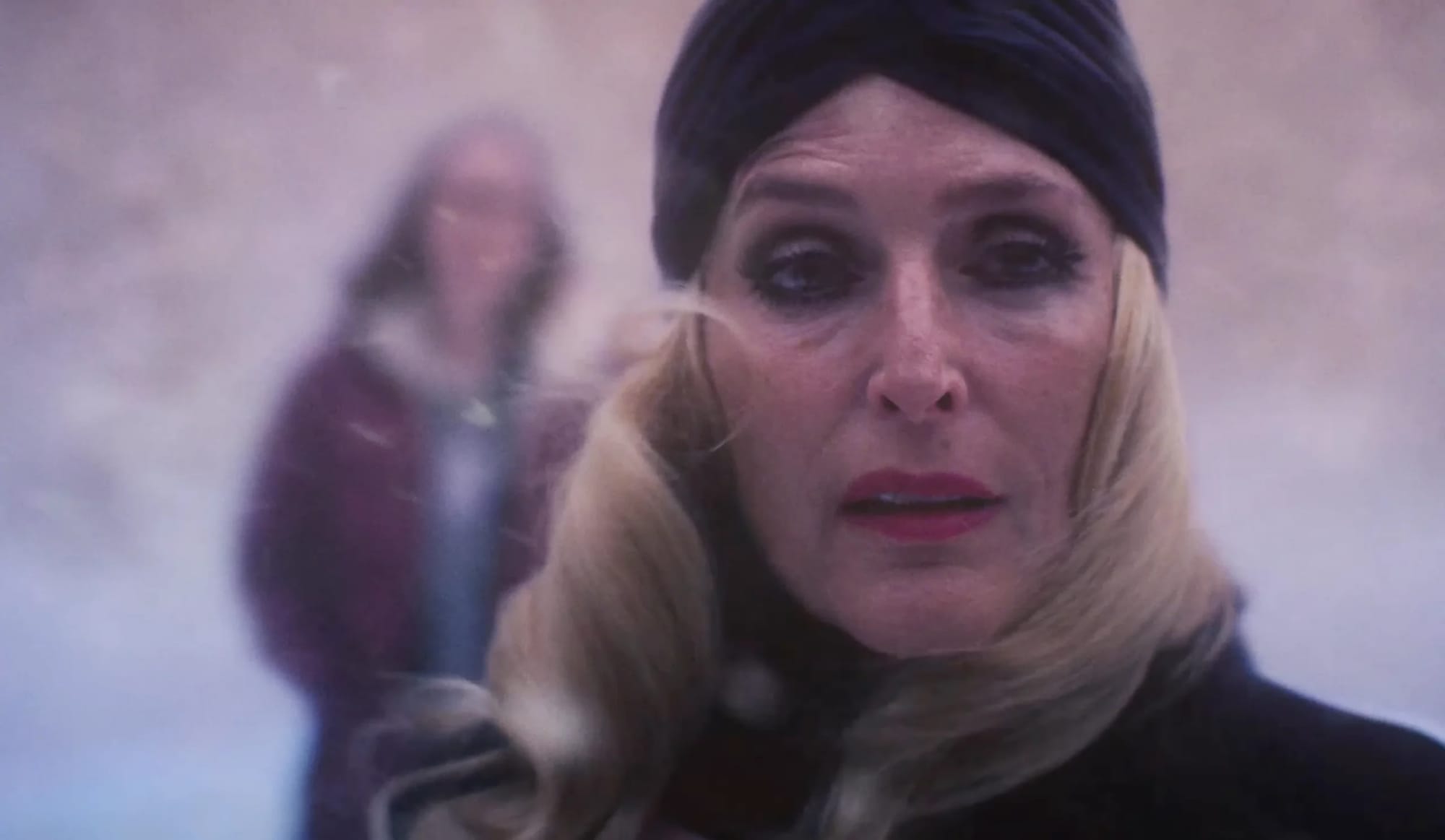
Opposite her, Gillian Anderson is simply phenomenal. She plays Billy, the original franchise star, with the kind of magnetic screen presence that makes every scene instantly more interesting. Part old Hollywood icon, part mysterious recluse, part trickster spirit, Anderson gives one of those performances where you never quite know whether to trust a single word coming out of her mouth. She is hilarious, seductive, intimidating, and endlessly watchable.
What impressed me most was how confidently Schoenbrun balances reverence and critique.
This is clearly a filmmaker who loves slashers. The film understands why generations of audiences have connected with these stories. It understands their power as spaces for fantasy, fear, desire, and even sexual awakening. At the same time, it is unafraid to interrogate the ways those same films have historically portrayed women and queer people.
The result is not a rejection of the genre but a conversation with it. A negotiation. An attempt to untangle personal identity from cultural imagery while also embracing the genuine pleasure those images can provide. It is a delicate balancing act, and Schoenbrun pulls it off beautifully.
Visually, the film is astonishing. There are images here that feel destined to live rent free inside my head for years. Bodies seem to melt into landscapes. Video stores transform into dream spaces. Fiction and reality become impossible to separate.
There are moments where the film feels like In the Mouth of Madness filtered through queer autobiography and slasher iconography. Other scenes feel closer to a hallucination than traditional storytelling. I found myself repeatedly thinking that Schoenbrun is creating images we do not quite have cinematic vocabulary for yet. Images that feel simultaneously nostalgic and entirely new. The visual imagination on display here is extraordinary.
And yes, for horror fans, there is blood. Lots of blood. Ridiculous amounts of blood. Schoenbrun understands that intellectual ambition and visceral pleasure do not need to exist in opposition.
The film is campy, sexy, bloody, weird, and often laugh out loud funny. It embraces postmodernism without ever feeling detached from genuine emotion. It is packed with references and ideas, yet never feels like it is showing off. Instead, everything serves a larger emotional purpose. Even the violence feels connected to the film's ongoing exploration of desire, vulnerability, transformation, and self creation.
That said, Teenage Sex and Death at Camp Miasma is not a film that will work for everyone. It is intentionally slippery. It resists easy interpretation. Viewers looking for a straightforward slasher may find themselves frustrated. Others may find the film's dense web of symbolism overwhelming. Personally, I found that uncertainty part of the appeal.
Schoenbrun has always been interested in discomfort, ambiguity, and contradiction. Like their previous work, this is a film that becomes more interesting the more you sit with it. Rather than providing neat answers, it invites conversation. It challenges audiences to bring their own experiences into the interpretation process.
The soundtrack deserves special mention as well. Every needle drop feels perfectly chosen. The music contributes enormously to the film's hypnotic atmosphere, helping bridge the gap between horror, romance, comedy, and dream logic. Combined with the lush visual design and committed performances, it creates an experience that often feels less like watching a movie and more like falling under a spell.
What I admire most about Schoenbrun is their refusal to make the expected version of anything. In an era dominated by familiar formulas and increasingly safe creative choices, they continue to take risks. They continue to make films that feel personal, vulnerable, strange, and uncompromising.
Teenage Sex and Death at Camp Miasma may be wrapped in the trappings of slasher cinema, but underneath the blood and camp is something deeply sincere. A film about identity. About desire. About the stories that shape us. About learning to separate yourself from the images that once defined you and discovering who you are on the other side.
Wildly inventive, emotionally resonant, visually stunning, and unlike anything else being made right now, Teenage Sex and Death at Camp Miasma cements Jane Schoenbrun as one of the most exciting and singular filmmakers working today.
Horror fans are going to debate it. Queer audiences are going to embrace it. Film lovers are going to spend years unpacking it.
And honestly, what more could you ask from a movie called Teenage Sex and Death at Camp Miasma?
*Featured image: Gillian Anderson, Teenage Sex and Death at Camp Miasma (MUBI)