
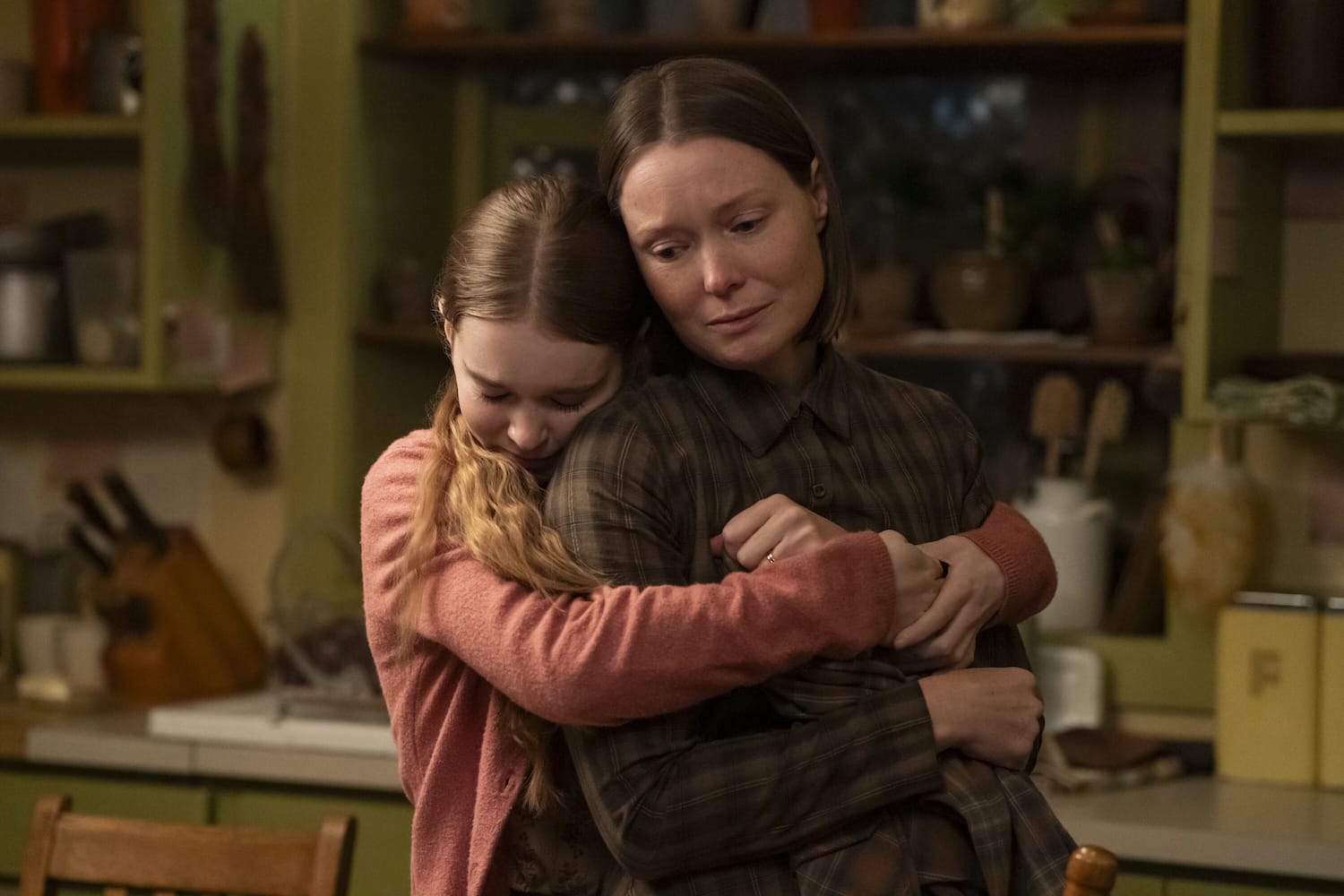
'Carrie': Never Doubt Mike Flanagan's Timely, Devastating Reimagining That Earns Its Place Beside the Original
I will admit to having a moment of genuine skepticism when this was announced. Brian De Palma's 1976 Carrie is one of those adaptations that does not merely stand the test of time but actively grows in stature with each passing decade. Sissy Spacek's performance remains one of the great screen portrayals of adolescent suffering. And the film's visual language, lurid—and operatic and completely specific to De Palma's sensibility—is so embedded in the cultural imagination that attempting to revisit the material felt, at minimum, like an enormous risk.
Why would anyone touch a seminal text after a masterpiece like that?
Having now seen Mike Flanagan's reimagining in full, I can tell you plainly: I will never doubt Mike Flanagan again.
What Flanagan understands, more deeply than either previous adaptation managed to articulate, is that "Carrie" is not fundamentally a horror story. It is a tragedy rooted in a specific failure of love, the damage done to a child by a parent who wants to protect her from the world and instead renders her completely unprepared for it.
The supernatural elements are the metaphor. The real horror is the loneliness of a girl who has been denied the tools to survive ordinary human interaction, and then thrown into an environment where the cruelest ordinary human behavior flourishes.
In 2026, that environment extends far beyond the school walls, and Flanagan knows it. The cyberbullying at the center of this adaptation is deeply disturbing precisely because it is so recognizable, so continuous, so inescapable in ways that the original story could not have anticipated.
The structural decision to open with the aftermath and weave in testimonial interviews throughout, a direct nod to the narrative architecture of King's own novel, is one of the adaptation's finest choices. It creates an almost unbearable dramatic irony from the very first episode. You know where this is going. The question is when, and watching every character interaction with that knowledge sitting in your chest gives the story a melancholic weight that builds and builds without release.
I had to take a mental break midway through because of how relentlessly distressing the material becomes. That is not a criticism. That is the show doing exactly what it is supposed to do.
Summer H. Howell is extraordinary as Carrie. She is not trying to replicate Spacek, nor should she be. Her Carrie is naive in the specific way of someone who has been homeschooled her entire life, sheltered from ordinary social education, dropped into a world whose codes she has never been taught to read. But this Carrie also has a spark, a genuine curiosity, an active desire to understand and participate in the world around her.
There is a scene early in the series involving Carrie and books that genuinely made me tear up. Howell finds the tragedy not in helplessness but in wanting, in reaching, in almost getting there before the world takes it away. It is a star-making performance, and the industry needs to pay attention.
Samantha Sloyan, a Flanagan regular whose work deserves more flowers than it receives, gives what may be the most compelling Margaret White ever put on screen. The key innovation here is that this Margaret leads with love. She is tender, protective, genuinely convinced she is shielding her daughter from a world she understands to be monstrous.
She is not wrong about the world. She is catastrophically wrong about her methods.
That distinction makes her far more tragic and far more complicated than the one-dimensional religious villain of previous iterations, and Sloyan holds every contradiction of the character with extraordinary skill.
Completing the triumvirate of powerhouse performances is Alison Thornton as Chris Hargensen, whose expanded backstory, which reveals the fractured privileged family life feeding her cruelty, is one of the adaptation's most intelligent additions. She makes Chris genuinely interesting and genuinely terrible in equal measure, which is a much harder tonal balance to strike than it might appear.
Flanagan's visual language here is distinctly his own while remaining in conversation with De Palma rather than simply replacing him. The shots are composed with the meticulous care and atmospheric density that characterizes his best work, and the music supervision is exceptional throughout, with song choices that do not merely underscore scenes but actively define them. The editing creates a rhythm that carries the tonal shifts between high school drama and supernatural horror without the seams showing.
This material is demanding in terms of genre, requiring the series to operate simultaneously as social realism and as myth, and the craft holds that duality in place throughout.
The prom sequence, which any adaptation of this story lives or dies by, is handled with a formal intelligence that honors the source while finding something genuinely new. Without detailing specifics, Flanagan's decision to interrogate the sequence through a structure borrowed from Rashōmon gives the familiar beats an analytical clarity that King's original text always pointed toward and no previous adaptation had fully realized.
It reframes what we think we know about the story and, in doing so, illuminates what the story was always actually about.
Matthew Lillard, in the midst of a remarkable career resurgence, delivers his most layered and moving performance as Principal Grayle. It is the kind of supporting turn that quietly shapes everything around it, and it is deeply satisfying to watch an actor of his gifts given material equal to what he can do with it.
The extended ensemble, which gives real texture and individuality to characters who exist as types in the source material, reflects Flanagan's consistent belief that every person in a story deserves to feel like a full human being.
The series is not without minor reservations. A new character introduced to help Carrie develop her powers feels like the weakest addition, and the resolution will likely divide audiences in ways that the show's creators must have anticipated. But these are small complaints against something that achieves something genuinely difficult: a reimagining of a beloved text that does not diminish the original and earns its own place beside it.
Flanagan has found in "Carrie" both a confirmation of everything he does best and a story that the current moment desperately needed someone to tell.
Fifty years after De Palma, the story has not dated. It has only become more urgent.
*Featured image: "Carrie" (Amazon Prime)