Jack of All Trades: An Interview with Julia Morizawa
Julia Morizawa is a multi-tool talent with over 20 years of experience in film, television, new media, theater, and fiction podcasting. Her script Something About the Tide placed in Script Pipeline's Screenwriting Competition, and her short film Dragonfly placed in the top 5 of Film Pipeline's Shorts Competition.
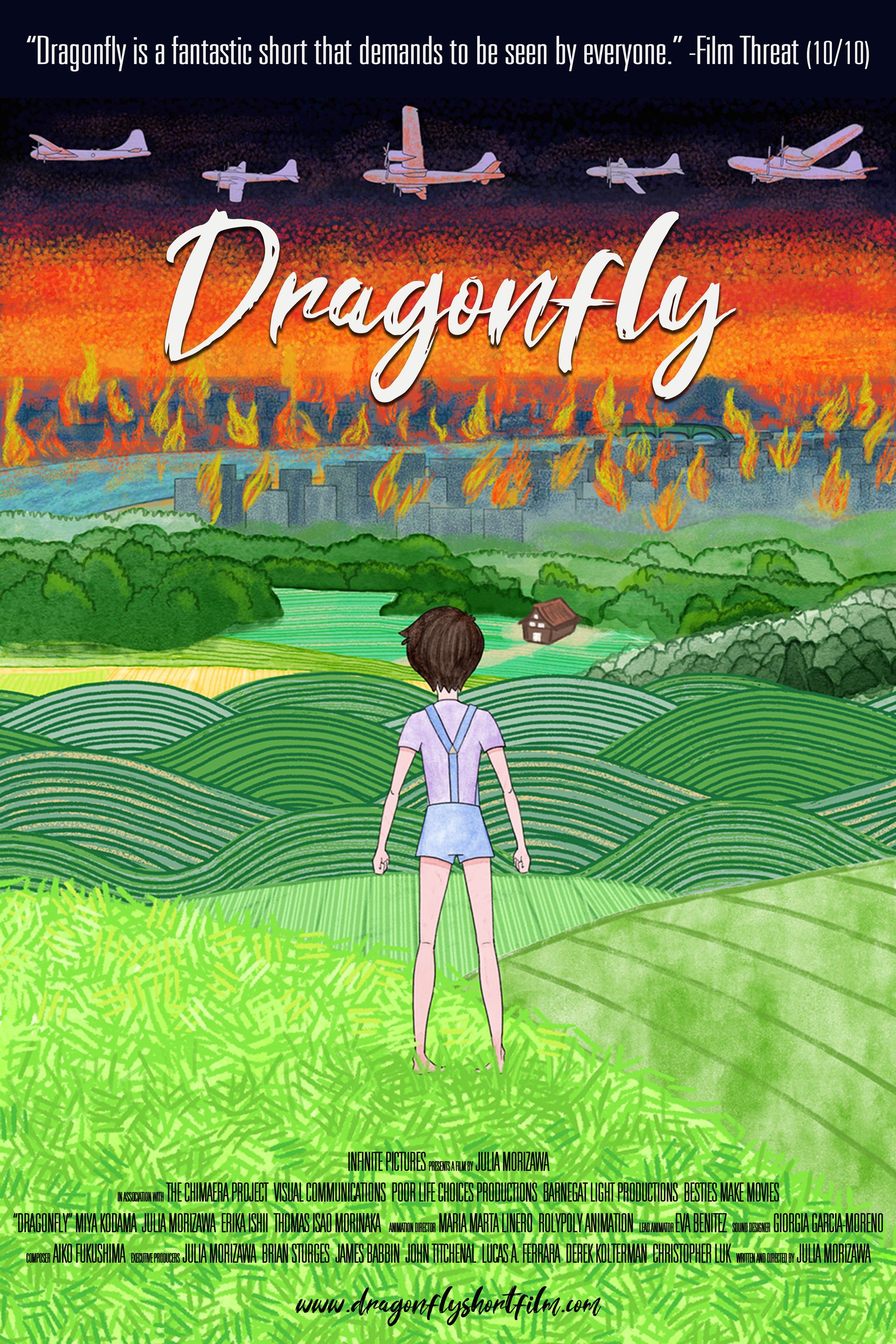
There have been films and documentaries about the bombing of Tokyo. Haven’t seen anything quite like Dragonfly though, in this style and from this perspective.
Why was it important for you to touch upon the subject?
When I was in my early-twenties, I interviewed my parents. At some point in the interview, I asked my mom if she knew anything about what her own parents (my maternal grandparents) experienced during the war—what we call WWII. My mom stated something along the lines of, “They were living in Tokyo, but there was a big fire, so they had to move back to the family farm.” I didn’t explore the subject further for several years. But when I finally did, it was me, typing into Google, “Big fire, Tokyo, 1940s?” And that’s when I first heard about the Tokyo Firebombing of March 9-10, 1945. In fact, that was the first time I had ever heard about any firebombings in Japan during WWII. I had been taught about the atomic bombings or Hiroshima and Nagasaki in school, but that was it. So it was important for me to touch on the subject, 1) Because I was shocked I had never heard of these firebombings and felt it might be a part of history—like many parts of history—that was too quickly being erased and forgotten, and 2) Because I felt like this story was a way to pay homage to or, perhaps, connect with my maternal grandparents whom I never met.
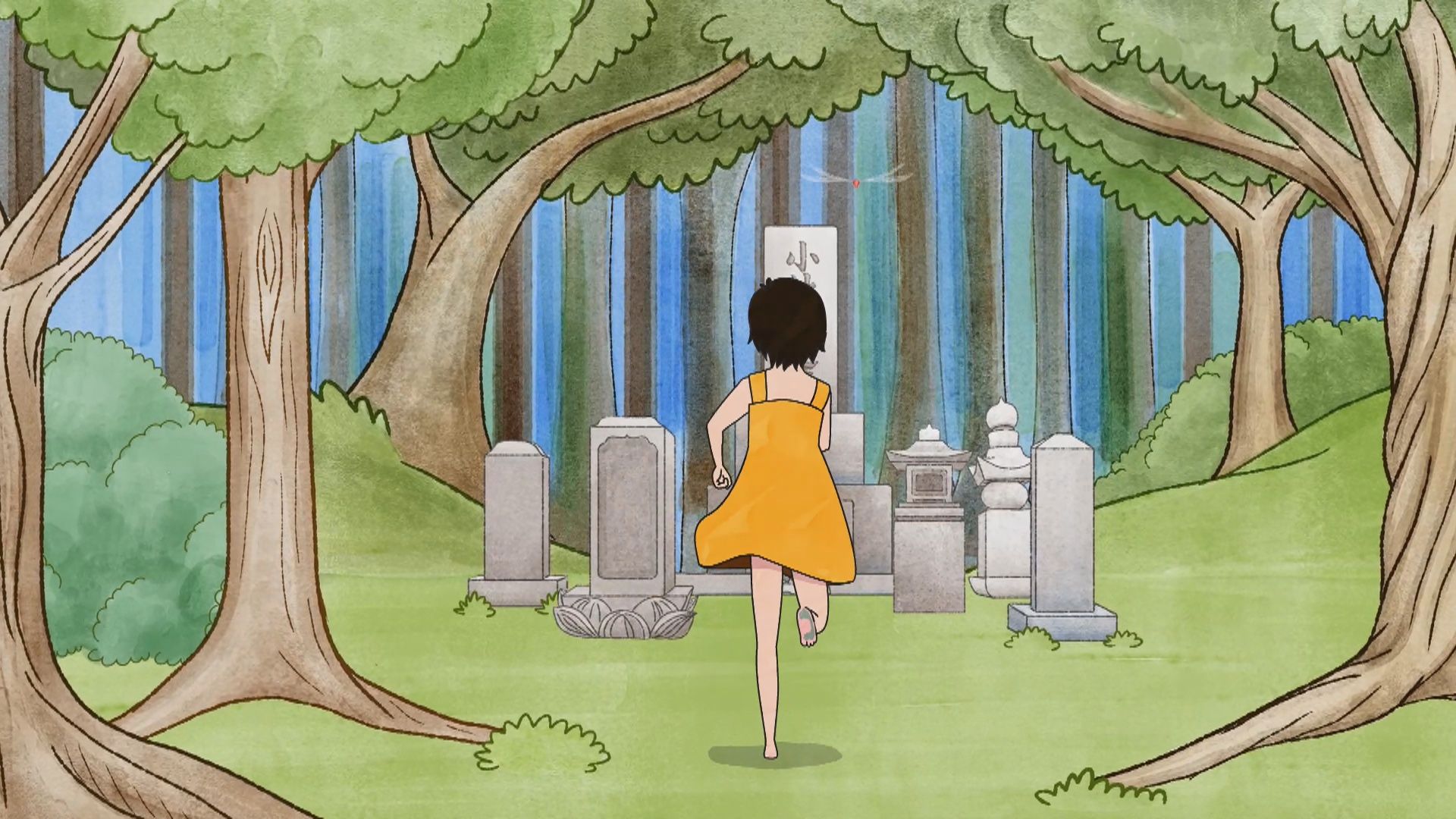
This 2D animation style, to me, fit the film beautifully. That juxtaposition of the horrors of the bombing and this innocent sort of look and feel. Assuming that was intentional? How did the animation come together, in finding an animator and writing with budget in mind. I’m seeing a lot more screenwriters trying to get animated projects off the ground, so any tips for them?
Everything was intentional, but not always from a purely creative perspective. The choice of animation style came from both a visual and tonal choice, as well as a budgetary one. I knew going into this project that my budget was going to be low. I ended up financing the film through self funds, crowdfunding, and a couple of EPs who came on later in the process and who were already friends of mine.
Going in, I knew my biggest visual and tonal inspiration was going to be Miyazaki—specifically My Neighbor Totoro, which is set in the 1950s Japanese countryside. This aesthetic and other similar comps were included in the pitch deck that I sent out to department heads while hiring, including potential animators. I interviewed several animation directors and invited three of them to create some concept art for the film, to see who might be the best fit in terms of style and aesthetic.
Our Animation Director, Maria Marta Linero, was one of those animators and we ultimately chose to work together. She brought on her partner, Eva Benitez, from their company, Roly Poly Animation, and the majority of the film was animated by this two-women powerhouse of a team. Eva was the lead animator, while Maria, as the Animation Director, created the storyboard animatic, all the concept and character art, the environments, and handled all the animation post-production. The team worked on a very low budget, I think because this was their first narrative short film and because they loved the story. I would not choose to do another animated project on such a low budget again because I am painfully aware that most of the team was woefully underpaid.
As such, my biggest piece of advice for screenwriters looking to get animated projects off the ground is to 1) Learn animation yourself, if you haven’t already— learning how to do stop-motion animation is now something on my personal bucket list, and/or 2) Allow your project to have the budget it needs, even if it is still a “low-budget” film by industry standards. I’d also suggest keeping it as short as the story will allow; kill your darlings. I look back at the script for Dragonfly sometimes, and I’m like, “Oof.” I think cuts could have been made, and there was quite a bit of adapting during the animation process to keep it as short as possible.
We had talked before about preserving oral history from those who lived through certain events firsthand, in a documentary sense. Do you feel like the urgency of that is dying? To you, how significant is putting history into a digestible form? And along those lines, what is ultimately more easily impactful in this current landscape: documentary or narrative?
I actually feel like the urgency of preserving oral history, particularly documenting lived experience, is increasing. Or perhaps I’m just surrounded by those communities and peers more so than I have been before in my life. With media so accessible to the general public today, it’s becoming the norm to document everything. Just think about how many videos we see on social media each day of someone’s meal, or someone’s partner coming home from work, or someone in line at the store. With so many people having access to something like an iPhone, I think it’s becoming more of a thing for the younger generation to be like, “Oh, maybe I should ask mom and dad or grandma and grandpa some questions and record it on my phone.”
Now, whether or not this type of video and/or audio documentation still has a growing urgency in the mainstream, or beyond social media, I don’t know. I think we’re living in a world and time where half the days we’re emotionally motivated to learn and act, and then half the days we just want to check out and scroll through cute animal videos.
I don’t love the idea of making history more “digestible” because I think it can too easily cross the line into “sugarcoating” or even editing history—editing the truth. But I do think there’s a higher risk of losing your audience if something is too hard to watch. I think we need both, and everything in between, because if the point is to share these stories with as many people as possible and to enact change, then we need to accept that each person is going to have a different taste or preference or emotional capacity for how they ingest stories and the truth. I honestly don’t have any legitimate insight into whether documentary or narrative is more easily impactful, but similarly, we need both if we want to get to the widest audience. Narrative might have a better chance in the mainstream and in pop culture, but documentary is what we get shown in school (at least it was when I was a kid), so I say, let’s keep doing it all.
Besides Dragonfly making the finals of Film Pipeline, your script Something About the Tide, a coming-of-age dramedy, placed in Script Pipeline as well. A very different project, but one that also felt personal—and one you’re looking to produce.
For the many writers out there with similar lower-budget dramas, where would you advise they start in pulling together all the pieces. Producers, talent, financiers, etc.? For someone going in cold, they need to find those relationships, but how?
For me and Something About the Tide, specifically, it started with a script. I wanted an awesome writing sample. And then I entered it in a lot of contests and tried going the route where it gets shared with industry professionals, so that maybe the script would get optioned and/or maybe I could land some representation. And then, because the story is so personal, I just realized that I really just wanted to produce the film myself. But, you know, ideally with a team of more experienced producers and folks with better connections in the industry than me.
So for other screenwriters, I’d say, finding a producer is first. If you’re not also a director, then attaching a director is next. Some of it is longer-term relationship building, some of it is going out on a limb and making cold calls. Our lead producer, Ashley Song, is one of the first people I connected with when moving from Los Angeles to Portland during the pandemic. She co-owns a studio up here, and she has more producing experience than me. After the screenplay won a small development grant through a program that her studio was running, I asked her to come on board as a producer, and she said, “Yes.”
Our director, Desdemona Chiang, was a cold email that I happened to send at the right time. Des has decades of experience directing for theatre and transitioned into film and TV during the pandemic. She’s looking to build her credits and experience in film, and I happened to reach out to her during that little pocket where she was making that career transition. Our casting director, Karyn Casl, is a friend of Des’ and attended our live pitch at Tribeca in 2024. She loved our pitch, but likely came on board more so because of Des. She happened to know the lead male actor we wanted to attach personally already. And so on and so forth.
Financing … well, we’re still working on that, and what we do have I can’t speak publicly on yet. But so far, it’s been a combination of equity investors, grants, and utilizing our state’s film incentives. Most relationships I’ve built have been built through working on other projects. I’m an introvert—yes, I’ve made connections with people by meeting them at film festivals and events, but the people I typically actually work with are people I’ve met in a professional environment, like on another project or in a class or at a lab/fellowship.
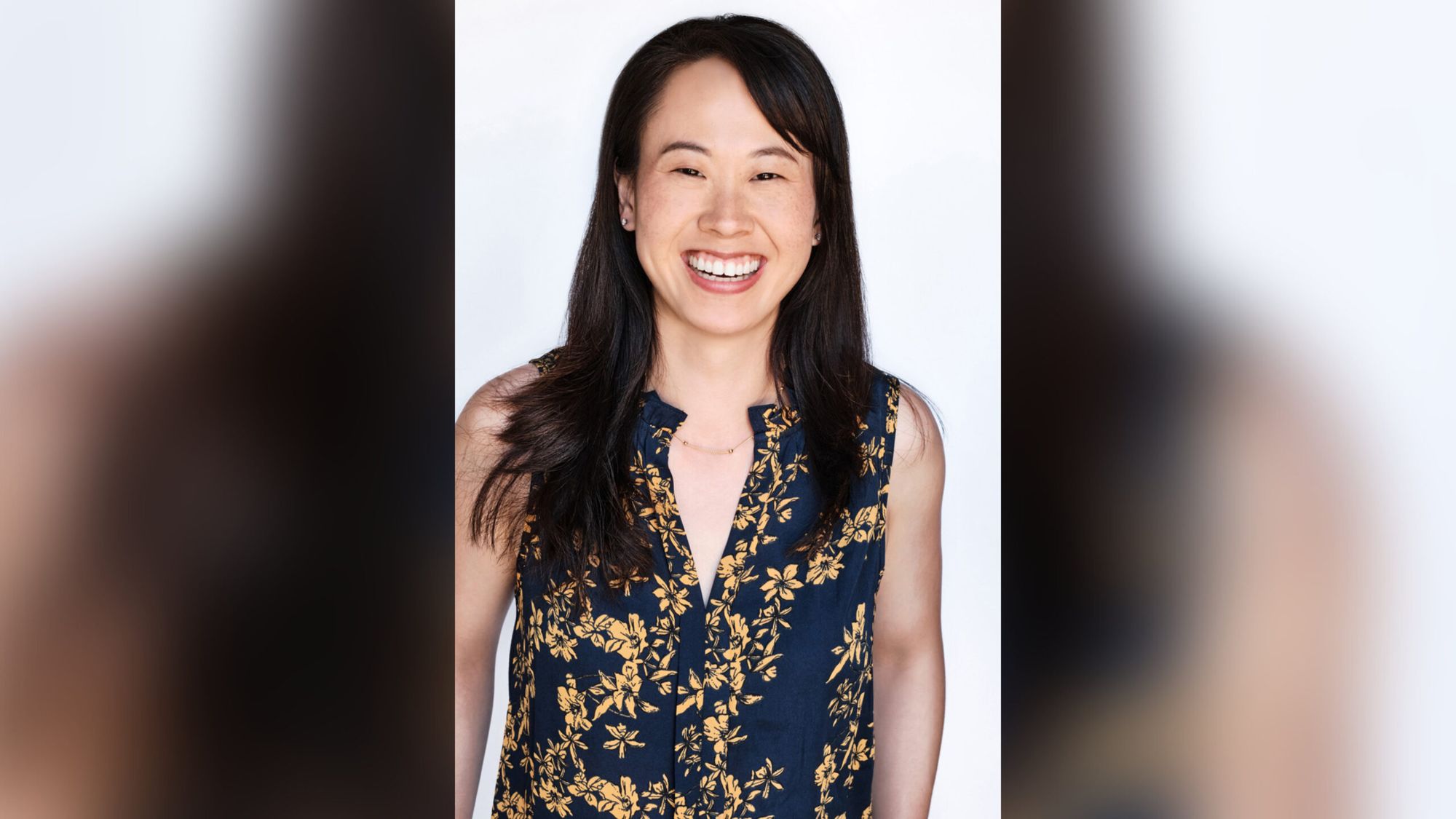
How has being an actress informed your writing, or how you approach certain projects, indie or otherwise?
I would say that my background as an actor has forced me to read a lot and a lot and a lot of scripts. And sometimes not even a full script, but scenes and sides and excerpts. You learn a lot about screenwriting just by reading scripts—and especially by reading them aloud. Every time an actor gets an audition, we have to break down the script (or at least the scene we’ve been provided). So we get really good at script analysis–every punctuation mark, the difference between delivering a period versus a comma or an em-dash versus an ellipses. And we often have to create our own backstory. I’ve written dozens and dozens of character autobiographies for roles, often more than the writer had written for that particular character. I would recommend that all screenwriters and directors take an acting class—a scene study class, specifically.
Listen, I’m not an established enough actor to be choosy about my gigs (although I would argue that I should allow myself to be more choosy regardless), but I think when you’ve worked across various mediums and budget levels, it’s important to adapt. One thing that being an actor has helped me in terms of approaching projects is in regards to pay. I worked for many years for no pay as an actor, because I was building my resume and my reel, or whatever. Now as I’ve focused more on writing and producing, I’m making those same sacrifices to build my credits. But I have a wiser perspective about it. I say “no” way more than I did 20 years ago. I have much better boundaries.
Big question, so soap box it to your heart’s content … What’s your take on the current indie environment? From getting financing to securing distribution? Where are we at, and where do you see things going?
I honestly don’t have the bandwidth to soapbox it right now. Everyone is telling me—because I’m in the midst of doing it now—it’s near-impossible to get an indie film financed. Screenwriters aren’t selling scripts anymore, they’re getting their scripts optioned for a very low rate. Financiers are not taking risks on indie films, especially if they don’t have a “bankable actor” attached (and “bankable” is not the same as “name,” which is not the same as “recognizable”). Apparently indie filmmakers are getting offered distribution deals of zero dollars. Zero dollars! Like, what?!
I think these shifts (or declines) in the film industry are motivating indie filmmakers to do “crazy” things like self-fund and self-distribute. Easier said than done, but that’s what I’m seeing more and more. Hollywood will probably keep making its $200M blockbusters and sometimes hitting the jackpot and sometimes losing $150M, but I guess they’re OK with that. I don’t think the big guys are really ever going to open their doors to true indie, low-budget film, no matter how many low-budget films win Oscars. So, we’ve just gotta do it ourselves. It’s tough, though. I’m genuinely starting to believe that perseverance is the only difference between “success” and “failure” when you don’t have nepotism or wealth in your hand.
You’ve written in other genres, you’ve published books and short stories. A lot of screenwriters are becoming multi-tool talents. A story that might not fit for one medium might for another.
Was this out of choice or necessity? Is the market evolving in such a way where writers have to consider other mediums, or become genre agnostic within reason? If so, what does that reflect about the industry and audience habits?
For me, I think there are just so many storytelling formats that I love that I’m keen on dipping my toe in everything. Jack of all trades, master of none, perhaps? But I am a huge advocate for adapting your story into a different format as a necessity. You have a feature screenplay for a deeply personal story that you’re still passionate about after 10 years? Yes, yes! Adapt that thing into an audio drama that you can self-produce and self-distribute. Or turn it into a novel that you can self-publish.
And yes, I do think writers and filmmakers and artists need to be open to adapting into other roles and mediums and genres in today’s industry. But I honestly don’t know if that’s specific to the entertainment industry. I don’t think it has anything to do with the audience. I mean, I know software engineers who became experts at some coding system I can’t name and that system became obsolete seemingly overnight. I know writers who are college professors, insurance agents who drive Uber. I think it’s all part of a much larger conversation about, well, capitalism.
Must answer without a second of thought, gut reactions only: what’s your favorite—not the best, but your favorite—animated film of all time?
Spirited Away.