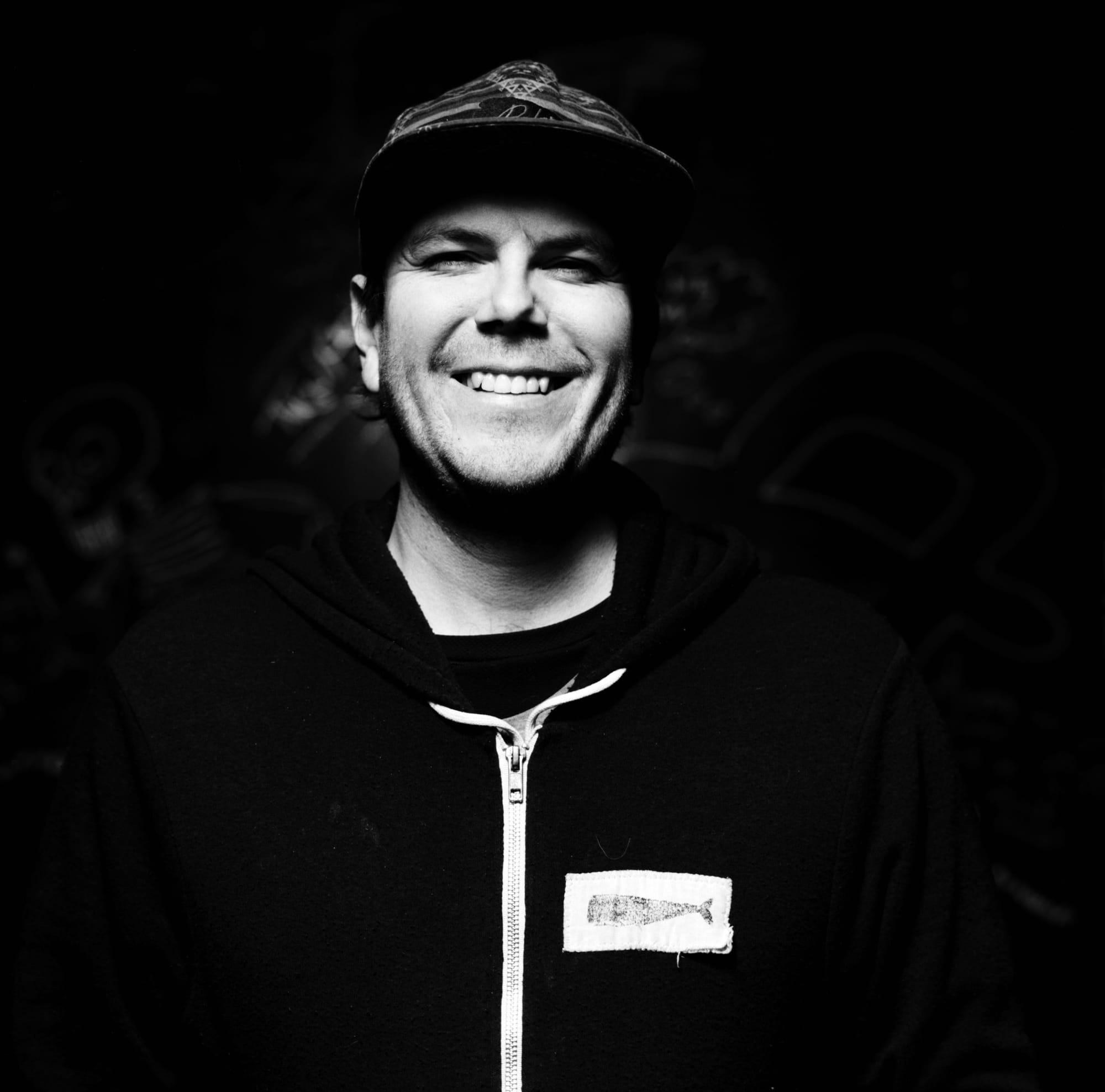
Nothing is Bigger Than the Little Things: A Conversation with ‘Tony’ Production Designer Ryan Warren Smith
Ryan Warren Smith on the art of invisibility, designing two very different 1970s films back-to-back, and why nothing is bigger than the little things.

Production design is one of those crafts that tends to do its best work invisibly. When it is truly succeeding, you are not thinking about the person who built what you are watching. You are simply inside it. Ryan Warren Smith has built his career on exactly that kind of immersive, self-effacing excellence. His fingerprints are on some of the most visually convincing films of the past decade, but you have likely absorbed them without ever registering who put them there. The claustrophobic, fluorescent-lit terror of Green Room, Jeremy Saulnier's nerve-shredding punk rock siege thriller. The Ozark desolation of "True Detective" Season 3. The bone-deep cold of The Holdovers, which conjured a New England prep school in the dead of 1970 so completely that you can practically smell the radiator heat. And most recently Rebel Ridge, Saulnier's tightly wound rural thriller, which turned a small-town American landscape into something genuinely unsettling.
Across all of it, Smith has made period and place feel less like a backdrop and more like a condition: something the characters cannot escape and cannot ignore.
His latest film is Tony, Matt Johnson's origin story for Anthony Bourdain, set in the summer of 1975 on Cape Cod, and it is among the finest things Smith has yet designed. The kitchen where young Bourdain first finds himself, the specific texture of a working-class Provincetown summer, the whole sensory world of a nineteen-year-old's chaotic, pivotal few months: Smith and his team have rendered all of it with a fidelity that gives the film its physical and emotional ground. The production design by Ryan Warren Smith is doing extraordinary work throughout, the kind that never calls attention to itself because it is too busy being completely convincing.
Smith previously conjured the 1970s with tremendous conviction in The Holdovers, and he brings that same period authenticity to Provincetown here. His path to this work is itself a story worth telling: he grew up obsessed with movies, moved to Los Angeles with no connections, learned his craft at the monitors of Sean Penn and Gus Van Sant as an on-set dresser, and got his first break as a production designer on Kelly Reichardt's Wendy and Lucy. I spoke with Ryan about all of it, including what it means to design a world around a man whose family is still alive to see it.
This interview has been edited for flow and clarity.
Rahul Menon: You told your mom at seven years old that you were going to make movies. You grew up watching Stand by Me on repeat until you figured out it must have been shot out of sequence, and that revelation blew your mind. When did the world of the Art Department specifically start calling to you, and what was it about production design that felt more right than directing, or any other creative position on a film?
Ryan Warren Smith: Wow, amazing research, Rahul! I moved to Los Angeles in my early twenties and became a PA. I was lucky enough to land with a director and producer who saw something in me and became somewhat of a personal assistant to them. I would travel and go on commercial shoots, and they would place me where they needed most help. At one point that became the Art Department as an Art PA. Once I started there, I made Art Department friends and began doing Art PA work elsewhere. I instantly felt at home. I loved creating environments and character, and this seemed like such a great place to do it. I could stay in the background, which is where I like to be, as it suits my personality best.
RM: You began your film career as an on-set dresser working alongside Sean Penn and Gus Van Sant. That is an extraordinary pair of filmmakers to learn from at the beginning of your working life. What did those early years as a dresser teach you about how great directors think about physical space, and how did being on the floor rather than behind the camera shape the production designer you eventually became?
RWS: I was so lucky to work with them so early. The great thing about being the on-set dresser at that point was getting to work directly with them and their Director of Photography, which was more valuable than any film school. Being able to stand at the monitor with them and see where all the Art Department's work was landing within the frame taught me to keep an eye on continuity and how to build a beautiful image without it feeling fake or distracting. That is also where I fell in love with practical lighting. I worked on it a great deal with the DP, especially Harris Savides, who had an enormous impact on me.
RM: Your first film as production designer was Kelly Reichardt's Wendy and Lucy, which premiered at Cannes and went on to become one of the defining American independent films of its era. That is an unusually significant debut. How did that collaboration come about, and what did working with Reichardt at that level of intimate, invisible filmmaking teach you about the relationship between environment and character?
RWS: I still can't quite believe that was my first film as a PD. It came about because of a producer I had met when I first moved to Portland, Neil Kopp. We met at Cinema 21 and became friends. He knew I was trying to break into features but just hadn't had the right break yet. He pulled for me on Gus Van Sant's Paranoid Park, which I didn't get, but then came back for Wendy and Lucy, which I somehow landed. Kelly and I instantly got along, had some laughs, and dove into the script together. I did the whole film out of my VW van.
Kelly likes to keep the footprint small, which was a wonderfully freeing way to work. I learned so much about simplicity from her. She was also incredibly decisive about every character's props, and that really triggered something in me.
What strikes me about Ryan's early years is how much of his career has been built through genuine relationships rather than industry positioning. Neil Kopp at Cinema 21 in Portland. Harris Savides at the monitor on a Van Sant set. These are not networking moments. They are the specific, human accidents that shape a creative life, and the fact that Smith notices and names them says something about how he moves through the world.
RM: You have now worked with Jeremy Saulnier, Andrew Haigh, Alexander Payne, and Matt Johnson, each with completely different creative DNA. How do you adapt your process to each of them, and what does a new director relationship actually look like in those first conversations?
RWS: I don't really adapt my process at all. I always lead with feeling and allow the story to guide me. I've gotten very good at trusting my instincts. My first conversations with new directors are usually about how we each work, what our processes are, what we respond to. And honestly, it's about feeling each other out to make sure we can spend four to six months together and have a good time. It's a bit like a blind date! Once we jump into a project, I try to come up with creative, character and story-driven ideas that will shape the feel of the film.
RM: You have described your fundamental philosophy as wanting to be invisible: never wanting your work to stick out or pull the viewer away from the story. And yet the worlds you build are so specifically convincing that they become genuinely inseparable from the emotional experience of the film. How do you achieve that invisibility, and how do you know when a set is finished in a way that serves the story rather than simply looking right?
RWS: Yes, this is something I think about a great deal. I was talking to my wife about it, about my wanting to remain invisible, and she said that might be the wrong word, as my sets do create an environment that feels natural and real. All of this comes from my fear of having a viewer get distracted by a set and pulled out of the story.
I want my sets to feel so real that the viewer assumes we must have found them that way. This matters enormously for the actors, too. I want them to feel so immersed that it never crosses their minds to question the environment. Over the years, I've gotten better and better at building sets with feeling. I spend time in them alone and with the set decorator, moving things around until it feels correct. Once my gut starts to relax, and I stop obsessing over the small details, I know it's time to photograph the set, hand it over to the shooting crew, and move on.
RM: The Holdovers required you to build Barton Academy from five different schools, tie them together through paint and set dressing, and make the whole thing feel like it was shot in 1970. The bowling alley came in after the winter carnival was cut for budget reasons, discovered almost by accident. What does a story like that illustrate about the relationship between constraint and creativity, and do you think the best solutions in production design almost always come from somewhere unexpected?
RWS: That was such a special one, mostly because Alexander is such an open individual and director. We spent a lot of time driving around scouting, visiting places, and talking to the people within them. If something felt genuinely right, he and David would rewrite the scenes to fit the location. It's such a wonderful way to work, allowing the outside world to guide you and to participate in what the film becomes. So, yes, so much comes from the unexpected, especially when you remain open to the happy accidents.
RM: You have now designed the 1970s twice in very different registers: the cloistered New England prep school world of The Holdovers and the sun-soaked, working-class summer of Provincetown in Tony. Both feel completely authentic and completely different. How do you research a period so deeply that it stops being research and starts becoming instinct, and what did the visual language of Tony need to feel like that The Holdovers did not?
RWS: Thank you, that means a great deal. These two films feel so related to me, like siblings or cousins. My research always begins early, when I'm most wide open, and I take in as much as I can through photographs, stock footage, and films actually made in that time period. After absorbing enough of that material, you let the feeling and instinct take over. It becomes seamless. For these two films to look so different, the seasons did a lot of the heavy lifting. The Holdovers is such a winter film, and Tony is all summer.
The directors also play an enormous role. Alexander and Matt have completely different styles. The Holdovers needed to feel like an old vinyl Christmas record. Tony needed to feel like a once bright, now faded old summer postcard.
RM: Production design is one of those crafts that, when working at its best, tends to disappear into the film entirely. My review of Tony singled out your work specifically, describing it as doing extraordinary work throughout, the kind that never calls attention to itself because it is too busy being completely convincing. When you do receive that kind of specific recognition, does it land differently than general praise for the film as a whole?
RWS: First of all, thank you so much for saying that. It genuinely means the world. And yes, it does land differently. Of course, I never want to draw attention to my work in the film. I operate best in the background, never in a spotlight. But it does feel extraordinary when people feel what I was trying to put into a project, when the emotions I've invested in it speak to someone. There is nothing better than that. It feels like pure magic, always surreal and beautiful when it happens.
There is something quietly moving about the way Ryan talks about being recognized for work designed to go unnoticed. The relief in his answer is genuine. He put his emotions into the physical world of Provincetown, 1975, and someone else felt them. That circuit completing is exactly what he means by pure magic, and it is also, without him saying so directly, what great production design actually is.
RM: Tony opens with Bourdain's own words describing himself as a spoiled, miserable, narcissistic young lout. Matt Johnson typically works in a pseudo-documentary mode that deliberately blurs fiction and real-world texture. How did both of those things shape the physical world you built around Dominic Sessa's Tony? And did working on a film rooted in a real person's actual life change what authenticity meant to you on this project?
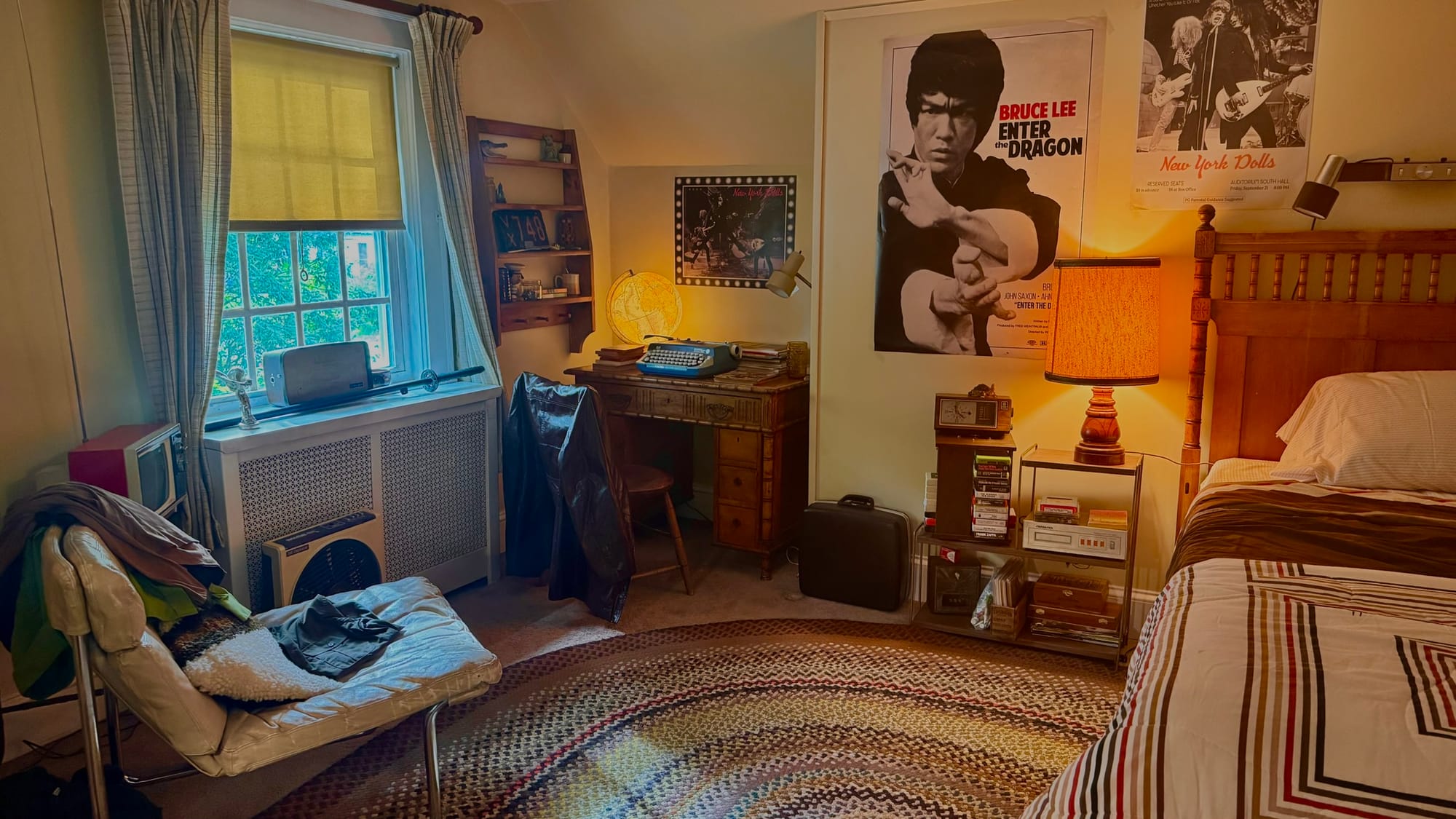
RWS: Matt made a very conscious effort to work in a different style than his previous films. He knew he needed to develop new approaches and work within the American union filmmaking system. We both read everything we could by Bourdain and dug deep into old family photographs of Tony's childhood home. Those photos were gold. The most heartbreaking part for me, watching the finished film, is that I had extraordinary photographs of Tony's real teenage bedroom, which we meticulously recreated, and very little of it ends up on screen. It meant so much to me to get that right, because I hoped his family would see it and feel that it honored him. But that is how it goes. Not everything we create gets seen. What mattered most was that he was a real person, and the thought of his family seeing something that was not right pushed me to get every detail correct.
RM: You have described reading scripts and immediately knowing what color a character should be, a process that feels almost synesthetic. Can you walk us through what that actually looks like in practice, and how color eventually becomes the visual identity of a finished film?
RWS: Yes, this is genuinely true for me. I learned years ago, through therapy, that my childhood memories have colors attached to them. I've always been a very sensitive and empathetic person, and colors are easily connected to feelings. It all starts with my lookbook, which is a collection of reference photographs, paintings, and textures. It's a mixed bag that represents the overall feeling, colors, and tone of the film. Building it helps me get clear on what the vision actually is, and then it becomes the foundation for communicating with the director, the DP, and the costume designer. We all have a great deal to draw from at that point. If we're ever second-guessing a decision, we go back to the lookbook and let it answer the question.
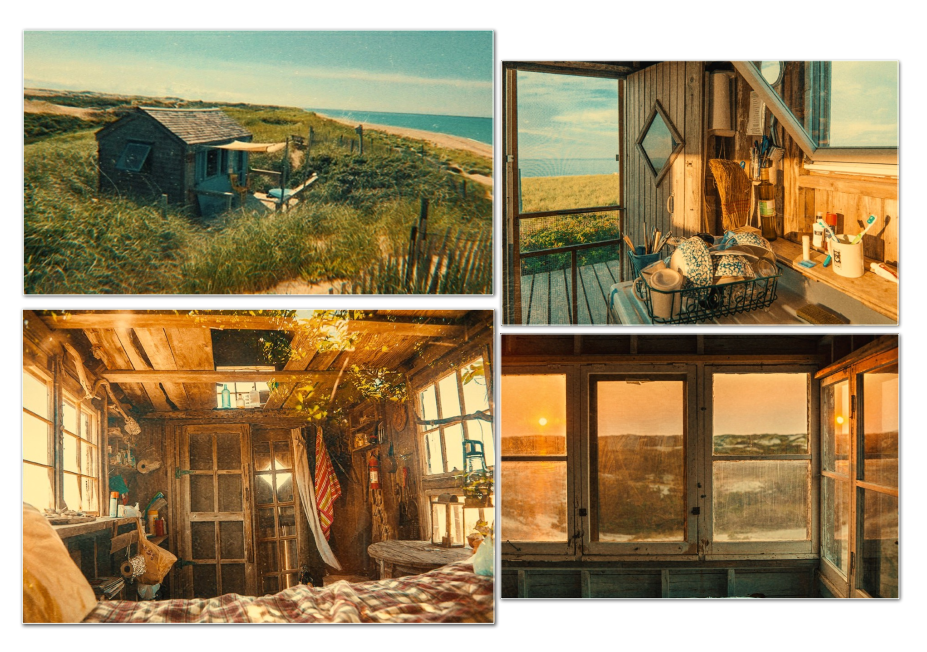
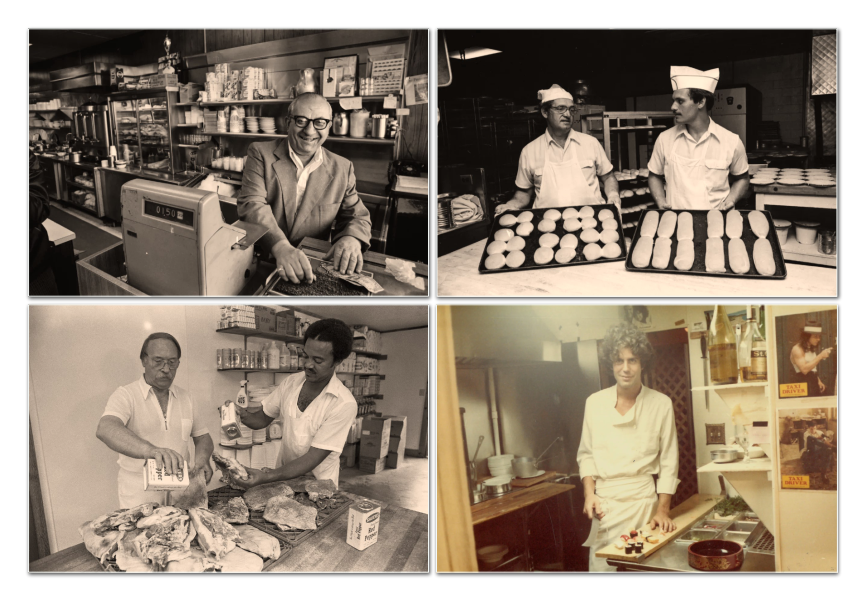
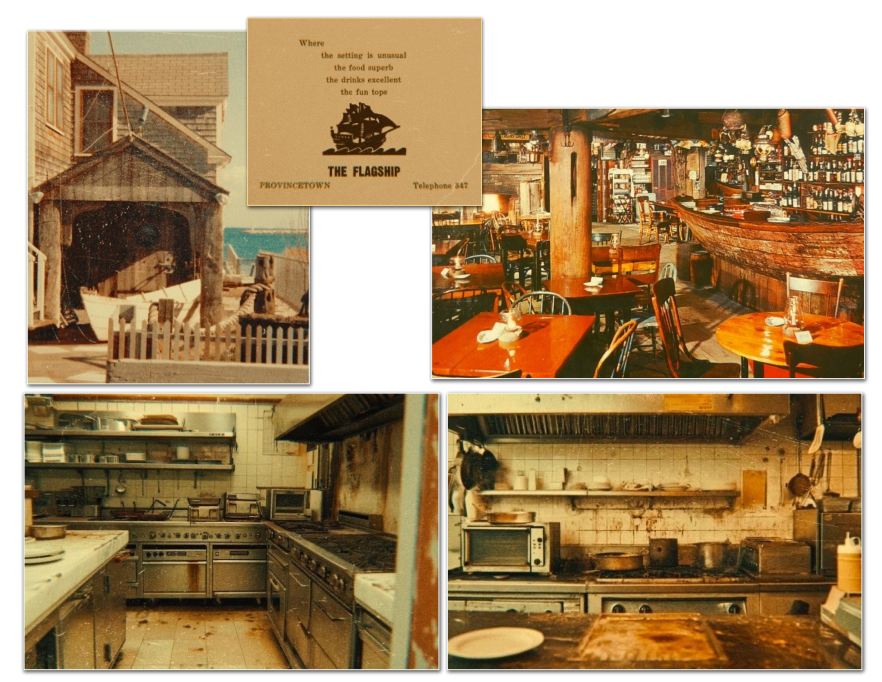
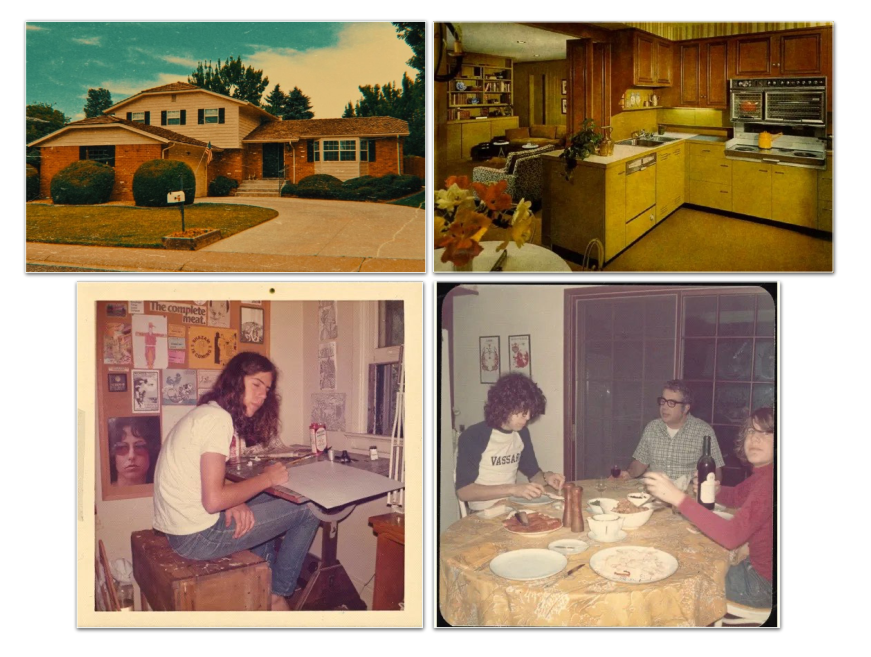
Lookbook for Tony
RM: For anyone drawn to production design, but not yet fully understanding what the job actually is, what would you tell them about what you do on a day-to-day basis that the credits on a film cannot convey? And what is the quality that separates someone who can design a set from someone who can genuinely tell a story through one?
RWS: When I describe my job to someone, I usually say that I'm in charge of everything in front of the camera: every prop, piece of set dressing, car, color, wallpaper, anything built. And that I have to tie all of it together so it supports the overall look and feel of the film. Thousands of details supporting an imaginary story. I think what separates a good production designer from a great one is empathy and feeling. I'm not an architect. I don't approach sets primarily in terms of what they cost, although I have a keen understanding of budget. If you lead with feeling, with heart, and always keep story and character at the center, that's what makes the difference. The things that surround these characters have to make them feel real. Nothing is bigger than the little things.
Thousands of details supporting an imaginary story. Nothing is bigger than the little things. Ryan says both of those things almost in passing, and both of them are as good a description of what production design actually is as anything I have read. The craft is invisible by design. The philosophy behind it, however, is anything but small.
RM: You now have The Holdovers, Tony, and Jeremy Saulnier's October all coming in close succession, which is a remarkable run of work across very different kinds of films. Looking forward, what would a script have to do or feel like to make you know immediately that it is the right next project?
RWS: I love that I have so many different types of films coming out. It has been a deliberate effort to get here. Like actors, creative crew members can get pigeonholed into making the same thing repeatedly. I've had stretches where one type of film leads to a flood of similar scripts, and it's taken a conscious effort from me and my agents to steer toward different kinds of projects. I don't want to do the same thing over and over. Before everything else, I'm a movie fan and a story lover. I want to tell fun, interesting, thought-provoking stories. That's the only real criterion.
Ryan Warren Smith describes production design as wanting to make sets feel so real that the viewer assumes we must have found them that way. That is an extraordinary ambition stated plainly. It means erasing all evidence of your own presence from the thing you have made, pouring months of research and instinct and physical labor into an environment that will be seen and felt without anyone registering that someone built it.
What this conversation keeps returning to is the word feeling. Ryan uses it constantly and genuinely, and it becomes clear over the course of these answers that it is not a vague creative synonym for something more technical. It is literally the starting point. The lookbook is the externalization of a felt response to a story. The hours spent alone in a set, moving props until the gut relaxes, are not about achieving visual correctness. They are about achieving emotional truth through physical space.
What moves me most is the detail about Anthony Bourdain's teenage bedroom. Ryan and his team rebuilt it from real family photographs, knowing that very little of it might make it onto screen. They built it for Bourdain's family as much as for the film itself. That is not a craft decision. That is an act of love for a real person who is no longer here. Tony was made by people who genuinely cared about getting it right. Ryan Warren Smith's job was to make that world feel absolutely real.
He succeeded. And the best part is, you probably did not notice.