
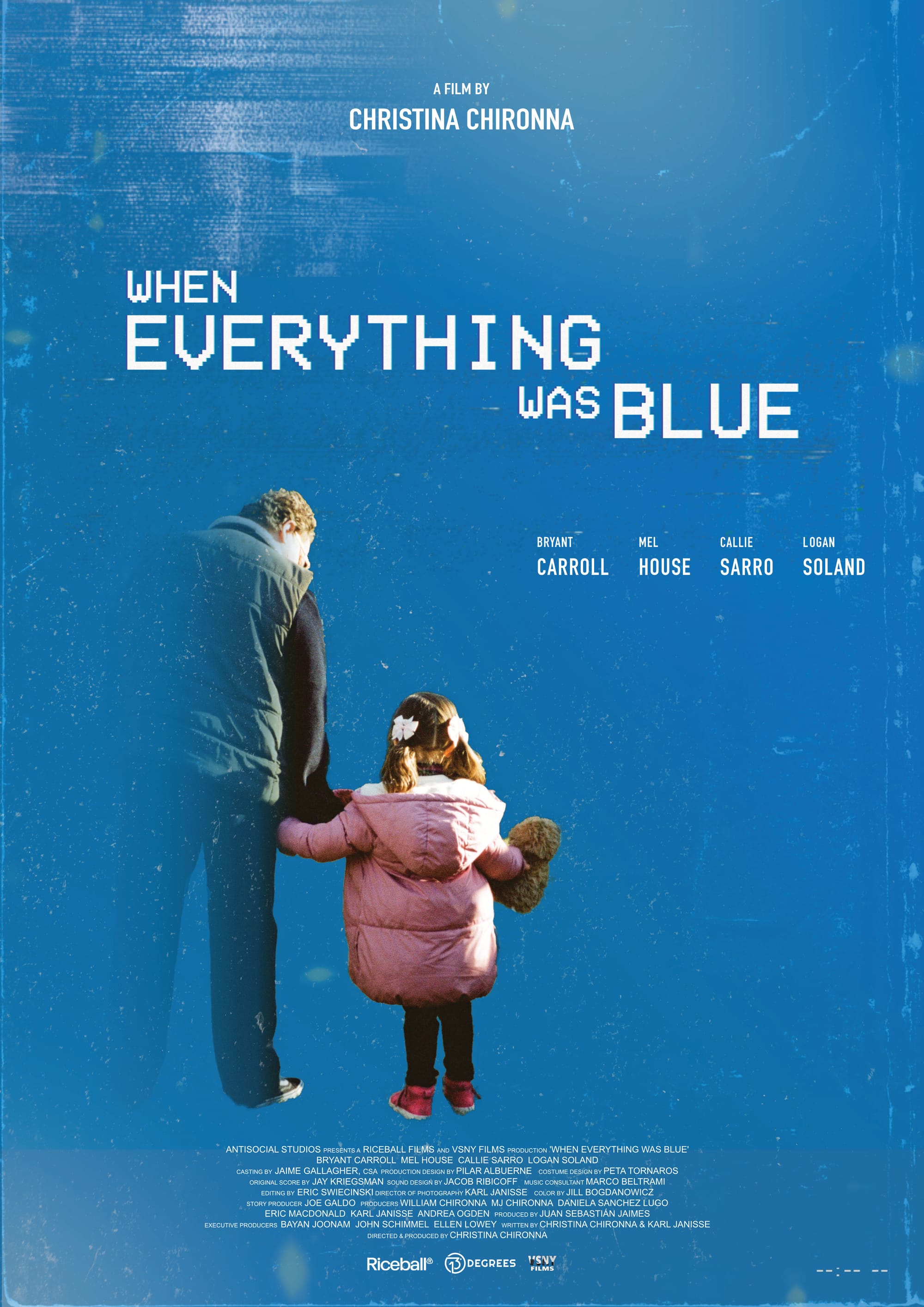
"When Everything Was Blue" by Christina Chironna
We don't see it often:
A drama revolving around 9/11 told through the lens of a home video camera.
Filmmaker Christina Chironna, director of When Everything Was Blue, "wanted the audience to feel like they were watching their own family's home videos" to create an immediate sense of nostalgia and closeness with these characters.
She's right in saying, too, "There’s something about old camcorder footage that feels incredibly personal. It reminds us of our families, our memories." An aesthetic memory soon to disappear with modern cameras, for that matter.
While Chironna doesn't have a personal connection to loss on 9/11, she did to its aftermath: her mother, a social worker for families who had lost loved ones in the terrorist attack; her father, who was meant to be in Manhattan that day. Long after the headlines disappeared, she saw the ripple effects firsthand.
So in the film, she sought to explore the frustration of seeing those who showed up for us, for the country, fall into obscurity. "First responders ran toward danger on September 11th. Yet many of them spent years fighting for healthcare and recognition afterward. Jon Stewart said it best during his testimony before Congress: 'They responded in five seconds. They did their jobs with courage, grace, tenacity, humility. Eighteen years later, do yours.'"
For Chironna, "This isn’t just a 9/11 story, it’s a human story. We see this pattern over and over again with veterans, with healthcare workers during and after COVID, and with so many who are celebrated in moments of crisis, but struggle to find support once the emergency has passed."
And so, the simple question—
How do we care for those who spend their lives caring for everyone else?
In execution, though, she had to reconcile the challenge of a camcorder perspective and its logic. Every shot had to answer a question. Why is the camera on right now? And as importantly, why does it turn off? That constraint affected everything for the filmmaking team—from the writing, the blocking, and the performances, to the emotional beats of the story.
"At times, it was limiting, but it also became one of the film’s greatest strengths. The format forced us to stay honest. We could only show what this family would realistically capture, and I think that restraint made the story feel even more intimate and authentic."
The sense of intimacy underscored by the cast and their on-screen dynamics.
"By the time we started shooting, it didn’t feel like four actors pretending to be a family," Chironna says. "It felt like they genuinely knew and loved each other, and I think the audience can feel that on screen."
To resounding and objectively magnificent results. The short feels like a time capsule to a different era, a behind-the-scenes echo to a moment in history that, almost inconceivably, seems to be gradually slipping away from our cultural consciousness.
When Everything Was Blue stars Bryant Carroll, Mel House, Callie Sarro, and Logan Soland. With a script by Chironna and Karl Janisse. A dramatically timeless, brutally heartbreaking short we'll never forget.
Odds & Ends
- The filmmakers gave Callie (who plays Emily) the camera and let her take it home after filming. Chironna asked her to shoot whatever she thought Emily would film. Some of that footage actually made its way into the final cut.
- Bryant (Luke), Mel (Julie), and Logan (Older Tyler) all stayed together during the shoot. So when they left set each day, they were still essentially living as a family.
- Chironna carries a handycam with her almost everywhere she goes. "In many ways, that’s how I see the world. Telling this story through a camera lens felt instinctive to me." And thus, the format in When Everything Was Blue was all but predetermined ...
- They only had one day of rehearsals. Chironna's biggest concern: how do you make four people feel like they’ve known each other their entire lives in one day? For the first half of rehearsal, they didn’t rehearse the script at all. They had them play board games, joke around, and spend time with one another. Plus one entire improv day, which Chironna discovered ended up as some of their favorite material–so much so, they cut nearly half the scripted scenes to make room for this new emotional backbone of the film.
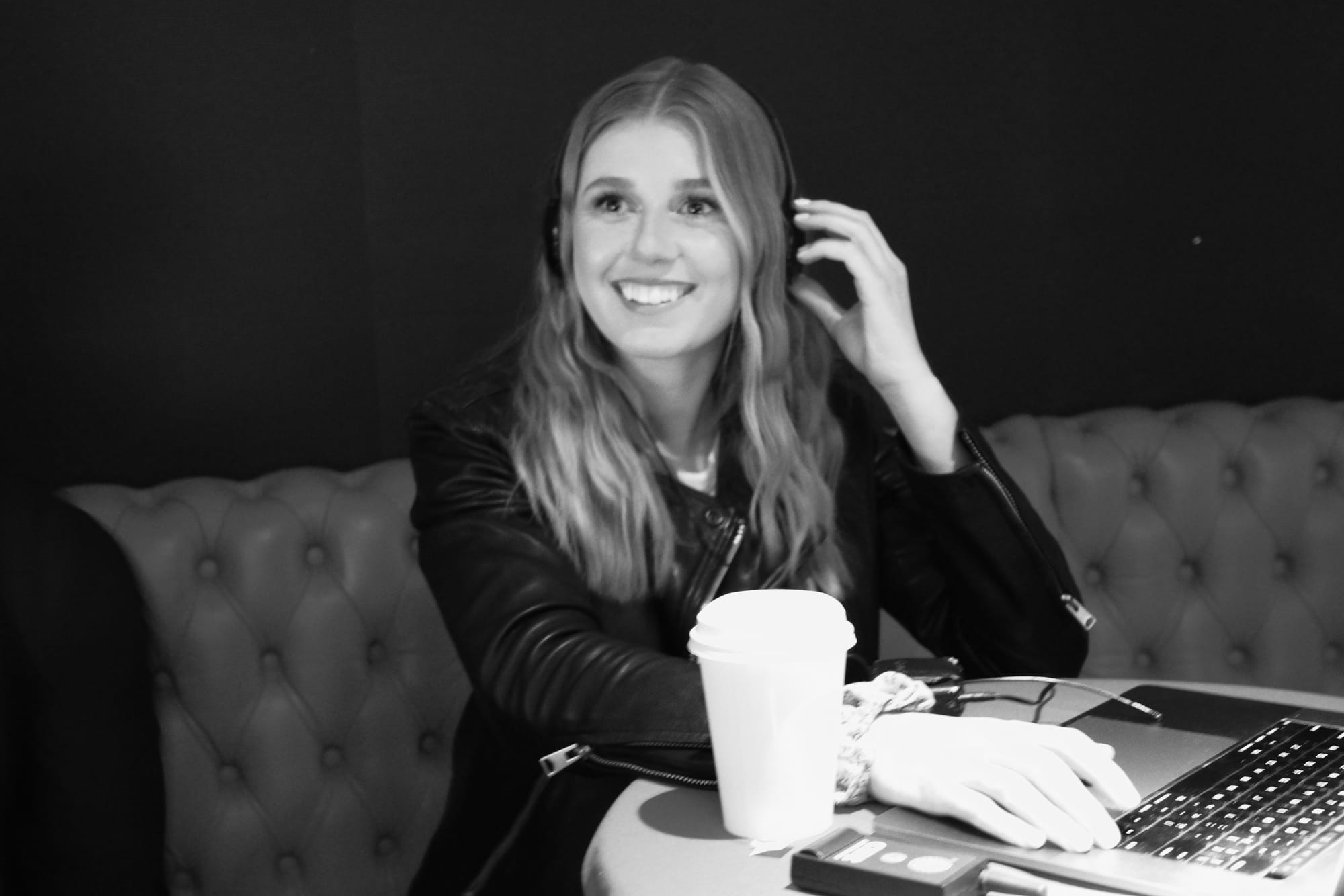
About Christina Chironna
Christina Chironna is a New York-based director drawn to stories that live in the grey, where love and loss, beauty and rupture, truth and ambiguity all coexist. Her work spans documentary, narrative, and hybrid forms, always grounded in emotional realism and the quiet complexity of human relationships.
Beyond the screen, Christina brings a rare duality: a filmmaker’s sensitivity paired with a marketer’s instinct. Having scaled brands from 0 to over 1M followers and 1B+ views across social, she builds emotional worlds that audiences don’t just watch, they participate in. Her background in growth-hacking and social storytelling allows her to reach viewers directly, without relying on the traditional agency intermediaries that often dilute impact and economics. It’s this blend of artistry and strategy that makes her a rare combination of creative prowess and commercial ingenuity.
Her most recent short film, When Everything Was Blue, has screened at over a dozen festivals across the U.S., U.K., and Europe—including an Oscar-qualifying run—garnering multiple awards including Best Live Action Short at the Phoenix Film Festival, Outstanding Narrative Short at the Art of Brooklyn Film Festival, Most Original / Creative Film at the Worldwide Women’s Film Festival, and several audience choice awards. The film blends documentary elements with narrative storytelling—a layered approach she continues to explore in her first feature.