Allison Tolman on Finding Success Later, Challenging Hollywood's Beauty Standards, and Learning to Trust Her Own Path
From small-town theater productions to her breakout role in "Fargo" and the workplace comedy "St. Denis Medical," Allison Tolman reflects on the unexpected journey that shaped her career and why she wouldn't change a thing.
From the quirky world of Fargo to the chaotic halls of St. Denis Medical, Allison Tolman has built an impressive career bringing unforgettable characters to life on the small screen.
Today, the Texas born actress stars as Nurse Alex on NBC’s hit mockumentary sitcom "St. Denis Medical." But her Hollywood resume extends far beyond the hospital walls, with standout roles in Paramount+’s "Why Women Kill," ABC’s "Emergence," and FX’s critically acclaimed "Fargo," among others.
With a career spanning some of television’s most recognizable shows, you might assume Tolman spent her childhood dreaming of bright lights, red carpets, and Hollywood stardom.
But becoming a television star was never part of her plan. She didn't grow up fantasizing about life in Los Angeles. In fact, for much of her early career, she wasn't particularly interested in moving to Hollywood at all.
What did she want to do? She just wanted to act and create art that made her proud.
For years, that meant performing in small theaters (she’s a self-described “theater kid”), building sets in garages, teaching children's theater, working day jobs, and making art with friends simply because she loved it.
"I was just trying to do what I feel I was put on this earth to do," Tolman said.
And then, at 34, everything changed.
After years of working in regional theater and struggling to gain traction in a larger market, Tolman landed the role of Deputy Molly Solverson in the first season of FX's critically acclaimed anthology reboot, "Fargo." Almost overnight, she went from juggling part-time jobs in Chicago to starring opposite some of Hollywood's biggest names.
More than a decade later, Tolman doesn't look back on those years as time lost.
"I wouldn't change a thing about breaking in late," she says. "I think it's made me the person and the performer that I am."
Tolman has built a career that moves effortlessly between comedy and drama, all while remaining refreshingly grounded about the unpredictability of Hollywood.
And as she reflects on her journey, she's equally candid about the industry's narrow beauty standards, the importance of complex female characters, and why success doesn't necessarily make the business any less uncertain.
The Road to Hollywood
Before "Fargo," there was Dallas, TX.
Tolman grew up in Houston and began her professional career in Dallas, where she helped run Second Thought Theatre with friends, performed improv and sketch comedy, and took whatever acting opportunities came her way.
She got her first agent, taught children's theater and vocal techniques at a local college, worked on commercials, did some corporate work, auditioned for local productions, and held down day jobs to pay the bills.
It wasn't glamorous, but it was an education.
The experience taught her something she still considers one of her greatest strengths: how to be a good teammate.
"Theater kids know how to work hard. They're humble. They know how to be a part of a team," she says.
By 2009, Tolman had established herself in Dallas. She was respected, working regularly, and comfortable.
Perhaps a little too comfortable.
Approaching 30, she decided it was time to challenge herself.
Rather than move to Los Angeles or New York, which she found to be too overwhelmingly big, she chose Chicago, a city she had fallen in love with while touring with a children's theater company.
She enrolled in The Second City's training program, completed its conservatory, and continued auditioning.
But the move didn't immediately pay off.
In the four years between arriving in Chicago and booking "Fargo" in 2013, Tolman estimates she landed only one other job through her agent.
"The answer to the question, 'How will I do in a larger market?' was not great," she jokes.
Still, she wasn't miserable. She had friends, creative projects, a podcast performed before a live audience, and day jobs that allowed her to continue pursuing acting. She was making art, she was learning, and she was building a life she enjoyed.
"I didn't feel unfulfilled," she explains. "I was just doing this thing that I loved in a different city."
What she didn't know was that one audition was about to change everything.
One Audition, One Phone Call, and a Life-Changing Role
In 2013, Tolman was navigating a career transition that had little to do with acting.
The IT firm where she'd worked for years, in client services, had been sold, changing the workplace culture she had come to love. She left and began working a temp job in the morning and part-time at a photography studio in the evenings while searching for something more permanent.
One afternoon, between the two jobs, she recorded an audition for a new television series called "Fargo," a new twist on the Coen Brothers’ critically acclaimed ‘90s film.
She sent in the tape and moved on.
Like most working actors, Tolman was accustomed to auditions disappearing into the void.
"You just send things out into the ether as an actor and you never hear anything back," she says. "And that's kind of, frankly, the job."
But a couple of weeks later, this time, her agent called.
Her audition was still in consideration.
A few weeks later, another call.
Still in consideration.
Then another.
The producers wanted her to fly to New York for a screen test.
“Then everything kind of got really serious, really quickly,” she said.
Suddenly, the actress who had spent years auditioning for commercials and small productions was negotiating her first major television contract.
Tolman remembers being stunned by the numbers. The proposed episodic salary was close to what she had previously earned in an entire year.
But perhaps the most memorable part of the process came during a work session with series creator Noah Hawley, director Adam Bernstein, and casting director Rachel Tenner.
After working through scenes for roughly 90 minutes, Hawley told Tolman they had seen everything they needed. She was welcome to return the following day for her scheduled screen test, but it wasn't necessary.
Tolman made a decision that still surprises her. She declined.
"I think I'm good," she remembers telling them.
Only afterward did she wonder whether she had made a terrible mistake. Fortunately, she hadn't. A few days later, she got the call. She was Molly Solverson.
And her life was about to look very different.
Finding the Heart of "Fargo"
For audiences, Molly Solverson became one of the most beloved characters in the first season. In a world filled with violence and moral ambiguity, Molly was the show's steady moral center. Tolman believes that's precisely why audiences connected with her.
"She's this compass in the middle, that sort of calm in the storm," she explains.
While viewers may be fascinated by morally questionable characters and outrageous circumstances, Tolman believes there's something comforting about having someone grounded to hold on to. Molly was young, inexperienced, and underestimated. But she was also observant, capable, and determined.
She was an underdog audiences wanted to protect and root for.
For Tolman, however, "Fargo" wasn't just a career breakthrough. It was also a crash course in filmmaking. Before the series, she had primarily worked in theater and commercials, with a single television guest appearance on "Prison Break."
She knew how to act. What she didn't know was how to navigate the technical demands of a major television production.
"I think "Fargo" taught me everything that I know technically about being on film," she says.
She learned the terminology, the rhythms and pace of production, the importance of camera placement, and the countless moving pieces that go into creating a television series.
Determined not to slow anyone down, she watched, listened, and absorbed as much as possible.
"I think I'm the actor that I am today because of how closely I had to watch everything in "Fargo," she reflects.
That attention to detail remains part of her process today. She describes herself as an actor with a "producer brain," someone who is constantly aware of the schedule, the cameras, the script, and the bigger picture.
And while "Fargo" brought sudden recognition, it also introduced an unexpected challenge: the machinery of Hollywood publicity. Promoting a hit television show, she discovered, was practically a second job. Interviews, photo shoots, red carpets, awards events, early mornings, and endless questions became part of her new reality.
It was glamorous, certainly. But it was also exhausting.
“The machine of publicity is something that I was not ready for, and it is a totally different skillset,” she said.
More importantly, the experience taught her just how quickly fortunes can change in an industry where stability is never guaranteed.
"It's a wonderful and horrible part of this business that it can really happen that fast," she says.
And that uncertainty is something she continues to think about today.
Finding Her Comedic Home at "St. Denis Medical"
These days, Tolman is back in familiar territory: comedy.
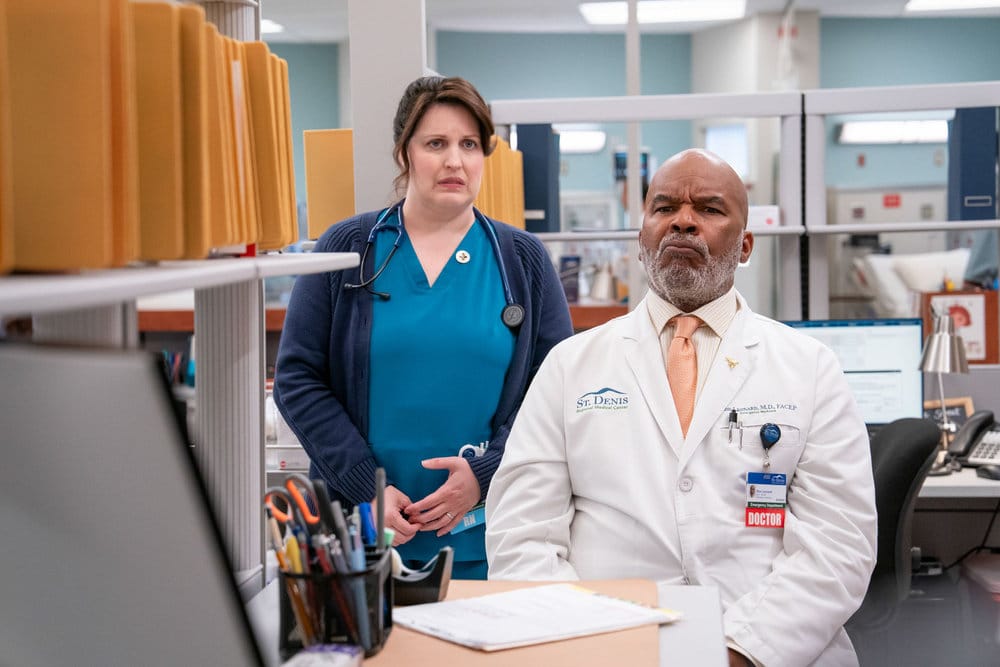
On NBC's "St. Denis Medical," she plays Alex, a dedicated nurse navigating the chaos of an underfunded Oregon hospital. The mockumentary format was an immediate draw. A longtime fan of Christopher Guest films, a “devotee” of the original British "Office," and the American workplace comedies that followed, Tolman had always wanted to work in the genre.
"When the script came to me, that was the biggest draw," she says. "It was mockumentary style, and I'd always wanted to play in that space."
For Tolman, the format offers something unique. The camera isn't simply documenting the action. It's another character. Through the camera, actors can communicate directly with the audience, sharing reactions, embarrassment, frustration, or disbelief without saying a word.
For Alex, the camera often becomes an ally. Tolman describes moments when her character looks directly into the lens as if to ask viewers whether they're witnessing the same absurdity she is. It's a subtle comedic tool, but one that Tolman said completely changes how a performer approaches a scene.
And after years of working across genres, Tolman has developed a deep appreciation for the technical precision required to make comedy look effortless.
"To me, so much of comedy is sort of like math," she says. "It's sort of like timing."
Onstage, during theater performances, performers get live reactions and can feel an audience's laughter and adjust accordingly. On television, particularly in a tightly edited network sitcom, there's far less room to linger. Pauses must be shorter. Jokes must land faster. And actors must find ways to preserve comedic timing within the constraints of a 22-minute episode.
But for Tolman, the rewards are worth it. She describes "St. Denis Medical" as something close to a dream job. The cast clicked almost immediately, and she says she's made some really incredible friends on the show. She also said most of the crew members have been working together for a long time—and had previously worked together on "Superstore" and "American Auto."
The result is a production environment that feels both efficient and familial. Tolman also gets to work close to home, something she doesn't take for granted.
"It's sort of a too-good-to-be-true situation," she says.
Challenging Hollywood's Narrow Definition of Beauty
Tolman's career has also made her an important voice in conversations about body image and representation.
Long before she arrived in Hollywood, she says she was being cast as the mother, the older woman, or the character actress. From a young age, she understood that her body didn't fit the narrow standards the entertainment industry often expects of leading women. That awareness was one reason she initially avoided Los Angeles.
"I couldn't handle the idea of being in a city and in an industry where they were going to tell me that I had to change my body," she says. “I think I knew inherently that would be really bad for me because I have always been a curvy girl.”
She knew that pressure could take a toll on her mental well-being.
So she chose a different path.
But even after finding success, Tolman remains frustrated by how little Hollywood's storytelling reflects the diversity of women's bodies. She acknowledges that there may be more larger-bodied women on television today, but questions whether those performers are being offered the same range of characters as their thinner counterparts.
Women of every size, she points out, can be intelligent, foolish, powerful, desirable, complicated, funny, and flawed. Yet those qualities aren't always reflected in the roles available to them.
"Our storytelling does not really represent the wholeness of the world around us," she says.
When "Fargo" first aired, Tolman received messages from women who were moved simply by seeing someone with a body like theirs on screen. For some, it was the first time they had seen a woman who looked like them portrayed as a capable, fully realized character rather than a punchline. Tolman remembers how meaningful those messages were.
"I know it would have been a comfort to me when I was coming up," she says.
Her concerns have only deepened as social media, beauty filters, artificial intelligence, and the renewed cultural fixation on extreme thinness continue to shape perceptions of what women should look like. Tolman believes the standard of beauty has become increasingly restrictive, even as the real world remains wonderfully varied.
"The more narrow we make the standard of what is beautiful, the broader we make the standard of what is ugly," she says.
Choosing Characters Who Have Something to Say
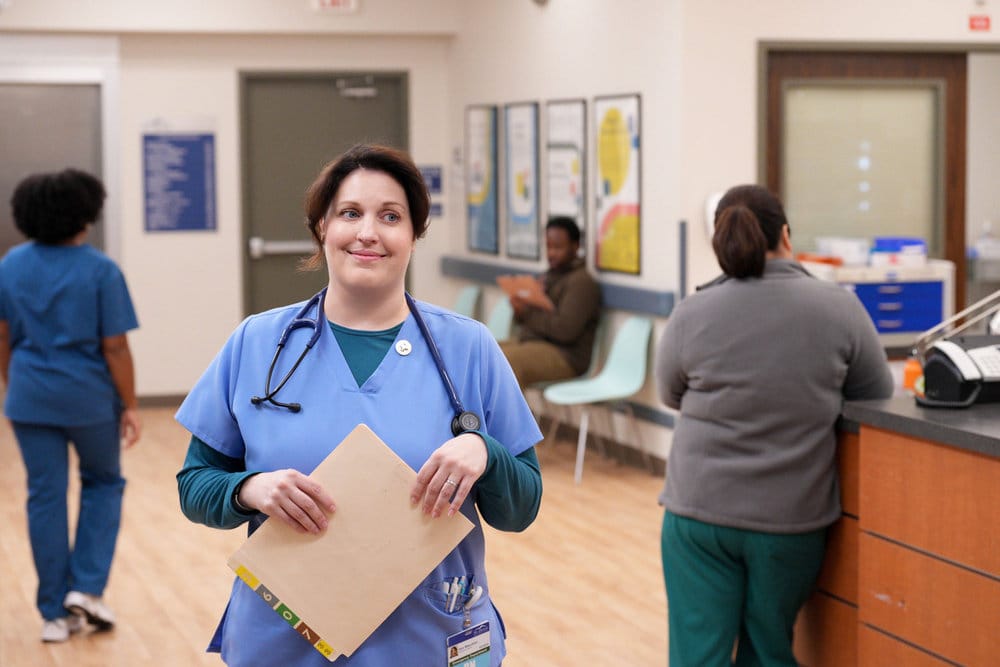
That commitment to authentic representation also influences the roles Tolman chooses. At this stage of her career, she's fortunate enough to have some say in the projects she takes on. She recognizes that the industry is facing a difficult period, with fewer productions and fewer opportunities for working actors, but she remains interested in characters who offer something more than a supporting role in someone else's story.
In particular, she gravitates toward complex women. Women who have their own ambitions, flaws, contradictions, and agency. Women who aren't simply there to serve the male lead.
That doesn't mean she dismisses those supporting roles. She understands their importance and the opportunities they provide to performers still building their careers.
But when she has the luxury of choosing, she wants to explore something different.
Her performance as Alma in "Why Women Kill" remains one of the projects she's proudest of. The role required a heightened, stylized approach that was unlike much of her previous work. It demanded more preparation, a different relationship with the material, and a willingness to step outside her comfort zone.
"I think it's some of the best work that I've done," she says.
For Tolman, it was proof that she could stretch herself in ways she hadn't previously explored.
And that desire to keep surprising herself remains central to her creative ambitions.
The Uncertainty of Success
Despite everything she's accomplished, Tolman is refreshingly candid about the realities of being a working actor. She knows how fortunate she is to have a steady job on a successful television series.
She also knows that nothing lasts forever.
The entertainment industry is undergoing significant changes, from corporate consolidation to shifting production models and fewer opportunities for performers.
Even established actors aren't immune to that uncertainty. Tolman wonders what the landscape will look like when "St. Denis Medical" eventually ends. She also thinks about aging in Hollywood and how the roles available to women change as they enter middle age. Rather than dwell on what she can't control, she's choosing to appreciate what she has.
"I'm so thankful that I've made it to where I am now," she says.
And when asked about what advice she'd give her younger self, her answer isn't what you might expect.
She wouldn't tell herself to move to Hollywood sooner, she wouldn't encourage herself to chase bigger opportunities or take more risks. In fact, she wouldn't change her timeline at all.
"I feel like I found all of this at the right time," she says. "I broke at exactly the right time."
Tolman believes those years of uncertainty, small productions, day jobs, and creative experimentation gave her something she might not have developed otherwise: perspective.
She knows what it means to work without recognition. She knows how to be part of a team. And she knows that being able to make a living doing something she loves is never something to take for granted.
What's Next? More Complicated Women, Please.
Who does Allison Tolman want to play next? She wants to play more women who are “bad at things.”
Not necessarily villains, or powerful matriarchs, or commanding authority figures. Just women who are flawed, foolish, incompetent, or occasionally make terrible decisions.
As character actresses age, she explains, they're often pushed toward roles that demand wisdom, strength, or authority. But Tolman sees no reason older women can't also be ridiculous.
"I think there are lots of women in their 50s who are dumb and bad at things," she says.
A Career Worth Trusting
When asked what she hopes audiences will say when they look back at her career years from now, her answer has nothing to do with awards, box office numbers, or the prominence of her roles.
Instead, she talks about trust.
She points to Meryl Streep as an example of an actor whose career she admires, not because every project is necessarily something she'd choose to watch, but because she trusts that Streep had a reason for choosing it.
Maybe the material was compelling. Maybe it offered an opportunity to collaborate with someone she admired. Maybe it was simply something she'd always wanted to try.
Tolman hopes audiences will extend that same trust to her.
"I hope people trust my canon," she says.
She wants a career filled with interesting choices, unexpected departures, and characters that challenge both her and the audience. And she hopes that even when a project seems surprising, people will believe there was a meaningful reason behind it.
It's a fitting aspiration for an actor whose career has never followed a conventional script.
Allison Tolman didn't arrive in Hollywood with a carefully mapped-out plan.
She spent years making theater with friends, working ordinary jobs, and finding fulfillment in the act of creating.
Then came "Fargo," and everything changed.
But perhaps the most remarkable part of her journey isn't that success eventually found her. It's that she never stopped finding value in the work she was doing before it did.
And now, with "St. Denis Medical" and whatever unexpected roles may come next, Tolman is continuing to build a career on her own terms. Not by chasing Hollywood's definition of success, but by trusting the path that brought her here and hoping audiences will trust where she goes next.
St. Denis Medical season 3 premiered on Monday, November 2, 2026, at 8/7c on NBC, with next-day streaming available on Peacock.
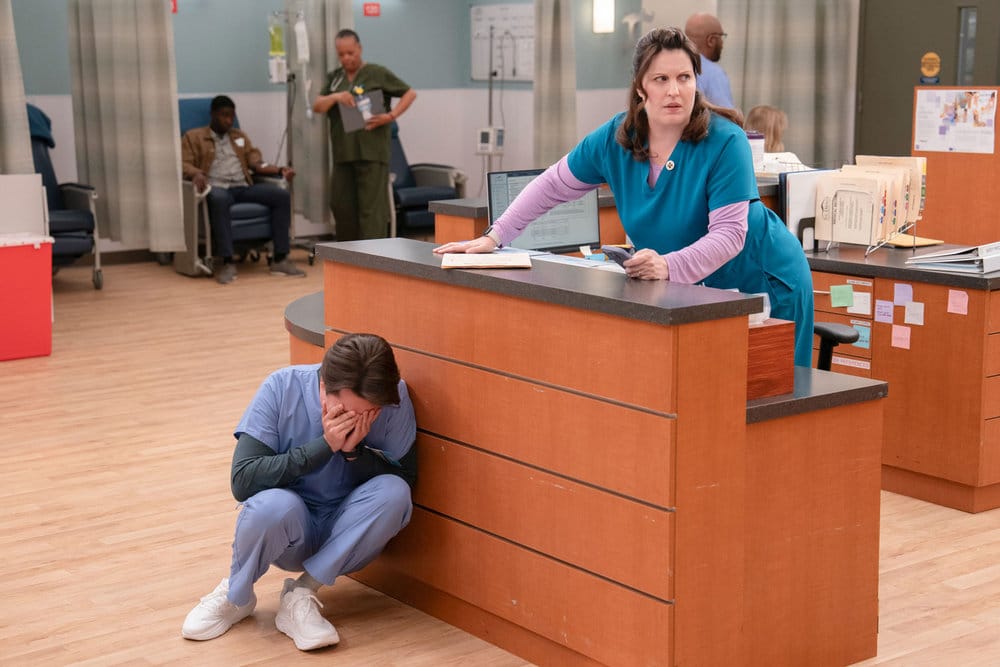
*Feature photo: ST. DENIS MEDICAL “This is From Joyce” Episode 210—Pictured: (l-r) Mekki Leeper as Matt, Allison Tolman as Alex – (Photo by Justin Lubin/NBC)