'You Can See Everything': The Manipulator and the Mirror
Nathan Fielder and Lance Oppenheim Have Made One of the Most Unsettling Films of the Decade
The film ended, and I sat in my seat at the Alamo Drafthouse for a long moment, not quite ready to stand up and rejoin the world. The first word that came to mind was "interesting," which I recognize is a famously inadequate word, but it was the only one that fit because "interesting" was doing the work that every other more specific word could not.
Disturbing. Funny. Infuriating. Compassionate. Manipulative. Honest. Dishonest. All of them were simultaneously true, and none of them was sufficient on its own.
Walking out, I still felt the dread that had settled over me somewhere in the first fifteen minutes and never fully lifted. That is what Nathan Fielder projects do. They generate a specific quality of unease that is not quite horror and not quite comedy and is absolutely, categorically, unlike anything else being made right now.
What Fielder and his co-director Lance Oppenheim have constructed here is, on its surface, a documentary about Elizabeth Holmes in the thirty-four days before she reports to prison.
Holmes, the Theranos founder, convicted fraudster, and one of the most written about figures in recent American cultural history, invites a film crew to document her life with apparent transparency. The premise sounds almost satirical: of course she does. What follows is three hours of something I am still struggling to fully categorize, and I mean that in the most admiring way available to me.
Both Fielder and Oppenheim have been separately developing what you might call docu-fantasia for years, a mode of filmmaking that does not pretend the camera has no effect on the reality it is recording, but instead incorporates that corruption as a deliberate tool, a lens through which the truth becomes even more interesting to examine.
Fielder's work, from his early deadpan comedy through The Rehearsal, has evolved into a genuine psychological investigation of the performative and lonely ways human beings attempt to connect with each other, including himself. Oppenheim, who also recently gave us one of the best narrative features of the year in Primetime, has been applying expressionistic fictional style to real subjects as a means of accessing their subjective reality.
Put these two sensibilities in the same room, turn them toward Elizabeth Holmes, and what you get is not a documentary in any conventional sense. It is something that asks whether a conventional documentary could ever be adequate to this subject, and answers its own question in real time.
For roughly the first ninety minutes, the film plays with tremendous precision on your expectations. Fielder is inserted into Holmes' domestic space, intensely skeptical of everything he sees and hears, but so struck by what she and her partner Billy Evans are offering him, this radical transparency, this apparently unguarded access, that he cannot stop watching.
Billy Evans emerges as one of the film's sneakily fascinating subjects in his own right, and some of the most revealing material involves Fielder noticing small domestic details, a bowl being taken away mid-whisk, an instinctive correction, and treating them as windows into something larger about the nature of this relationship and this household. The way Fielder spots a stray thread and tugs at it, with the patience of someone who knows he has time, is masterful filmmaking.
Holmes herself is extraordinary to watch. Her doe eyes, perpetual composure, on-command vulnerability, the quality of every word she speaks that manages to feel both vacantly alien and completely authentic simultaneously. Fielder's baffled, character-breaking "c'mon, Liz" when she claims she cannot recall ever knowingly telling a lie in her adult life is one of the year's great moments of pure documentary reaction—a man whose entire professional life has been built around studying human performance encountering someone whose performance he genuinely cannot read.
His comparison of talking to her with the Abbott and Costello "Who's On First" routine, deployed as a metaphor for her argument about miscommunicating rather than deceiving investors, which then devolves into a genuine misunderstanding about whether she even grasps the joke, is as funny and as unsettling as anything I have seen in a film this year.
Then Holmes goes to prison, and the film becomes something else entirely. Fielder loses his access and begins to spiral, reviewing footage, reconstructing scenes, trying to locate the clarity that three months of proximity failed to produce.
The second half goes full Errol Morris in its willingness to recreate and restage, and full Hitchcock in the psychological texture of Fielder's obsession with a blonde subject who has been taken away from him. Vertigo and Rear Window are not accidental reference points: the film is genuinely interested in what it means for a filmmaker to become fixated on someone they cannot stop thinking about, and in whether that fixation is analysis or something more compromised. Fielder subjects his own investment to the same scrutiny he turns on Holmes, and the film's increasingly elaborate construction keeps undermining any sense that proximity to a subject equals understanding of them.
This is where You Can See Everything ascends to something genuinely profound. The question the film leaves you with is not whether Holmes is guilty, which the courts have already settled, but what kind of thing she actually is: a textbook narcissist who has spent so long believing her own fabrications that they have become her truth, or an actor of such total commitment that the performance and the person have become indistinguishable? Is Billy a controlling partner who has taken advantage of someone vulnerable, or exactly the kind of partner she deliberately selects to keep her hands clean? Is it possible for both things to be true? Is the question itself the wrong frame?
The film does not answer any of this, and I mean that as the highest praise. It builds a Rorschach test three hours long and lets you find yourself in it.
The title is one of cinema's better recent jokes. You can see everything, the film quietly insists, and still have absolutely no sure way of knowing what you are seeing.
The gorgeous cinematography, the phenomenal score, the editing that builds its own kind of argument through juxtaposition: all of it is in service of a film that is honest about the fundamental dishonesty at the heart of documentary as a form, and that turns that honesty into something approaching wisdom.
Fielder's narration late in the film, reflecting on the deficit of credibility that comes with spending a career as a comedian, and how difficult it becomes when you want to be taken seriously, lands with the weight of genuine self-revelation. It is the most emotionally direct moment in the film, and it arrives in a film that has spent three hours asking whether directness is even possible.
I am still thinking about that final conversation. I will be for a long time.
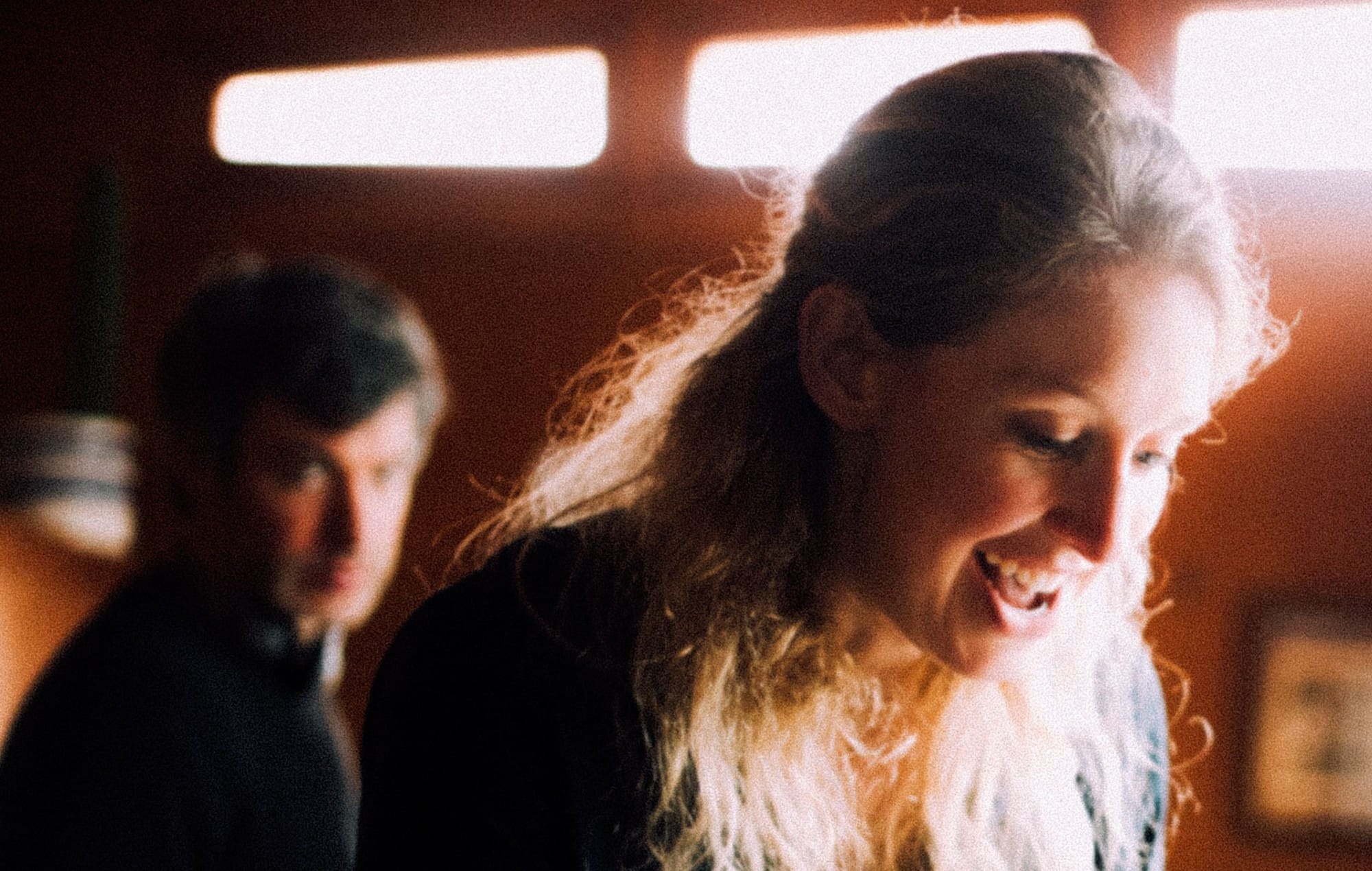
*Feature Image You Can See Everything (A24)