

The Right Kind of Delusional: A Conversation with ‘Primetime’ Writer Ajon Singh
Writer Ajon Singh on forty scripts before one got made, handing Robert Pattinson your screenplay, and why ambiguity is the whole point.

Forty scripts. Three good ones. One that got made. By thirty-one.
That is the short version of Ajon Singh's origin story, and it would be easy to let it become the whole story, the kind of tidy underdog narrative that gets made into a gif and shared on screenwriting forums. But the longer version is more interesting and more instructive.
There were the years driving Uber between auditions. There was the time spent as a background actor, absorbing how film sets actually function. There was a stint at a film agency that led, five years later, to a producing relationship on the very film that broke him through. There were brutal writers' rooms and edifying ones. There was Robert Pattinson, who somehow read the script and loved it. And then there was Lance Oppenheim, who became one of his closest collaborators and friends.
The film they made together, Primetime, is one of the most formally distinctive and genuinely disturbing things I have seen this year. It is a Lynchian docu-horror built around Chris Hansen and the "To Catch a Predator" era, told with a lurid, neon-soaked expressionism that refuses to let the audience sit comfortably on the side of the righteous.
Robert Pattinson delivers what may be his finest screen performance. Skyler Gisondo carries the film's most quietly devastating arc. And Singh's screenplay is doing real structural work beneath the surface spectacle, using Rent as a recurring motif, threading the critique of complicity with precision, and building a third act that turns on exactly the question the film has been circling all along: who faces consequences, and why?
Singh is now slated to write Spider-Punk for Daniel Kaluuya, which makes him one of the more remarkable stories in recent Hollywood.
I spoke with Singh about the forty scripts, the Robert Pattinson phone call nobody could have prepared for, and what he would want every writer still counting their way toward their first made film to understand.
This interview has been edited for flow and clarity.
Rahul Menon: Let's start at the beginning, because your path to Primetime is genuinely one of the more compelling origin stories making the rounds right now. Driving Uber, working as a background actor, writing forty scripts with, by your own count, three good ones and one that got made, all by thirty-one. What kept you going through all of that, and was there ever a point where you genuinely considered walking away from writing entirely?
Ajon Singh: I think one of my strengths, and this is true of my life generally, is that I'm a pretty delusional person. Even when things were going dismally, I always expected them to work out on some level. I think I was also putting in the work. I wrote a lot. I wrote often. I felt my craft improving, and my style and tone becoming more honed. I just felt that it was impossible to keep getting better and better without eventually seeing some sort of result.
Plus, I worked at a film agency for about six months, which led me to meet AJ Bourscheid, who would become a producer on Primetime over five years later when our paths crossed again. Then I got a job as a writers assistant on three shows. The first one was absolutely brutal and shook my faith in the business for sure. But the following two shows, "Painkiller" and "Metropolis," were far more edifying. So I kept expanding my community and meeting new people.
I had a friend once tell me, 'You should only do this if you love the craft more than you hate the rejection,' and I really love writing. Even in the darkest of times, it's something I lean on.
RM: The story of how Primetime actually came together is almost as cinematic as the film itself. You write the script, it somehow finds its way to Robert Pattinson, he loves it but wants to produce rather than star, and then at a party he gets Lance Oppenheim interested, Lance reads the whole thing over a weekend, and suddenly you have one of the most exciting filmmaking duos attached to your script. Can you walk us through what that process actually felt like from your side, and what it was like handing your screenplay over to a filmmaker with as singular a vision as Oppenheim?
AS: I think one thing that's sort of disingenuous about interviews I've heard before is that people don't always take into consideration how much luck plays into everything. And cliche as it is, I do believe, to a certain extent, that you can make your own luck.
Writing as much as I did, I was ready to chase opportunities when they presented themselves, even though I faced rejection time after time after time. That being said, I was never prepared for Robert Pattinson to read my script. You can't prepare for moments like that. But when I saw how he and Brighton McCloskey were engaging with the material, in a way that was totally aligned with how I saw the project, it was easier for me to feel comfortable. Then once I met Lance, who has very quickly become one of my closest friends, it became even easier.
When you trust people like that, it's not so difficult to hand over a script because you feel like it's in good hands. When I watched Lance's work for the first time, I just knew he was a visionary, and there are very few visionaries. I had total confidence that he would be able to do something very special. Our communication was so good, and he's just a really collaborative spirit. I think that's why he's so fucking good.
RM: My review of the film noted that the screenplay is doing real structural work beneath the surface spectacle, and I was particularly struck by the use of Rent as a recurring motif. A musical about a self-absorbed filmmaker who exploits the lives of others for his art, placed inside a story about a man who exploits real human suffering for ratings. That choice felt too precise to be accidental. Can you talk about how that thread developed in the writing, and what other structural or thematic decisions in the script you are most proud of?
AS: It all stemmed from this idea that Dan Plum was heavily invested in musical theater and found himself in a position where, as is common for desperate actors in this business, when you get a gig, you take it. And in this case, "To Catch a Predator" is a very challenging, extreme sort of acting job, if you can even call it that.
Originally, we played around with the idea that he could do a monologue from Willy Wonka, but we eventually found Rent more fitting for the reasons you stated, and also because it was just so iconic to that era. The more we started talking about it, the more we began thinking about how we could bring it back at the end, and what kind of song or feeling we could establish in the beginning and then flip it on its head for the ending. "Seasons of Love" ...
That ellipsis lands exactly right. The Rent motif is one of those screenplay choices that reveals itself gradually, the kind of structural decision that seems precise in retrospect because it is. Singh does not announce the parallel between Rent's fictional filmmaker-exploiter and the real one at the center of his story. He builds toward it patiently, then lets the callback do the work. It is the kind of writing that earns the right to its ambition.
RM: The film operates in a genuinely unusual register, oscillating between surreal horror, dark comedy, media satire, and something that occasionally tips into the psychedelic. How did you hold those tones together on the page, and were there moments where you worried the script was pulling in too many directions at once?
AS: I don't think I was ever that worried because, for one, I generally write this way. I tend to write ensemble pieces for the most part, and keeping track of all these characters and tones is sort of how I have fun during the process.
Additionally, I felt it was better to have these things in the script and shoot them, and then make the tough decisions in the edit. Of course, you want to have a vision for the movie, but you also want to be extremely discerning in the editing process. I tried to be helpful in that regard, but the burden really fell on Lance and Dan Garber, our editor, who had to make those difficult decisions for months and months.
The hope was that, even when scenes were shortened or slashed, they could take elements from certain exchanges and possibly repurpose them elsewhere, adding texture and color where needed.
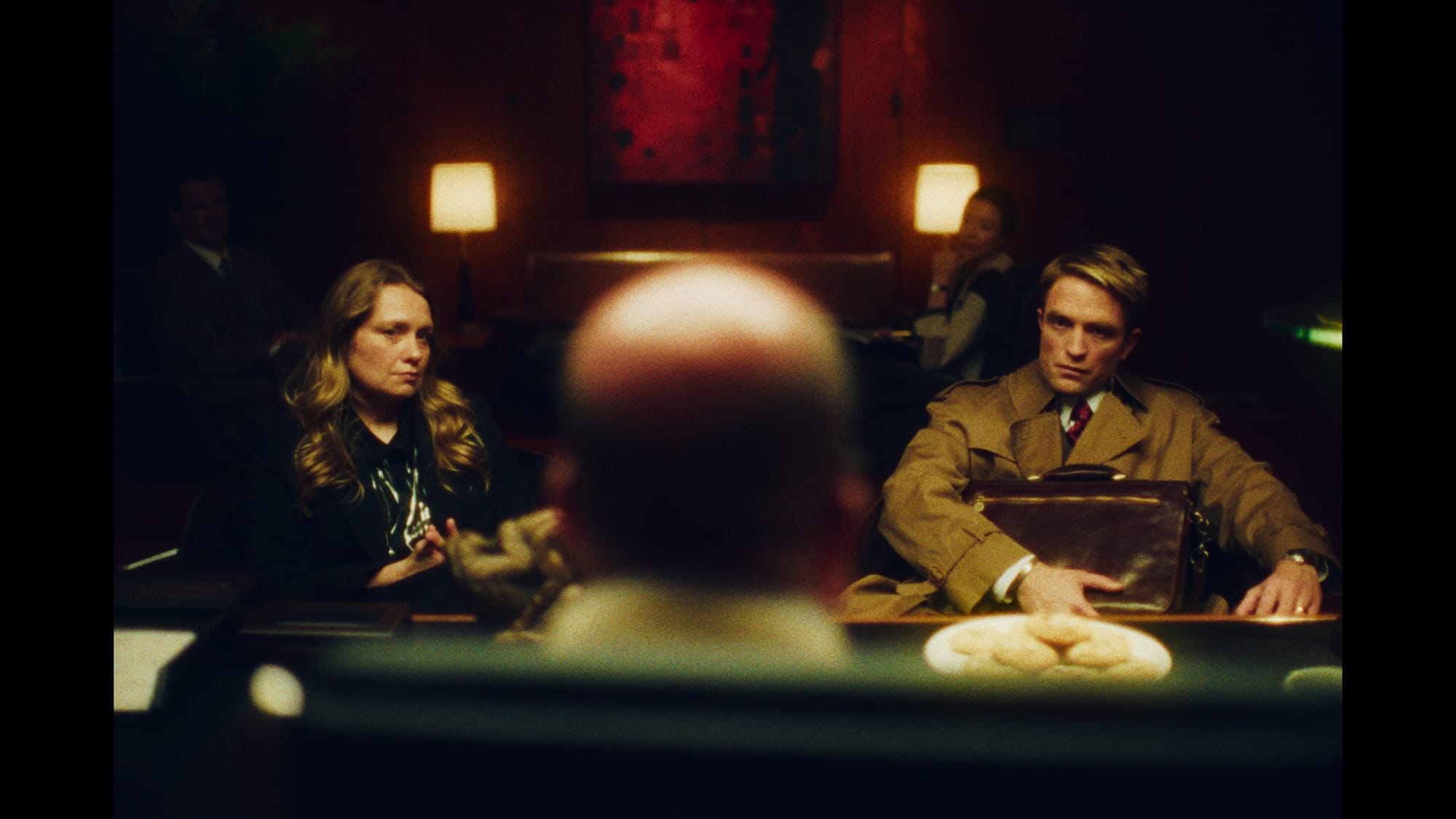
RM: One of the film's sharpest observations is that the morality of "To Catch a Predator" was never seriously questioned until it caught someone rich and powerful. That line of critique lands with real weight, and it implicates the audience as much as it implicates Hansen. How much of that argument was present in your earliest drafts, and how did it evolve across the writing process?
AS: The District Attorney was always the third act of the film. But the addition of religious and community leaders was a big part of the conversation when Lance and I started talking. The D.A. was always there because I knew that, for this movie to reflect what I was trying to explore, it had to drive right towards something I felt deeply: that people in power often don't face consequences for their actions. And Chris Hansen genuinely did expose these sorts of powerful people.
RM: The script is based on the Esquire article "Tonight on Dateline This Man Will Die," and you have clearly done deep research into the "To Catch a Predator" era and its cultural context. What was the hardest part of adapting real events and real people into something that is simultaneously a character study, a media satire, and a horror film, and how did you navigate the ethical responsibilities that come with that territory?
AS: The way my process worked for this was, I did months and months of research, and then I put together a minute-by-minute timeline of the entire incident. From there, I write a really, really long outline so I can get all the ugly stuff out of the way, allowing me to move pretty quickly once I start drafting. As far as ethical responsibilities, I think using Chris' book, along with his interviews and podcasts, helped. We hoped that taking all of that information and dramatizing it into a film would allow us to create a media collage that could feel bigger than a biopic.
That phrase, "a media collage that could feel bigger than a biopic," is exactly the right description of what Primetime achieves. The film is not interested in the conventional biographical mission of explaining how a person became who they are. It is interested in something stranger and more uncomfortable: the cultural machinery that made what Hansen did not just possible, but popular. Singh's research-first approach, building the timeline before drafting anything, gives the script its structural confidence. He knows where he is going before he writes the first scene.
RM: Skyler Gisondo's character, the decoy actor who just wanted a career and ended up at the center of something much darker, carries one of the film's most quietly devastating arcs. The tension between his desire for legitimacy as a performer and the increasingly compromised nature of what he is performing felt like it was doing a lot of thematic heavy lifting about complicity and self-deception. How much of that character was drawn from the real history, and how much was your own invention?
AS: Dan Plum was a composite of many decoys that we learned about. But we really focused on this idea of having a dream, only for that dream to play out differently than expected. The character gradually realizes that maybe it wasn't what he wanted in the first place, only to end up at a point where the siren song of that dream, which now feels so distant, is calling to him again, pulling him back in.
RM: You are now slated to write Spider-Punk, which is a significant jump in scale from an independent film about a true-crime television host. How did that opportunity come about, and what does the leap from Primetime to a project of that size actually feel like from the inside? For writers like me who are in the process of breaking in, knowing how that transition happens in practice is invaluable.
AS: I think in this case, the opportunity sort of came from the excitement surrounding the Primetime script, especially having someone as incredible and coveted as Rob attached. Once you get an opportunity like that, you start to get attention. In my case, Daniel Kaluuya had read the script, and I think he'd gotten it from a representative, maybe. He reached out because he was a fan and wanted a collaborator for the Spider-Punk film. From there, it sort of came together. Can't say much more about it. But Daniel is really fucking cool.
RM: You have talked openly about writing forty scripts before Primetime. For writers who are earlier in that count and wondering whether the work is accumulating into something or just disappearing into a drawer, what is the most honest thing you can say about what those years of unproduced writing actually gave you as a craftsman?
AS: I think early on I had a lot of confidence that my work was good, and it's funny now looking back because my work was very not good. But the most honest thing I can say is that if you do something over and over, it's really hard to get worse. Most likely, you will get better. That's at least been my experience.
If you're someone who's interested in learning, and you read a lot of scripts and watch a lot of films and really try to understand the art of storytelling, and you do the thing a lot, it's just like lifting weights in the gym. Your technical skills get stronger, but your intuition gets stronger, too. And I think intuition is something you cannot buy. It's something you have to hone yourself, and that comes with time.
I have a long way to go, but I think writing all those scripts taught me something else, too. At the time, they felt like the most important things in the world to me. But the more you do it, the more you realize that you can't really control the marketplace or the people who read your work. Sometimes it's a total coincidence, like it was with Rob. But what you can control is getting your reps in.
That last phrase deserves to be underlined. You can't control the marketplace. What you can control is getting your reps in. It is the most honest piece of craft advice in this entire conversation, and it is the kind of thing you can only say when you have actually done it forty times. The gym analogy is not new, but Singh earns it. Intuition, he says, is something you cannot buy. That is exactly right, and it is exactly what forty scripts gives you.
RM: Lance Oppenheim has developed a very specific filmmaking sensibility over his documentary work, what I described in my review as docu-fantasia, where expressionistic style and psychological truth blur together in genuinely unusual ways. What was the collaborative dynamic like between his vision and your script, and in what ways did the finished film surprise you relative to what you had imagined while writing it?
AS: Because Lance was so collaborative and brought me to set, and because we really leaned on each other throughout the process, I never felt too caught off guard. He gave me a lot of insight along the way. But Lance is constantly playing, and I think that's really where he would exceed my expectations. He and David Bolen, our cinematographer, love to play, and they love to improvise.
One thing I wasn't really prepared for, but started to anticipate later on, was that Lance would take old lines from scenes he had cut, or lines from other scenes, and throw them at the actors in a totally different scene to see how they would react. I loved this because it kept scenes fresh and actors on their toes. I got so used to it that I started saving old lines in my Notes app on my phone so I could have them ready if he ever asked.
He just has this incredible balance between sophistication, play, and improvisation. And one thing I really loved about what he and Dan did in the edit was how they found a sense of pace where they could turn three separate scenes into one sort of musical montage. Those sequences really burst off the screen, and I think they make the movie and establish its tempo.
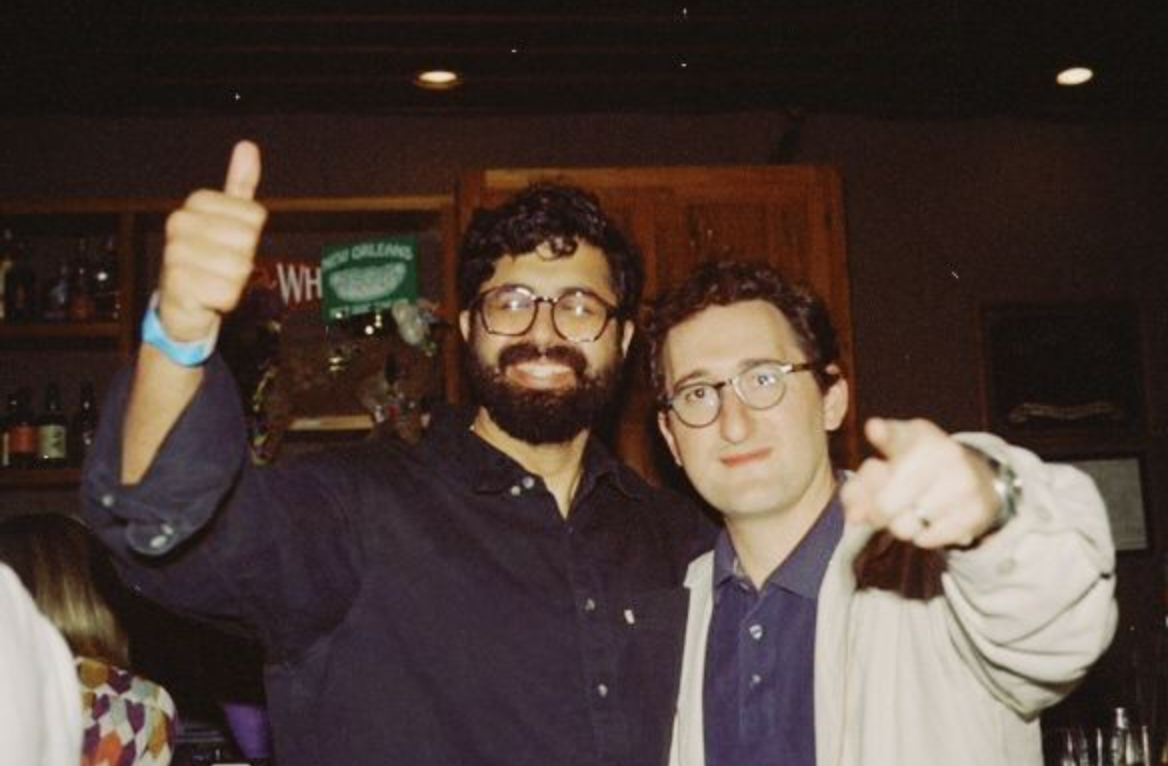
RM: The film ends on an observation that is more uncomfortable than it is conclusive, implicating the collective appetite for public punishment as much as it indicts Hansen specifically. Was that ambiguity always your intention, or did you arrive at it through drafts? And how do you feel about audiences who leave the film having enjoyed it as a thriller without fully reckoning with what it is asking them to think about themselves?
AS: Well, I think you used the right word, which is ambiguity, and I think using the word indicts is sort of at odds with that. I don't think we ever intended to indict him. We just wanted to create this sort of spiritual depiction of what happened and allow audiences to make up their own minds. You can't control what audiences think, and even Lance, me, David, Rob, and Dan all have different opinions about what the movie is about or what certain scenes are trying to say. And that, I think, is the whole point of this process. It's the beauty of art.
RM: You are thirty-one, you have one made film that is generating real awards conversation, and a major studio franchise assignment on the horizon. Looking back at the version of yourself who was driving Uber between auditions and writing scripts into drawers, what would you most want that person to know that you did not know then?
AS: Keep writing. Be kind. Focus less on making it and do it because you can't live without it. And try to impress yourself more than others.
Keep writing. Be kind. Focus less on making it and do it because you can't live without it. And try to impress yourself more than others.
Four sentences. Twenty-six words. It is a remarkable thing that the most useful answer in this entire conversation is also the shortest one, and that it arrives at the end, after Ajon Singh has told you everything else: the delusional optimism that carried him through the lean years, the intuition that only forty scripts can build, the total coincidence that was Robert Pattinson, the friend who told him to do it only if he loved the craft more than he hated the rejection. Everything points back to those four sentences.
What makes Singh's story genuinely instructive is not the outcome. Writers break through every year in ways nobody predicted. What is instructive is the specific quality of conviction that got him there: not the belief that he was already good, but the belief that he would get better. He describes his early work as very not good and laughs at the confidence he had in it. That is a particular kind of self-awareness that tends to produce serious writers, people who can look clearly at their own development without either inflating it or collapsing under it.
Primetime is a film about what happens when performance consumes the performer. Ajon Singh's story is almost a counter-argument to that. He stayed in the work, stayed out of the spotlight, wrote the scripts nobody saw, and arrived at a film that is now generating the kind of conversation that matters. The reps paid off. The delusional optimism paid off. And he is, by his own admission, still a long way to go.
*Feature photo by Sinna Nasseri (A24)